.svg)


Why HazMat UAV programs are expanding
Hazardous materials incidents have become increasingly complex.
Departments are responding to a broader range of emergencies than ever before, including:
- lithium-ion battery fires;
- chemical releases;
- rail derailments;
- fuel terminal incidents;
- pipeline failures;
- industrial explosions;
- unknown substance calls.
In each case, incident commanders face the same challenge: they must make rapid operational decisions before they have a complete picture of the situation.
Sending personnel into an uncertain environment too early increases operational risk.
Waiting too long delays containment, evacuation, and rescue operations.
This is why aerial situational awareness has become one of the most valuable applications for public safety UAV programs.
Rather than replacing traditional response procedures, drones provide incident commanders with better information before committing personnel and resources.
Federal funding opportunities for HazMat UAV programs
Most successful departments do not apply for funding because they want drones.
They apply because they want to improve responder safety, strengthen incident command and enhance emergency preparedness.
Federal grant reviewers are far more interested in operational outcomes than aircraft specifications.
The strongest funding opportunities include the following programs.
Assistance to Firefighters Grant (AFG)
For many departments, the Assistance to Firefighters Grant remains the primary source of funding for UAV programs.
Projects are generally strongest when UAVs are positioned as tools that improve:
- responder safety;
- hazardous materials response;
- fireground situational awareness;
- technical rescue;
- disaster response;
- command and control.
Applications that clearly connect drone deployment to operational risk reduction are generally more competitive than those focused primarily on technology acquisition.
Emergency Management Performance Grant (EMPG)
EMPG supports emergency preparedness and capability development across state and local agencies.
HazMat UAV programs align particularly well with EMPG objectives because they improve:
- incident command;
- situational awareness;
- interagency coordination;
- operational resilience;
- emergency planning.
Departments should emphasize how UAV capabilities strengthen preparedness before an incident occurs, not only response during the incident itself.
Homeland Security Grant Program (HSGP)
Programs such as SHSP and UASI continue to support regional preparedness and critical infrastructure protection.
HazMat UAV capabilities are especially relevant for projects involving:
- CBRNE preparedness;
- regional response teams;
- mutual aid;
- critical infrastructure protection;
- interoperability.
Regional deployment models often create stronger funding narratives than single-department capabilities.
Where UAVs deliver the greatest operational value
Departments rarely deploy drones because flying is easier.
They deploy them because faster information leads to safer decisions.
The highest-value applications all improve operational awareness before responders enter the hazard zone.
Initial scene assessment
The first minutes of any HazMat incident are often characterized by incomplete information.
Aerial reconnaissance helps incident commanders quickly determine:
- the size of the incident;
- visible fire conditions;
- smoke or vapor movement;
- potential access routes;
- immediate risks to responders.
This allows command staff to establish safer operational priorities before committing personnel.
Hazard zone mapping
Determining hot, warm, and cold zones is one of the most critical tasks during hazardous materials incidents.
Drone imagery provides a broader operational perspective, helping command staff evaluate scene boundaries, identify obstacles, and coordinate staging areas more effectively.
Chemical spill and industrial incident assessment
Industrial facilities often present complex layouts that are difficult to evaluate from ground level.
Aerial observation enables responders to:
- assess containment;
- identify secondary hazards;
- monitor runoff;
- evaluate infrastructure damage;
- improve tactical planning.
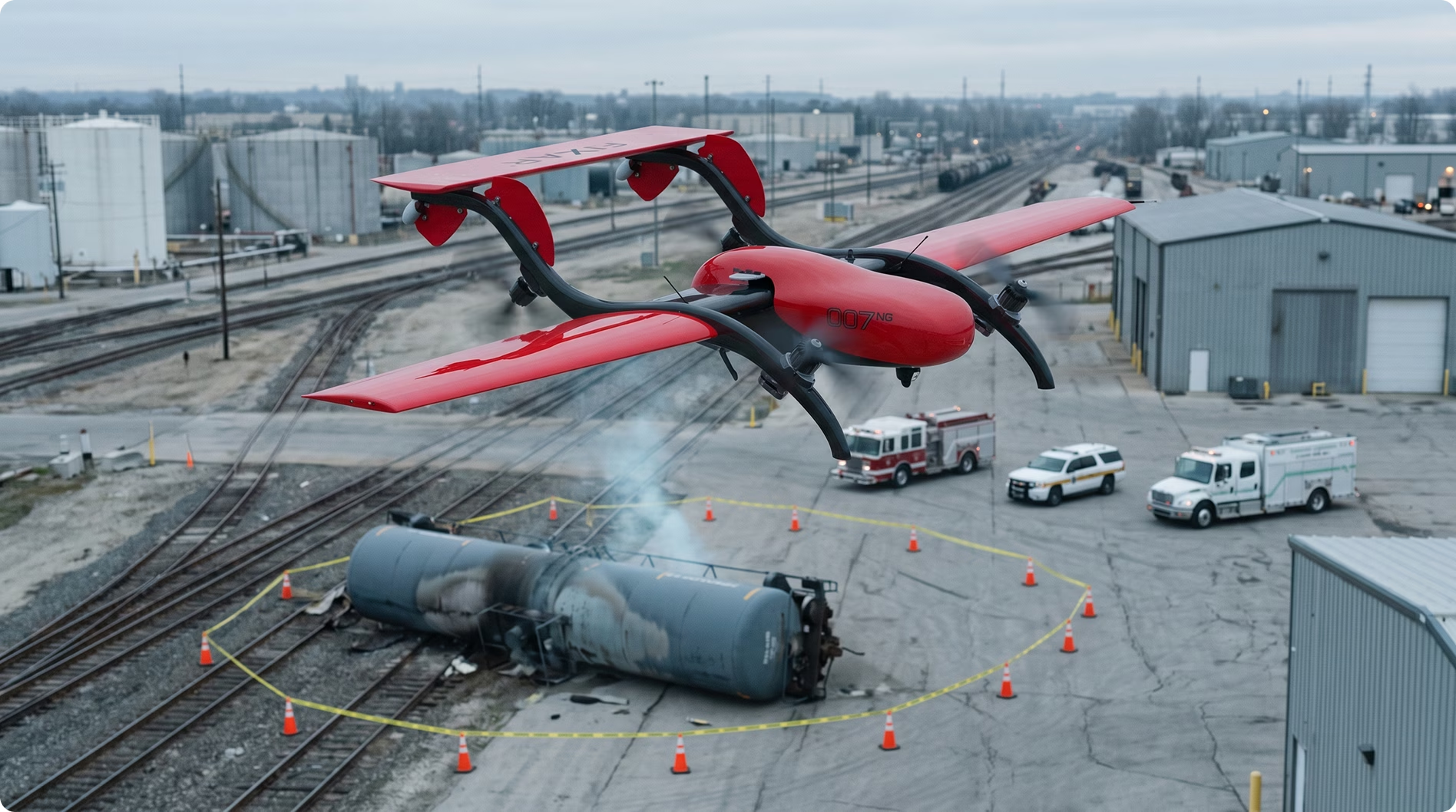
Rail and highway HazMat incidents
Transportation incidents frequently occur in locations with limited visibility and difficult access.
Drone operations help responders assess:
- overturned tank cars;
- damaged cargo;
- vehicle positioning;
- surrounding infrastructure;
- evacuation routes.
Earlier situational awareness supports faster decision-making while reducing unnecessary responder exposure.
Critical infrastructure emergencies
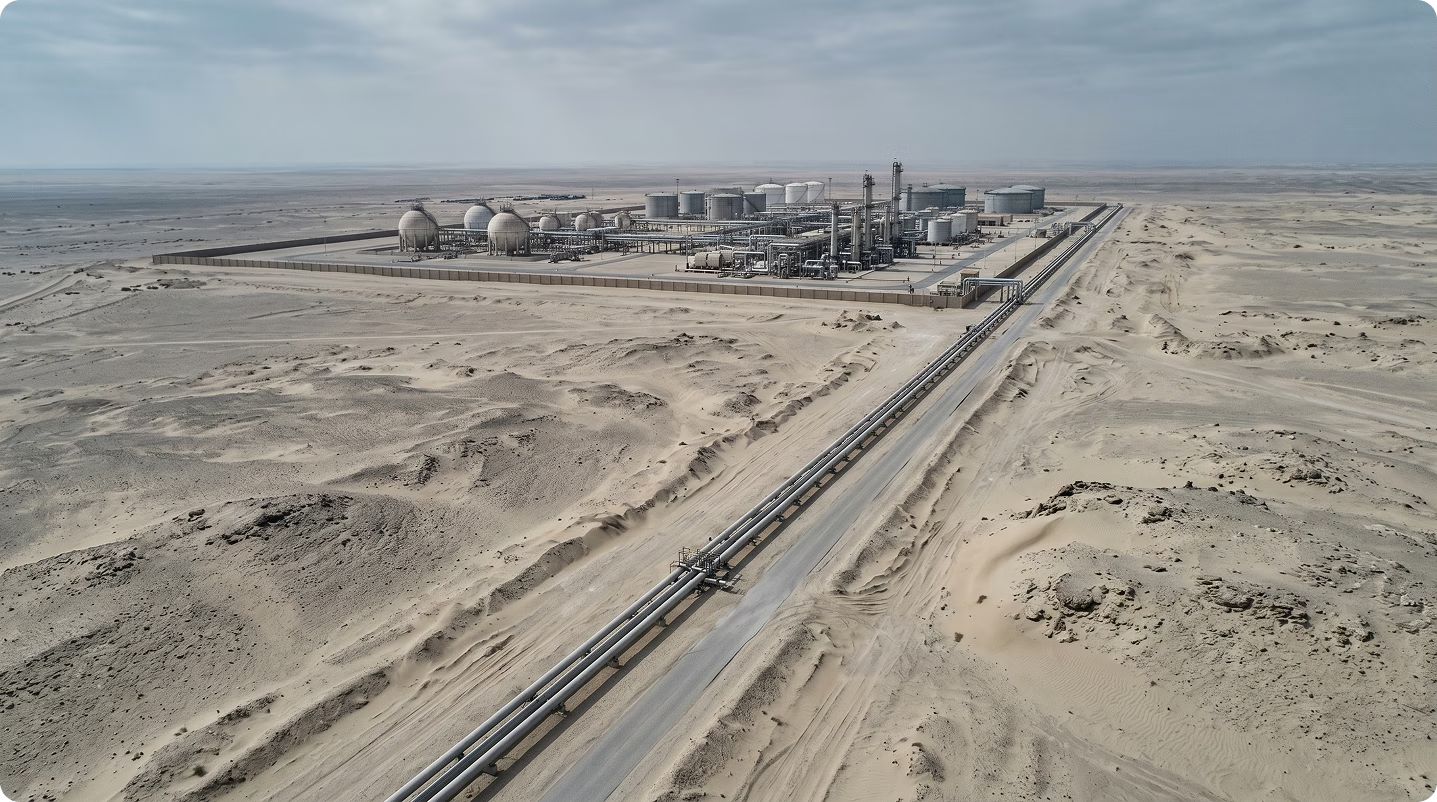
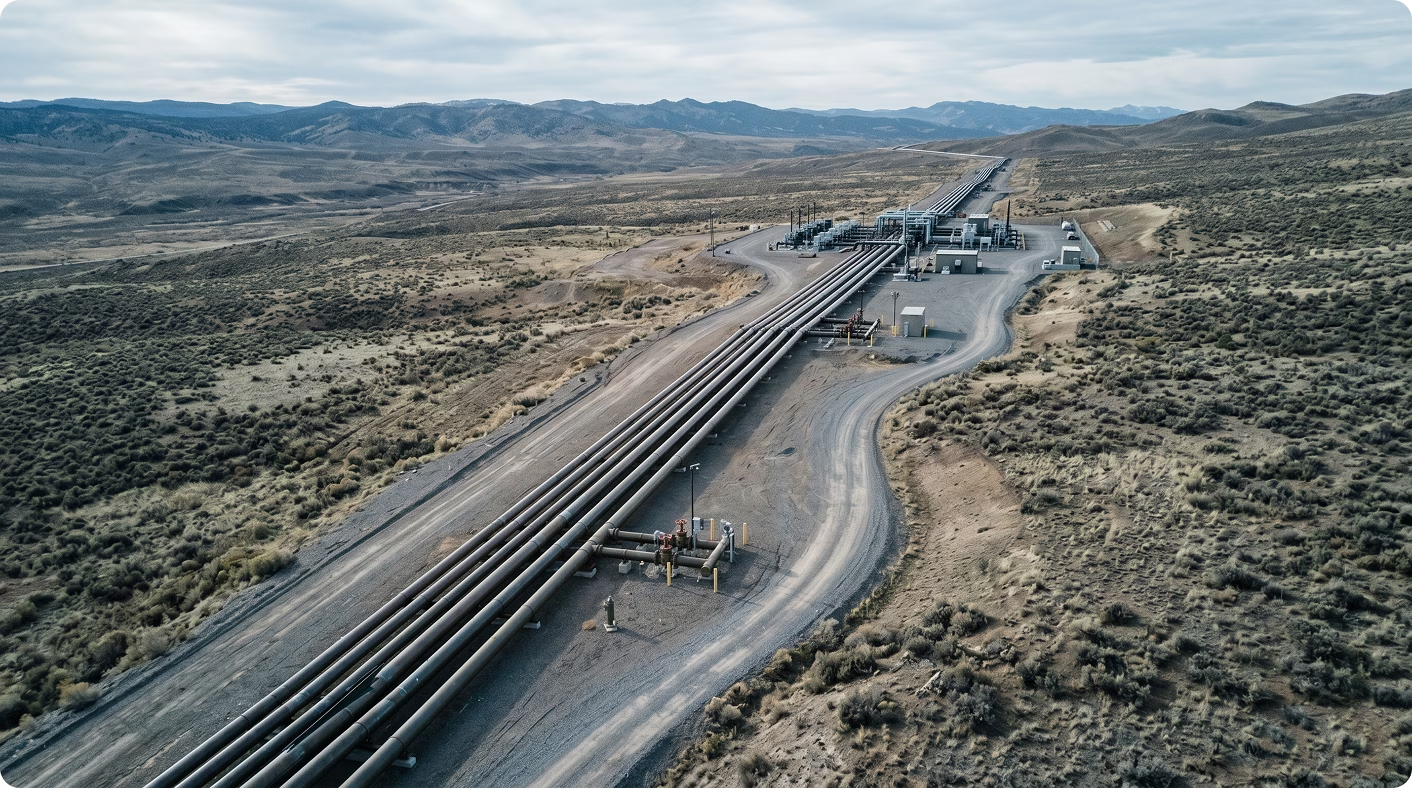
Hazardous materials incidents involving pipelines, fuel terminals, substations, or industrial facilities often require coordination across multiple agencies.
Shared aerial intelligence improves communication between fire departments, law enforcement, emergency management, and infrastructure operators.
Building a strong grant application
One of the most common mistakes departments make is writing grant applications around equipment.
Successful applications are built around capability.
Grant reviewers want to understand how a department will improve operational performance, not simply what it plans to purchase.
Strong applications typically explain:
- the operational risks facing the jurisdiction;
- how UAV deployment reduces responder exposure;
- how drones integrate into ICS;
- training requirements;
- mutual aid capability;
- long-term sustainability.
Focus on responder safety
Responder safety remains the strongest justification for HazMat UAV funding.
Applications should clearly explain how aerial intelligence helps reduce unnecessary exposure to hazardous environments and supports safer tactical decisions.
Demonstrate ICS integration
Departments should explain how UAV operations support existing Incident Command System structures.
Examples include:
- command visibility;
- safety officer operations;
- planning section intelligence;
- unified command;
- resource coordination.
Plan beyond equipment
Competitive applications typically include funding for:
- aircraft;
- pilot training;
- standard operating procedures;
- maintenance;
- exercises;
- implementation.
This demonstrates long-term operational readiness rather than one-time technology acquisition.

How FIXAR supports operational readiness
HazMat incidents demand rapid decision-making in environments where information is limited, and responder safety is the highest priority.
FIXAR is designed to support structured aerial operations that provide incident commanders with timely, repeatable situational awareness without adding unnecessary complexity to field operations.
Instead of treating UAVs as standalone aviation assets, the platform helps agencies integrate aerial intelligence into established emergency response procedures.
Faster situational awareness during the first operational period
The first minutes of a hazardous materials incident often determine the effectiveness of the entire response.
FIXAR enables teams to launch standardized missions quickly, providing aerial intelligence that supports:
- initial scene assessment;
- hazard zone evaluation;
- access route identification;
- staging area selection;
- perimeter monitoring.
Earlier visibility helps command staff make more informed decisions before committing responders to potentially hazardous environments.
Standardized incident workflows
Consistency is essential during emergency operations.
FIXAR enables agencies to establish repeatable mission profiles that can be used across a wide range of incident types, helping ensure that aerial intelligence is collected using the same operational approach regardless of who is flying the mission.
Standardized workflows also simplify training, improve interoperability, and support more consistent operational outcomes.
Supporting multi-agency operations
Large-scale HazMat incidents often involve multiple responding organizations.
By providing structured aerial workflows, FIXAR helps improve information sharing between:
- fire departments;
- emergency management agencies;
- law enforcement;
- regional HazMat teams;
- critical infrastructure operators.
This supports a more coordinated response during complex incidents.
Reducing operational complexity
Emergency responders should focus on managing the incident – not on operating complicated technology.
FIXAR's mission planning approach reduces the manual workload associated with repetitive flight preparation, allowing personnel to concentrate on tactical decision-making rather than flight execution.
This is particularly valuable during high-pressure incidents where time and cognitive workload are critical factors.
Frequently Asked Questions
Can drones be funded through the Assistance to Firefighters Grant (AFG)?
Yes. UAVs may be eligible when they are presented as part of a broader capability that improves responder safety, incident command, and operational readiness, rather than as standalone technology purchases.
What types of incidents benefit most from UAV deployment?
Hazardous materials releases, industrial fires, rail derailments, tanker rollovers, pipeline incidents, lithium-ion battery fires, and critical infrastructure emergencies all benefit from rapid aerial situational awareness.
How do UAVs improve responder safety?
By providing incident commanders with an aerial view before crews enter potentially hazardous environments, UAVs help reduce uncertainty, improve hazard assessment, and support safer tactical decisions.
What should be included in a grant application?
Strong applications typically include aircraft, training, standard operating procedures, maintenance planning, exercises, and a clear explanation of how the capability improves operational readiness.
Can UAV operations be integrated into the Incident Command System?
Yes. UAVs can support multiple ICS functions, including command situational awareness, hazard zone assessment, planning, resource coordination, and unified command operations.
How does FIXAR support HazMat response?
FIXAR enables agencies to build standardized UAV workflows for rapid scene assessment, hazard zone monitoring, and incident command support, helping departments improve operational consistency while reducing responder exposure.
Conclusion
Hazardous materials incidents demand rapid decisions under uncertain conditions. For fire departments and emergency management agencies, UAVs are no longer simply an emerging technology; they are becoming an essential tool for improving responder safety, strengthening incident command, and enhancing operational preparedness.
Departments that build funding proposals around measurable operational outcomes, rather than equipment acquisition, are better positioned to secure federal grants and establish sustainable UAV programs.
For technology providers, the opportunity lies not in selling drones, but in helping agencies develop repeatable aerial capabilities that improve decision-making during the most challenging emergency incidents.
Ready to build a fundable HazMat UAV program?
Whether your department is preparing an AFG application, expanding regional response capabilities, or integrating UAVs into HazMat operations, FIXAR can help you build a procurement-ready, grant-aligned solution.
Our team supports agencies with:
- grant-ready technical documentation;
- UAV program development;
- SOP and workflow design;
- mission planning strategies;
- training and implementation planning;
- technical consultation for public safety deployments.
Contact the FIXAR team to discuss how your agency can strengthen responder safety and build a sustainable UAV capability for hazardous materials response.



.svg)