.svg)
Why South Korea's defense market is different
Many international UAV companies approach South Korea as another rapidly growing defense market.
In reality, it operates according to a very different procurement philosophy.
While other countries often emphasize innovation programs or pilot deployments, South Korea prioritizes operational maturity, procurement discipline, and long-term implementation. Buyers are typically less interested in experimental technologies than in solutions that can be deployed reliably within established operational frameworks.
This approach reflects broader national priorities, including:
- defense modernization;
- operational readiness;
- industrial competitiveness;
- standardized procurement;
- long-term technology support;
- trusted supplier relationships.
For UAV companies, this means procurement decisions are rarely based on aircraft performance alone.
Organizations are expected to demonstrate how their solution supports real operational requirements, integrates into existing security procedures, and can be maintained throughout its lifecycle.
Procurement pathways that matter
South Korea's procurement ecosystem is built around centralized acquisition, standardized supplier participation, and clearly defined operational requirements.
Organizations entering the market should understand the institutions that shape defense technology adoption.
Defense Acquisition Program Administration (DAPA)
The Defense Acquisition Program Administration (DAPA) is responsible for managing South Korea's defense acquisition strategy, modernization programs, and procurement activities.
For UAV suppliers, DAPA is the primary gateway into defense capability development.
Its responsibilities include:
- force modernization planning;
- acquisition management;
- defense R&D programs;
- supplier qualification;
- technology evaluation;
- procurement coordination.
For organizations developing autonomous UAV solutions, understanding DAPA's acquisition priorities is essential when preparing long-term market-entry strategies.
Korea Online E-Procurement System (KONEPS)
KONEPS is South Korea's centralized electronic procurement platform used across the public sector.
More than a tender portal, it forms the backbone of the country's procurement ecosystem by supporting supplier registration, bid management, compliance documentation, and contract administration.
Companies interested in long-term participation should treat KONEPS as part of their market-entry strategy rather than simply a place to monitor opportunities.
Successful suppliers typically prepare documentation and internal procurement processes before responding to individual tenders.
Defense modernization initiatives
South Korea continues to invest heavily in defense modernization programs that emphasize automation, digital transformation, and advanced surveillance capabilities.
For UAV companies, these initiatives create opportunities in areas such as:
- autonomous monitoring;
- force protection;
- infrastructure security;
- intelligent surveillance;
- unmanned situational awareness.
Organizations that position UAV technology as part of broader modernization efforts are generally more competitive than those marketing standalone aircraft.
Building local partnerships
Local collaboration plays an important role in the South Korean defense ecosystem.
International companies frequently strengthen their procurement position by working with:
- defense contractors;
- systems integrators;
- industrial technology companies;
- research organizations;
- security solution providers.
Strong partnerships improve operational alignment, simplify implementation, and help organizations navigate procurement requirements more effectively.
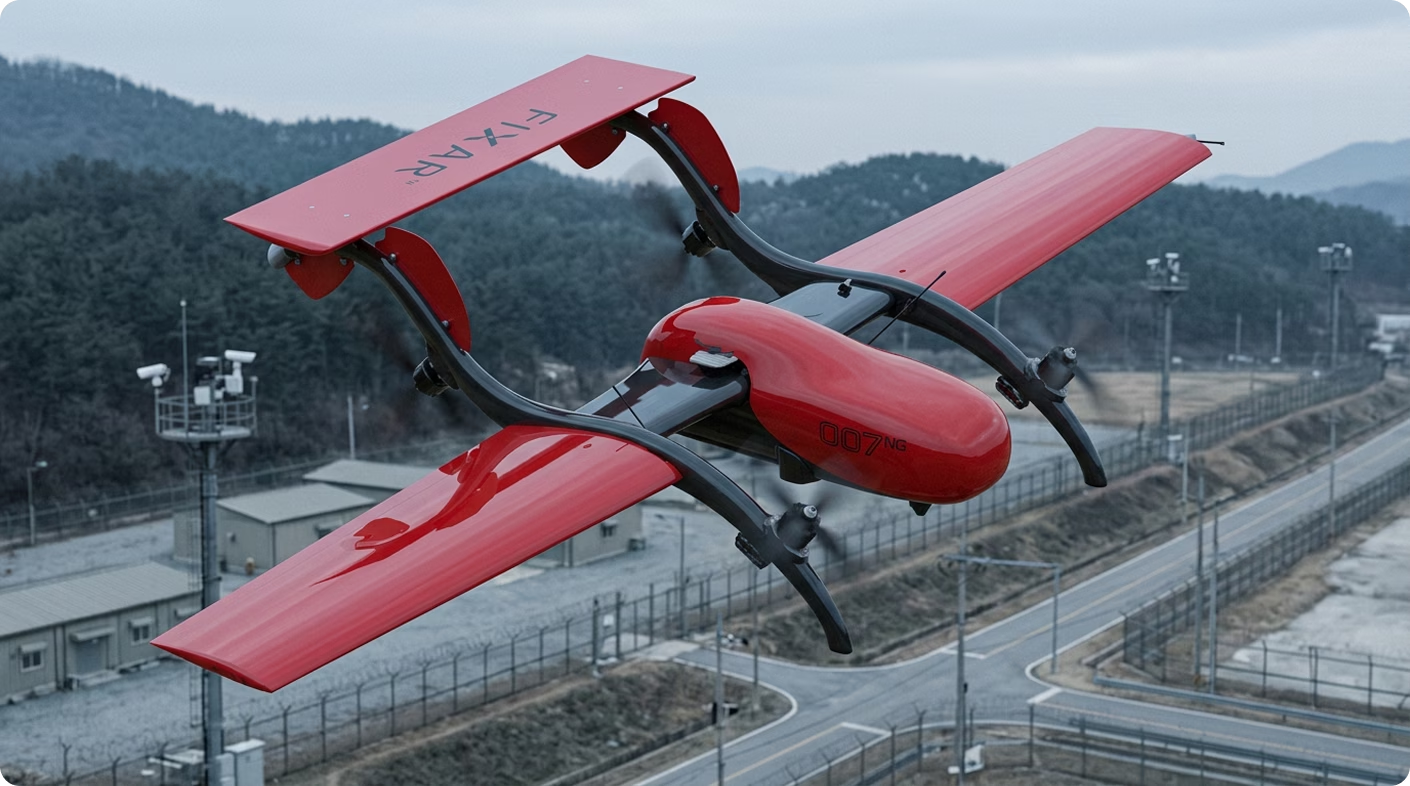
How FIXAR supports structured security operations
South Korea's defense and security organizations increasingly evaluate UAV technologies based on their ability to support disciplined, repeatable operations across complex environments.
FIXAR is designed with these operational requirements in mind.
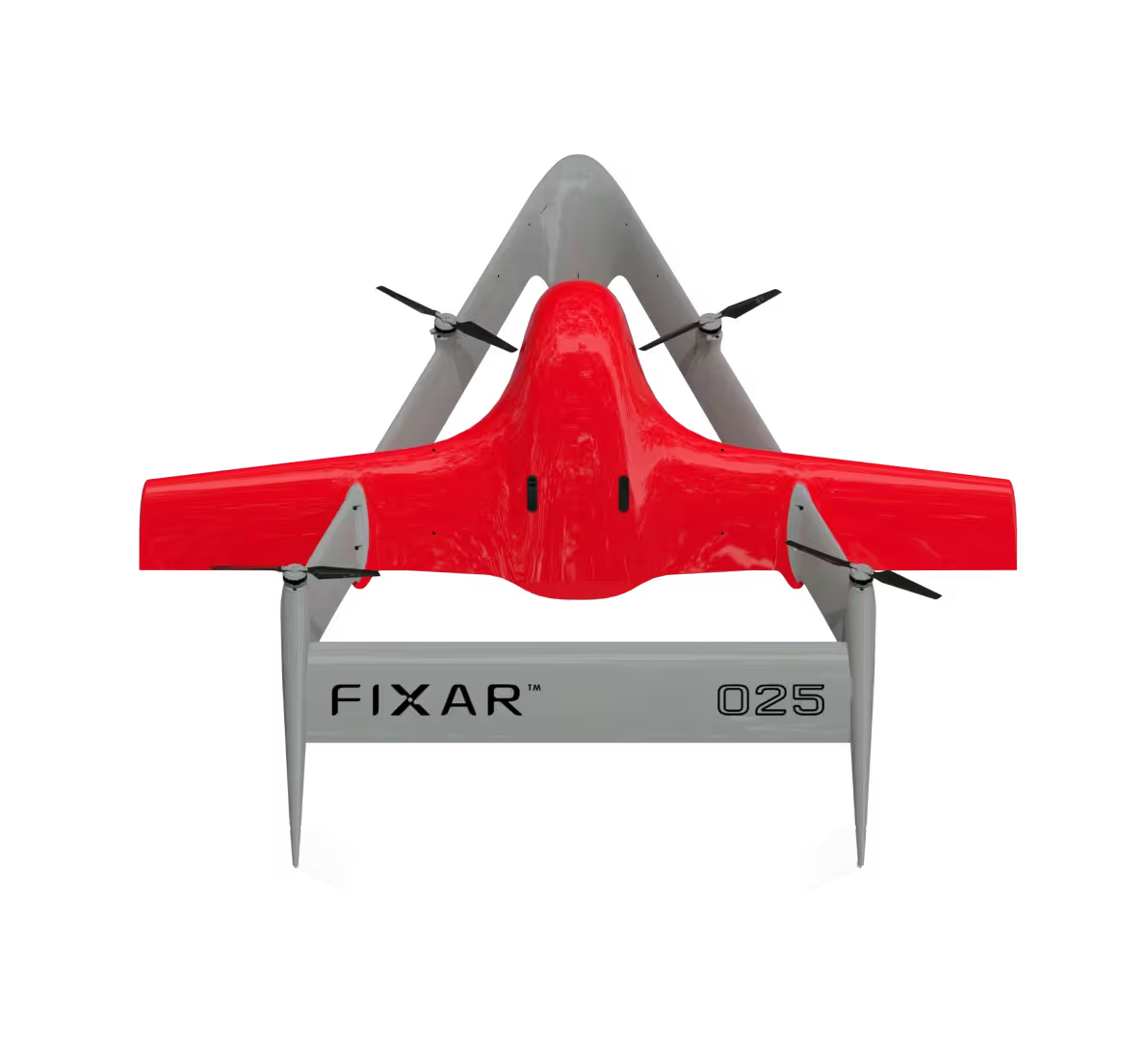
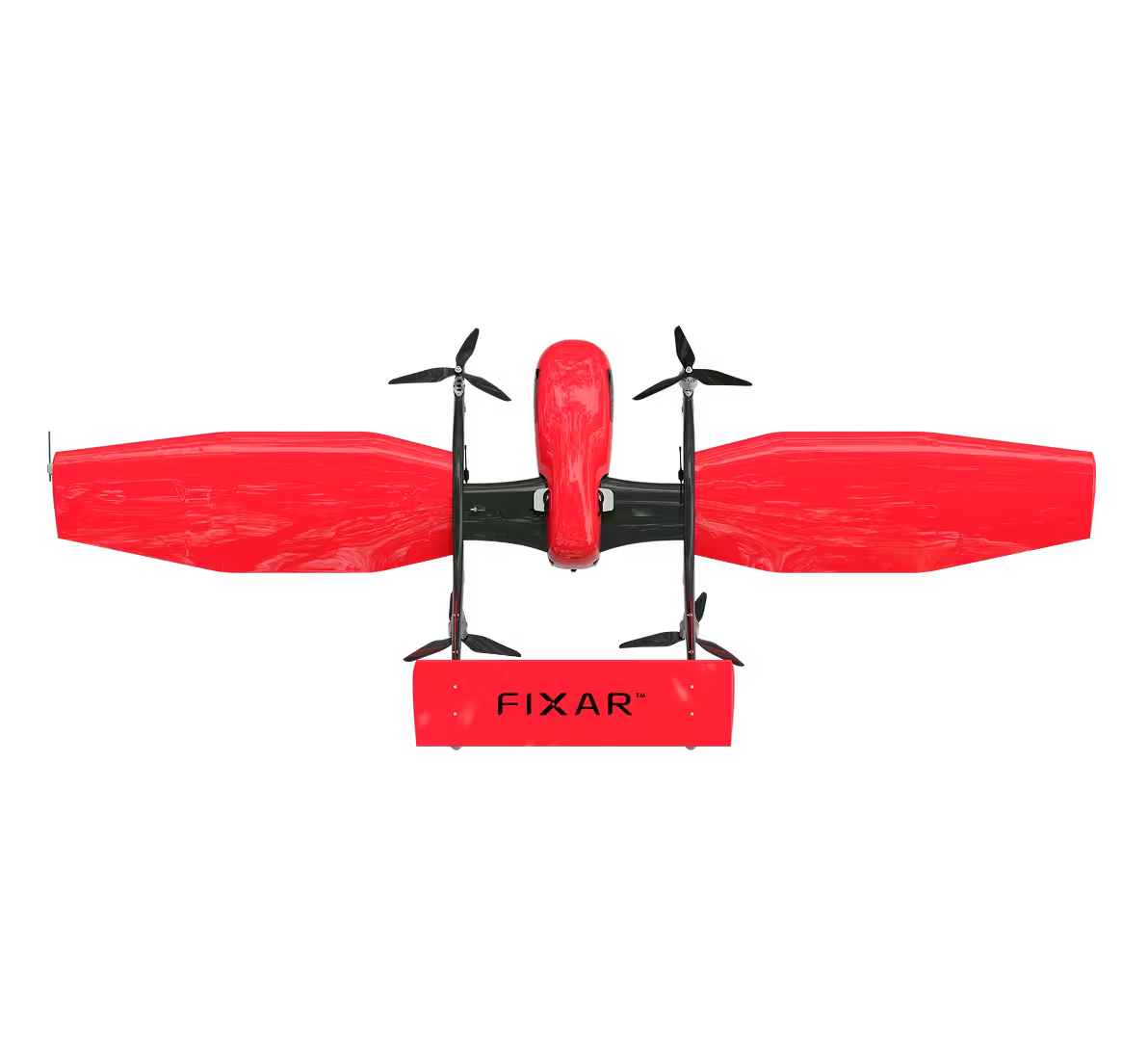
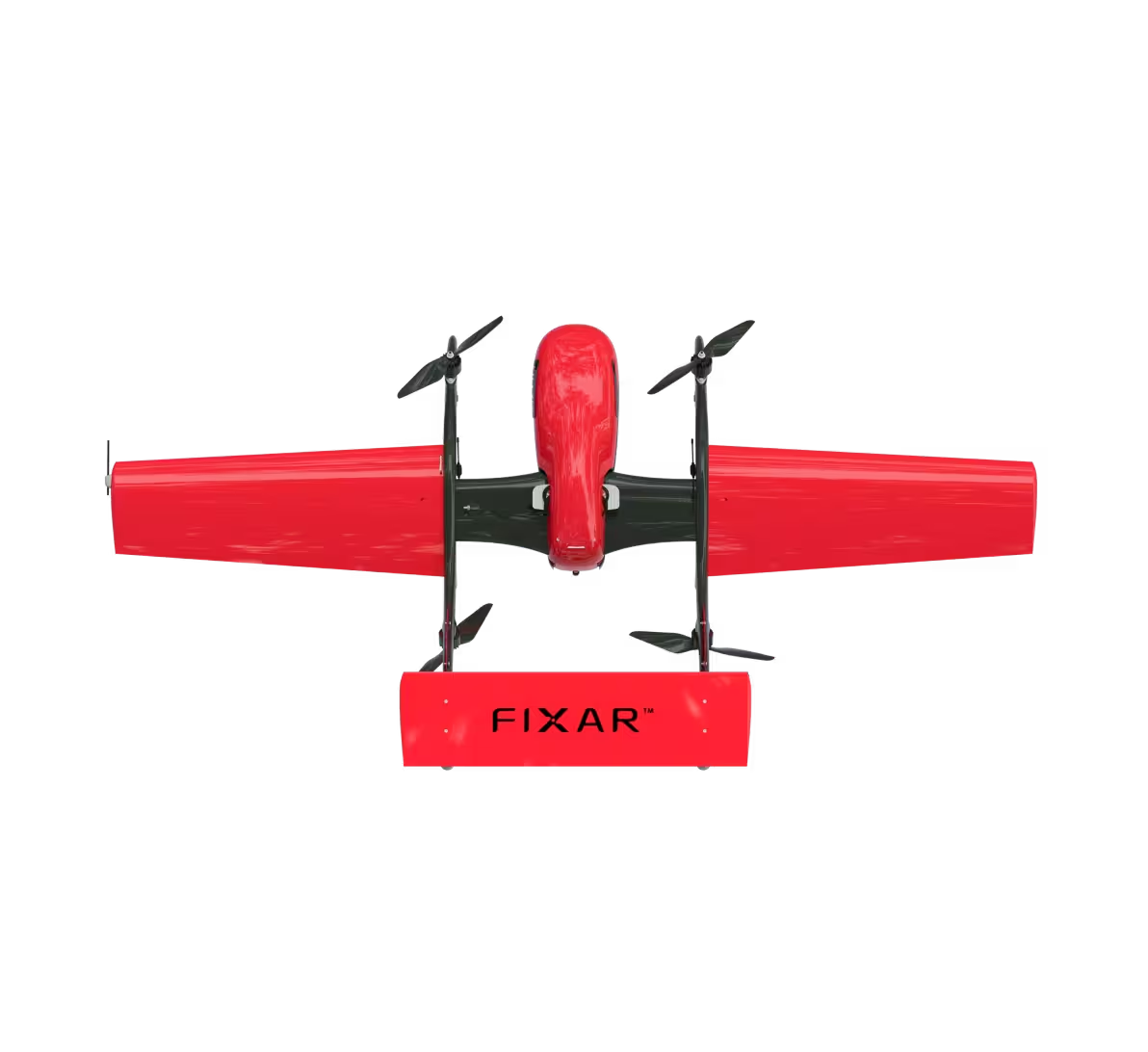
Rather than focusing solely on aircraft performance, the platform enables organizations to build standardized autonomous workflows that integrate into long-term security and infrastructure monitoring programs.
For defense contractors, systems integrators, and public-sector organizations, this approach aligns more closely with procurement priorities than technology demonstrations centered on flight capabilities alone.
Standardizing routine security operations
Large installations require surveillance that is both reliable and repeatable.
FIXAR enables organizations to establish predefined autonomous missions that can be executed consistently across multiple facilities and operational scenarios.
These standardized workflows support:
- perimeter patrols;
- scheduled infrastructure inspections;
- recurring surveillance missions;
- remote-area monitoring;
- security verification after alerts.
As a result, organizations can improve operational consistency while reducing the effort required to plan routine UAV missions.
Supporting large and distributed facilities
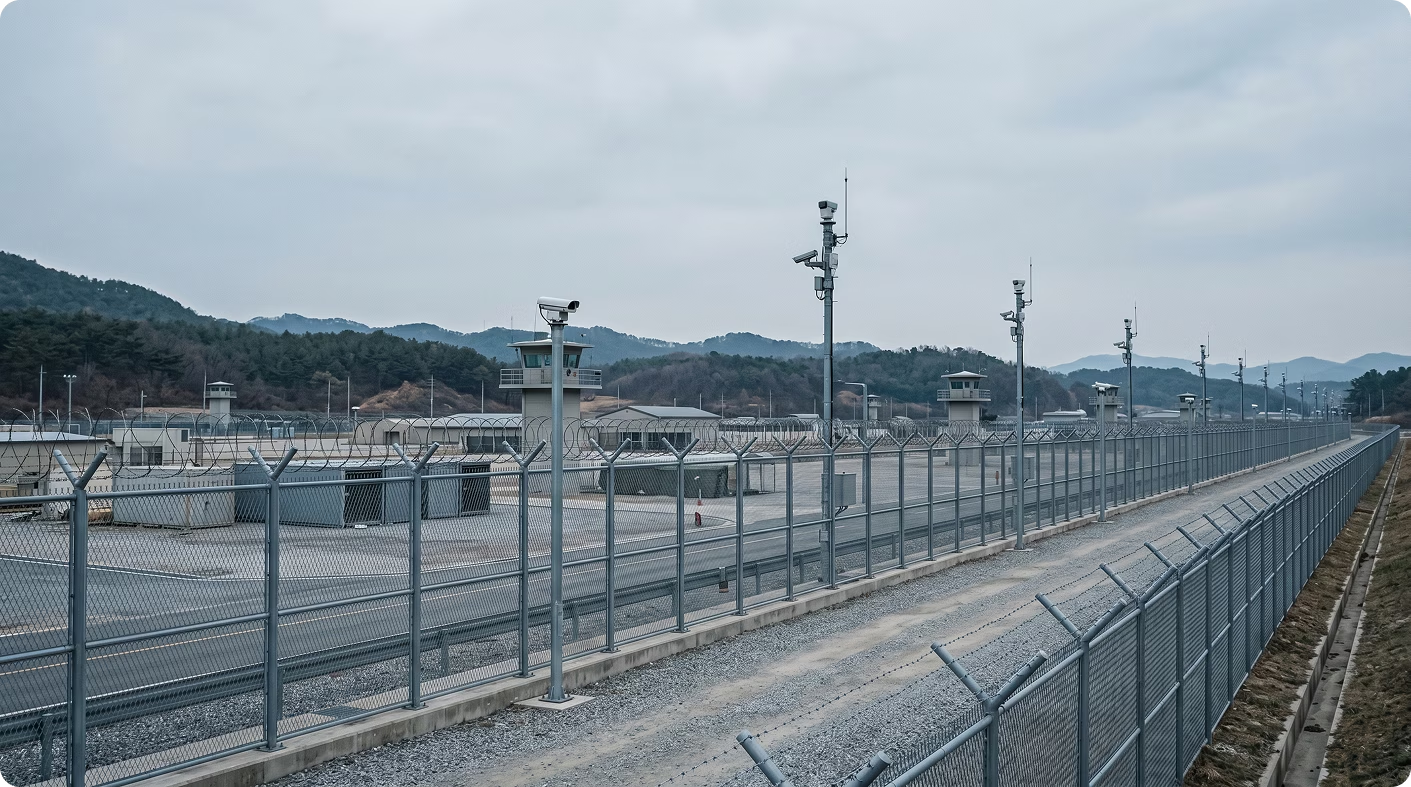
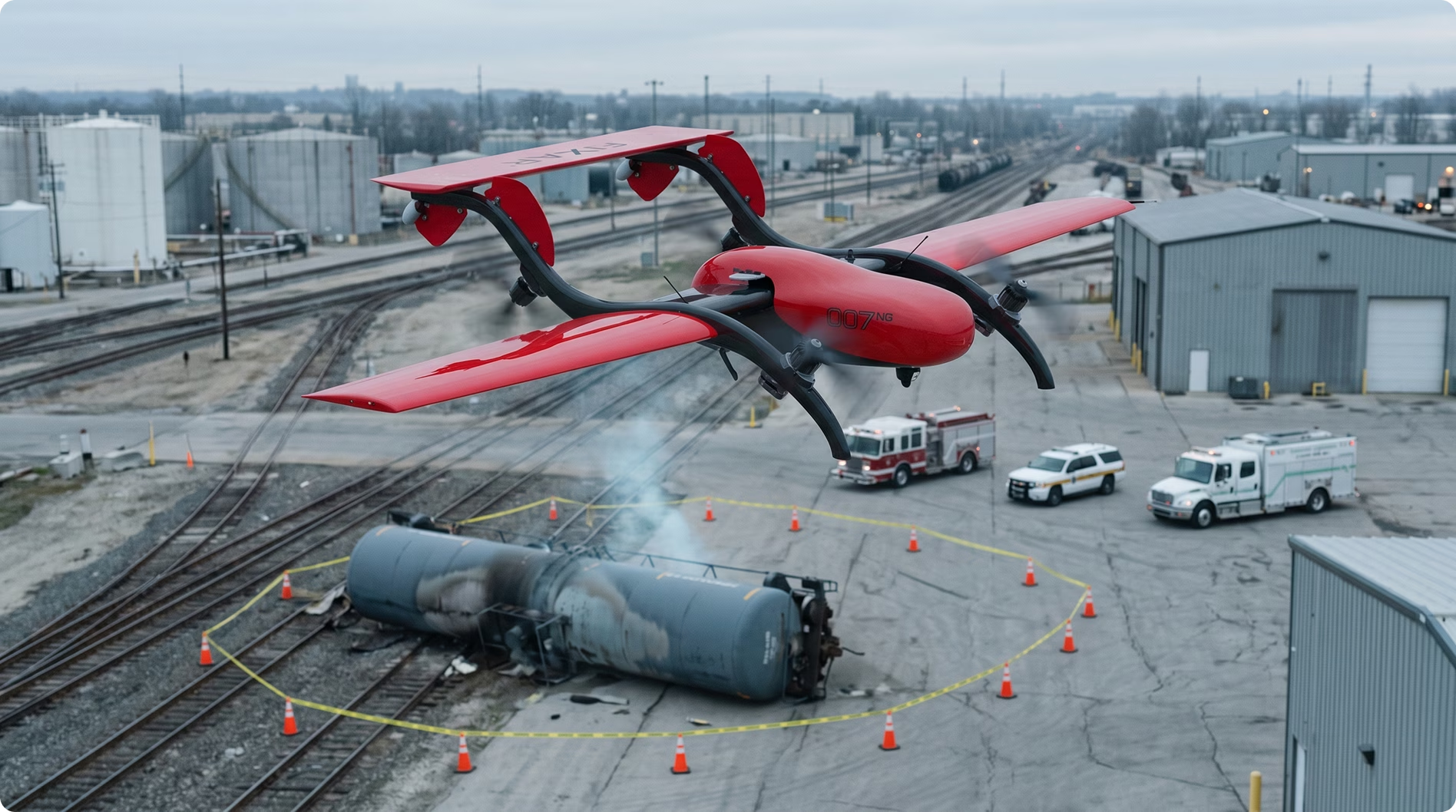
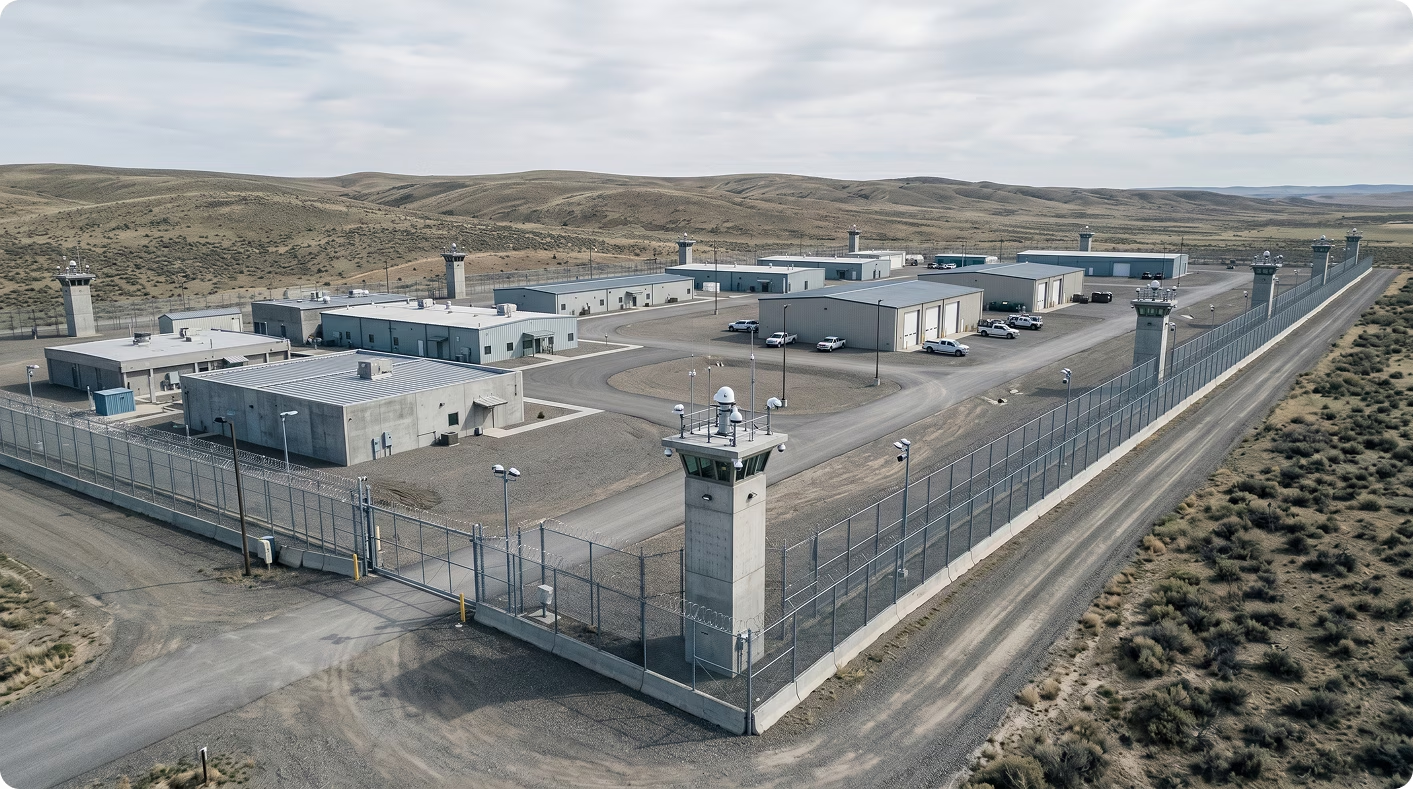
Military bases, logistics hubs, and critical infrastructure often extend across wide geographic areas with multiple access points and operational zones.
Maintaining continuous awareness across these environments requires more than occasional UAV flights.
FIXAR supports structured monitoring of:
- defense installations;
- logistics centers;
- industrial facilities;
- transportation infrastructure;
- government sites.
By enabling repeatable mission execution, the platform helps organizations maintain consistent situational awareness while simplifying day-to-day operations.
Reducing operational complexity
Routine surveillance should not require complex mission planning every time a UAV is deployed.
FIXAR streamlines recurring operations through autonomous mission planning and standardized workflows, allowing security teams to focus on incident response rather than flight preparation.
This is particularly valuable in organizations where UAV operations form part of broader security procedures rather than dedicated aviation programs.
Supporting scalable deployment
As UAV programs expand, maintaining consistency across multiple sites becomes increasingly important.
FIXAR helps organizations develop scalable operational models that can be applied across different facilities while preserving standardized procedures, training requirements, and mission execution logic.
This supports long-term growth without introducing unnecessary operational complexity.
Preparing for procurement in South Korea
Companies entering the South Korean market should think beyond individual tenders.
Long-term success depends on becoming procurement-ready before opportunities arise.
Several practical steps can strengthen market positioning.
Understand procurement requirements early
Organizations should become familiar with the structure of DAPA programs, supplier qualification processes, and KONEPS procurement procedures before pursuing individual opportunities.
Early preparation reduces barriers during formal procurement.
Develop procurement-ready documentation
Well-prepared documentation demonstrates operational maturity and reduces evaluation risk.
Organizations should prepare:
- operational concepts;
- deployment methodologies;
- technical specifications;
- implementation plans;
- lifecycle support models;
- maintenance procedures.
Comprehensive documentation often distinguishes mature suppliers from early-stage technology providers.
Invest in local partnerships
Collaborating with Korean defense contractors, systems integrators, or industrial technology partners can strengthen procurement positioning and improve implementation capability.
Local expertise is particularly valuable when adapting solutions to national procurement requirements.
Demonstrate operational maturity
South Korean buyers consistently prioritize solutions that have moved beyond proof-of-concept.
Organizations should show how their technology performs during routine operations, how missions can be repeated consistently, and how the solution can be supported over its operational lifecycle.
Frequently Asked Questions
What is DAPA?
The Defense Acquisition Program Administration (DAPA) is South Korea's central defense procurement authority. It oversees acquisition planning, capability development, and defense modernization programs.
What is KONEPS?
KONEPS is South Korea's national electronic procurement platform. It manages supplier registration, tender announcements, bid submissions, and contract administration for public-sector procurement.
Can foreign UAV companies participate in South Korean procurement?
Yes. International companies can participate, particularly when they work with local partners, meet procurement requirements, and demonstrate long-term operational support.
Why is autonomous surveillance a priority?
Military bases, industrial facilities, and critical infrastructure require frequent monitoring over large areas. Autonomous UAV operations help improve coverage, increase consistency, and reduce the burden of routine patrols.
What makes a procurement-ready UAV solution?
Organizations should demonstrate operational reliability, standardized deployment procedures, strong technical documentation, lifecycle support, and the ability to integrate into existing security operations.
How does FIXAR support South Korean defense projects?
FIXAR enables organizations to establish structured autonomous missions for perimeter security, infrastructure monitoring, and recurring surveillance, helping operators build scalable UAV programs that align with South Korea's disciplined procurement environment.
Conclusion
South Korea's defense and public-sector security market is defined by structured procurement, operational discipline, and long-term capability planning.
For UAV companies, success depends on more than innovative technology. Organizations must demonstrate that their solutions can be deployed reliably, integrated into existing operational procedures, and supported throughout their lifecycle.
Companies that understand procurement requirements, invest in local partnerships, and present autonomous UAVs as a repeatable operational capability, rather than simply an aircraft, will be significantly better positioned to compete in one of Asia-Pacific's most sophisticated defense markets.
Looking to enter South Korea's defense market?
Whether your organization is preparing for DAPA opportunities, building relationships with Korean systems integrators, or developing procurement-ready UAV solutions, FIXAR can help strengthen your market-entry strategy.
Our team supports partners with:
- procurement-ready technical documentation;
- operational concept development;
- autonomous mission workflow design;
- deployment planning for security operations;
- support for local integration strategies;
- technical consultation for defense and critical infrastructure projects.
Contact the FIXAR team to discuss how FIXAR can support your next procurement opportunity in South Korea.







.svg)