.svg)
Why European defence procurement is different
Companies entering the European defense market often expect procurement to follow the same logic as national military acquisition programs.
In reality, European funding is designed to build capabilities rather than purchase products.
Instead of evaluating individual platforms in isolation, European programs encourage organizations to combine technologies, industrial expertise, and operational knowledge into collaborative projects that address shared security challenges.
This approach reflects several long-term strategic priorities.
Across Europe, governments are investing in:
- strategic autonomy;
- industrial resilience;
- cross-border interoperability;
- supply-chain security;
- UAV innovation;
- collaborative capability development.
For UAV companies, this means success depends not only on the quality of the aircraft but also on the value the technology adds to a larger operational ecosystem.
Organizations should therefore position themselves as contributors to mission capability rather than suppliers of standalone hardware.
The funding programs shaping Europe's defence ecosystem
Several European initiatives are driving investment in autonomous systems and collaborative capability development.
Understanding how these programs differ helps organizations identify the right entry points.
European Defence Fund (EDF)
The European Defence Fund is the European Union's flagship program for collaborative defense research and capability development.
Rather than funding individual companies, EDF supports multinational consortiums working on technologies that strengthen Europe's defense capabilities.
Projects are typically evaluated on their ability to:
- address strategic capability gaps;
- encourage cross-border cooperation;
- strengthen the European defense industrial base;
- accelerate innovation;
- deliver practical operational value.
For UAV developers, success depends on demonstrating how autonomous systems contribute to broader operational objectives rather than presenting aircraft as standalone solutions.
European Defence Industry Programme (EDIP)
While EDF focuses primarily on research and capability development, EDIP aims to strengthen Europe's defense industrial readiness.
The program emphasizes:
- collaborative production;
- industrial scalability;
- supply-chain resilience;
- manufacturing capacity;
- long-term capability delivery.
Organizations participating in EDIP projects should be prepared to demonstrate both technical maturity and the ability to support industrial deployment at scale.
NATO DIANA
Although separate from European Union funding mechanisms, NATO's Defence Innovation Accelerator for the North Atlantic (DIANA) has become an increasingly important pathway for UAV technologies.
The program supports emerging solutions with potential applications across both civilian and defense environments.
For UAV companies, DIANA offers opportunities to validate technologies, collaborate with defense stakeholders, and demonstrate operational relevance before wider adoption.
European Defence Agency (EDA)
The European Defence Agency plays a central role in promoting cooperation between member states and identifying common capability priorities.
While the EDA does not replace national procurement, its initiatives help shape future collaboration in areas such as autonomous systems, interoperability, and capability development.
Organizations that understand these priorities are often better positioned to participate in future multinational projects.
Where UAV UAVs deliver the greatest operational value
European defense funding increasingly supports technologies that generate value across both civilian and military environments.
This UAV approach strengthens investment cases by enabling organizations to address multiple operational priorities using a common technological foundation.
The following applications consistently align with current European funding priorities.
Border security and situational awareness
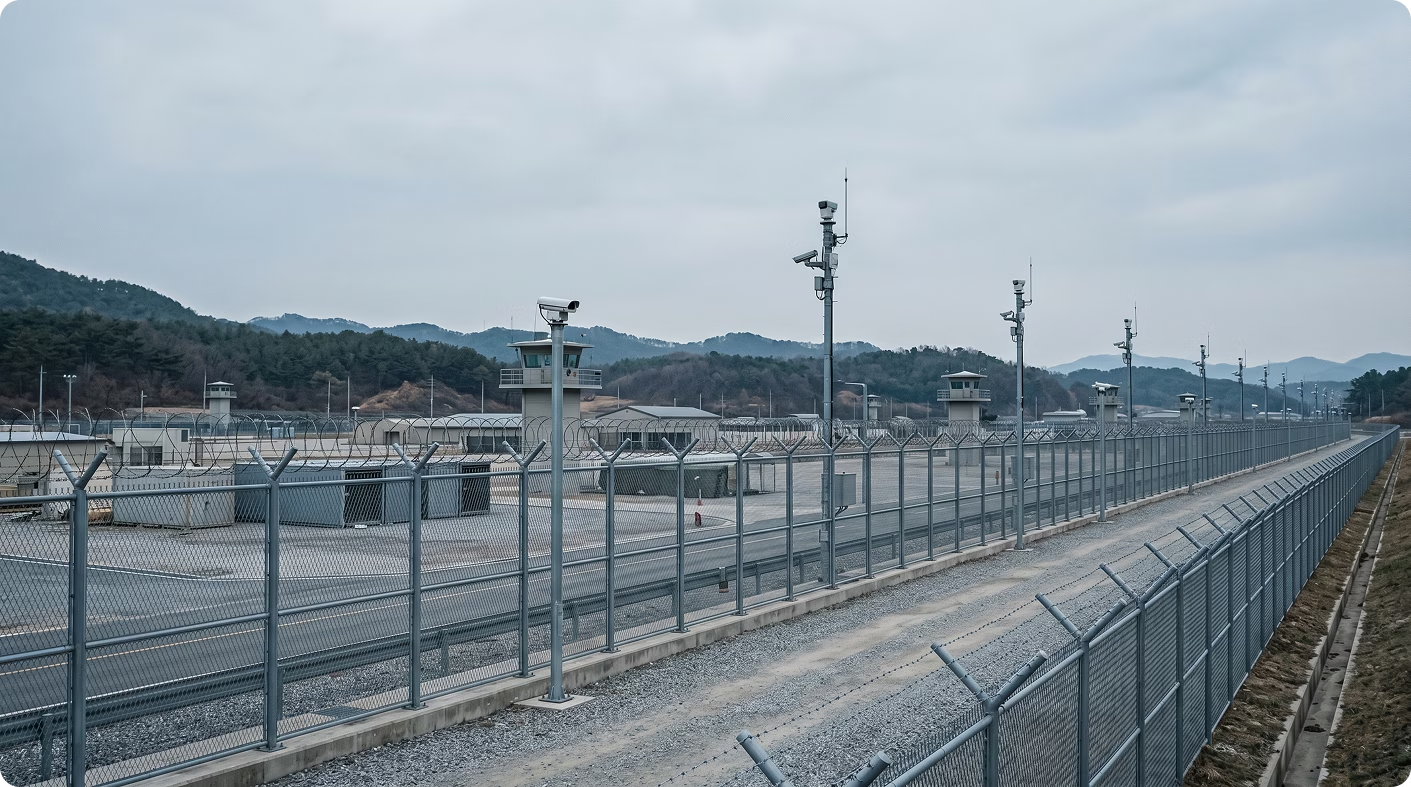
European agencies are investing in technologies that improve visibility across extensive land and maritime borders.
Autonomous UAV operations help organizations monitor remote areas more efficiently while supporting faster assessment of developing situations.
Typical applications include:
- border patrol support;
- remote-area observation;
- infrastructure monitoring;
- coastal surveillance;
- access route assessment.
The emphasis is on persistent situational awareness rather than continuous manual patrols.
Critical infrastructure protection
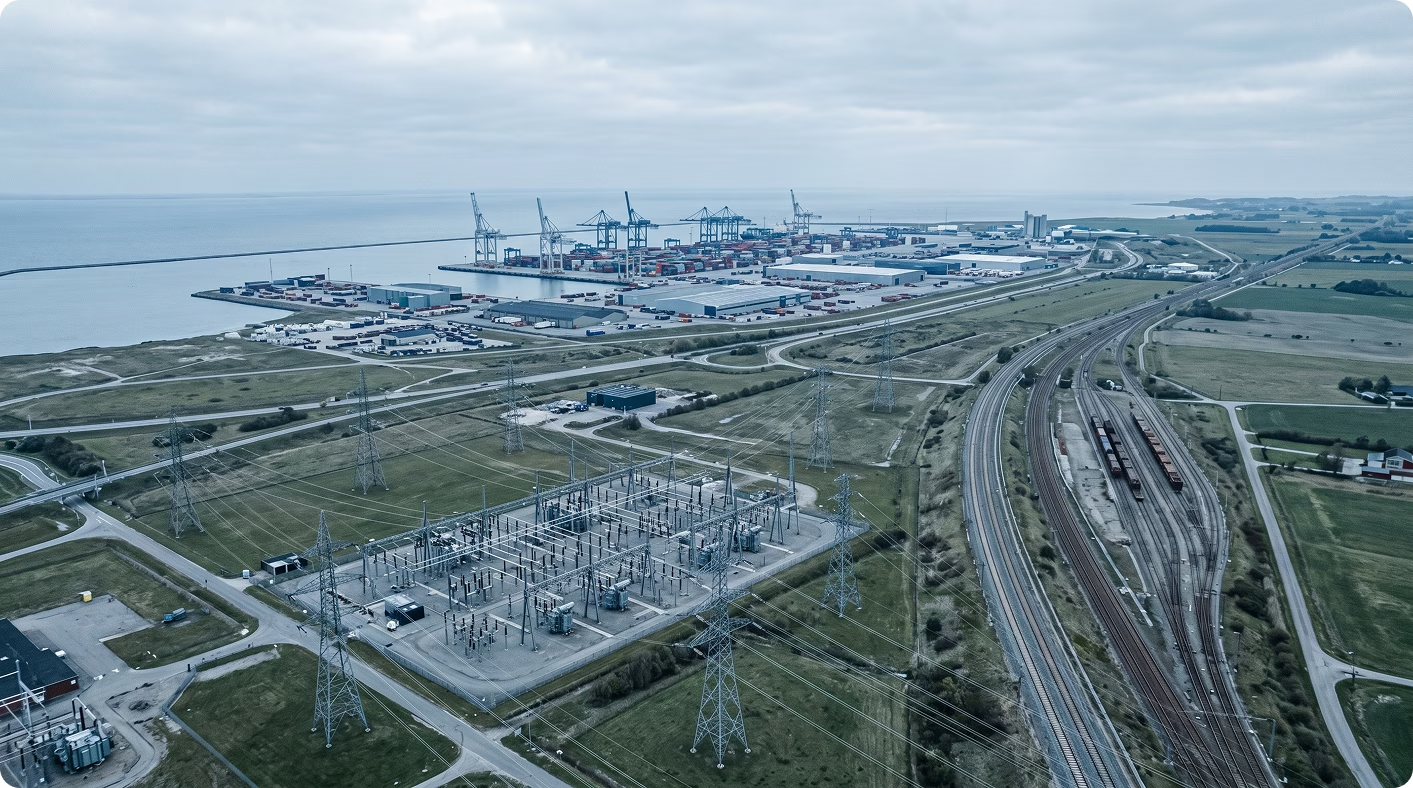
Energy facilities, transportation networks, communications infrastructure, and public utilities are increasingly recognised as strategic assets requiring continuous monitoring.
Autonomous UAV operations support recurring inspection and surveillance by improving visibility across geographically dispersed infrastructure while reducing the operational burden on personnel.
Energy and industrial security
Europe's focus on energy resilience has increased demand for technologies capable of monitoring pipelines, substations, renewable energy facilities, and other critical infrastructure.
Repeatable UAV missions help operators inspect distributed assets more efficiently while supporting maintenance planning and infrastructure resilience.
Emergency response and civil protection
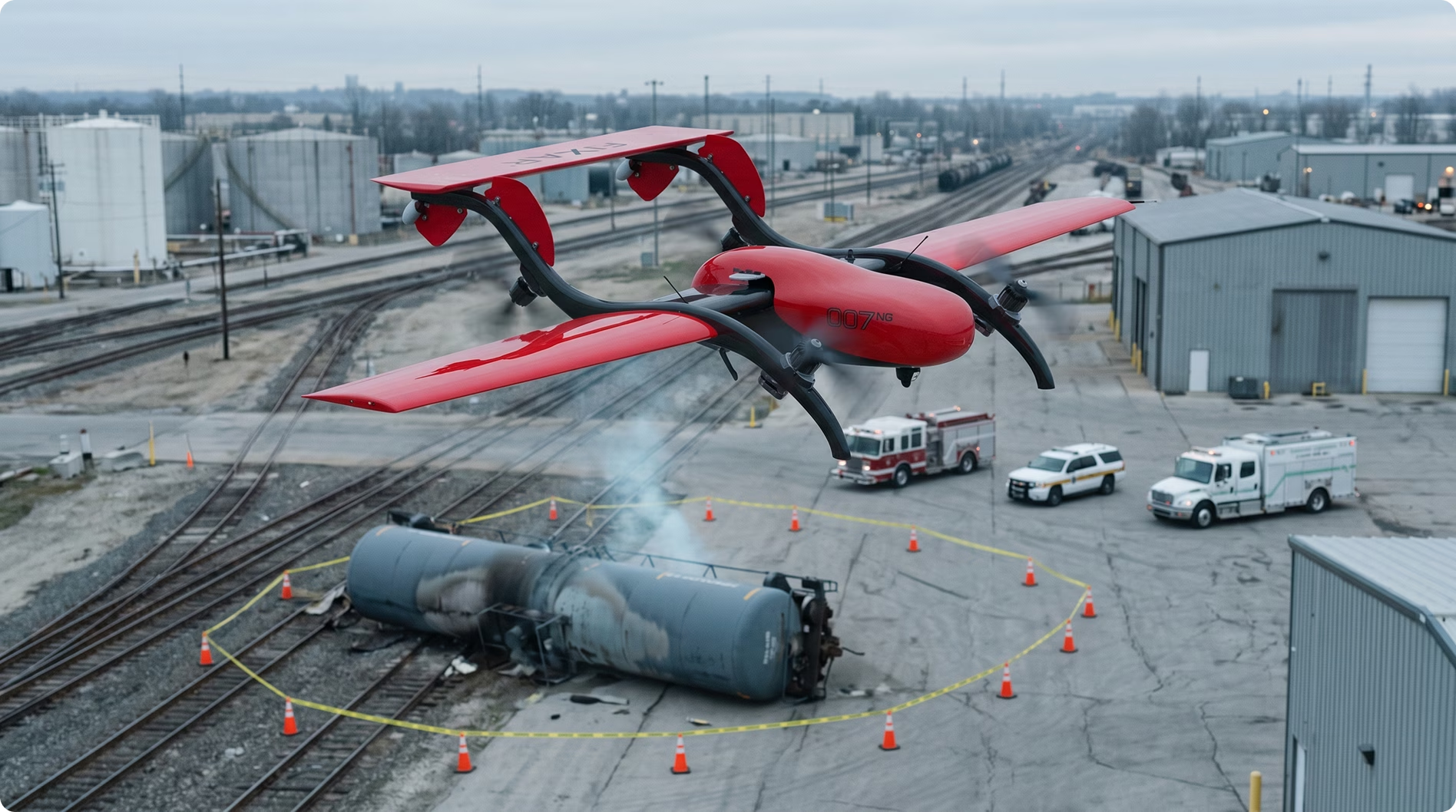
Wildfires, floods, and other emergencies frequently require rapid situational awareness before ground teams can safely access affected areas.
Because UAV technologies can support both civil protection and defense-related operations, they fit naturally within Europe's UAV funding strategy.
Maritime and coastal monitoring
Coastal infrastructure, ports, and maritime transport corridors play a growing role in European resilience planning.
Autonomous UAVs provide an additional layer of observation that supports infrastructure awareness, environmental monitoring, and security operations across extensive coastal regions.
Building a competitive consortium proposal
Joining a European defense consortium requires more than innovative technology.
Project coordinators are assembling multidisciplinary teams capable of delivering complete operational capabilities rather than individual products.
For UAV companies, success depends on demonstrating how autonomous systems strengthen the overall project, not simply adding another technology component.
The strongest proposals consistently address five key areas.
Define your operational role
One of the most common weaknesses in consortium applications is an unclear division of responsibilities.
Rather than presenting themselves as "drone providers," successful organizations define a specific operational contribution.
For example:
- autonomous infrastructure monitoring;
- border surveillance support;
- persistent situational awareness;
- recurring inspection workflows;
- autonomous mission planning;
- distributed-area monitoring.
A clearly defined role helps consortium coordinators understand where the technology fits within the wider project architecture.
Demonstrate mission value
European evaluators rarely assess technology in isolation.
Instead, they ask how a capability contributes to broader operational objectives.
Strong proposals explain:
- which operational challenge is being addressed;
- how autonomous UAV operations improve mission performance;
- how the capability integrates with other project components;
- what measurable outcomes are expected?
Mission contribution is significantly more persuasive than lists of technical specifications.
Show interoperability
Most EDF and EDIP projects involve organizations from several countries working across different operational environments.
As a result, interoperability is a central evaluation criterion.
Organizations should explain how their solution supports:
- multi-partner operations;
- standardized workflows;
- integration with existing systems;
- data exchange;
- coordinated mission planning.
The easier a technology fits into a consortium ecosystem, the stronger its overall value proposition.
Demonstrate technical maturity
European defense programs increasingly prioritize technologies that can move beyond research into operational deployment.
Applicants should provide evidence of:
- validated operational concepts;
- repeatable deployment methods;
- implementation planning;
- realistic integration pathways;
- technology readiness.
Demonstrating deployment maturity often has a greater impact than introducing additional experimental features.
Build a long-term capability narrative
European funding is intended to strengthen long-term industrial capacity, not just complete individual projects.
Organizations should therefore explain how their technology contributes to:
- strategic autonomy;
- industrial resilience;
- future capability development;
- scalable deployment;
- sustainable European partnerships.
This broader narrative aligns closely with current EU defense priorities.
How FIXAR supports European defence collaboration
Successful European defense projects require technologies that are not only innovative but also practical to integrate into multinational programs.
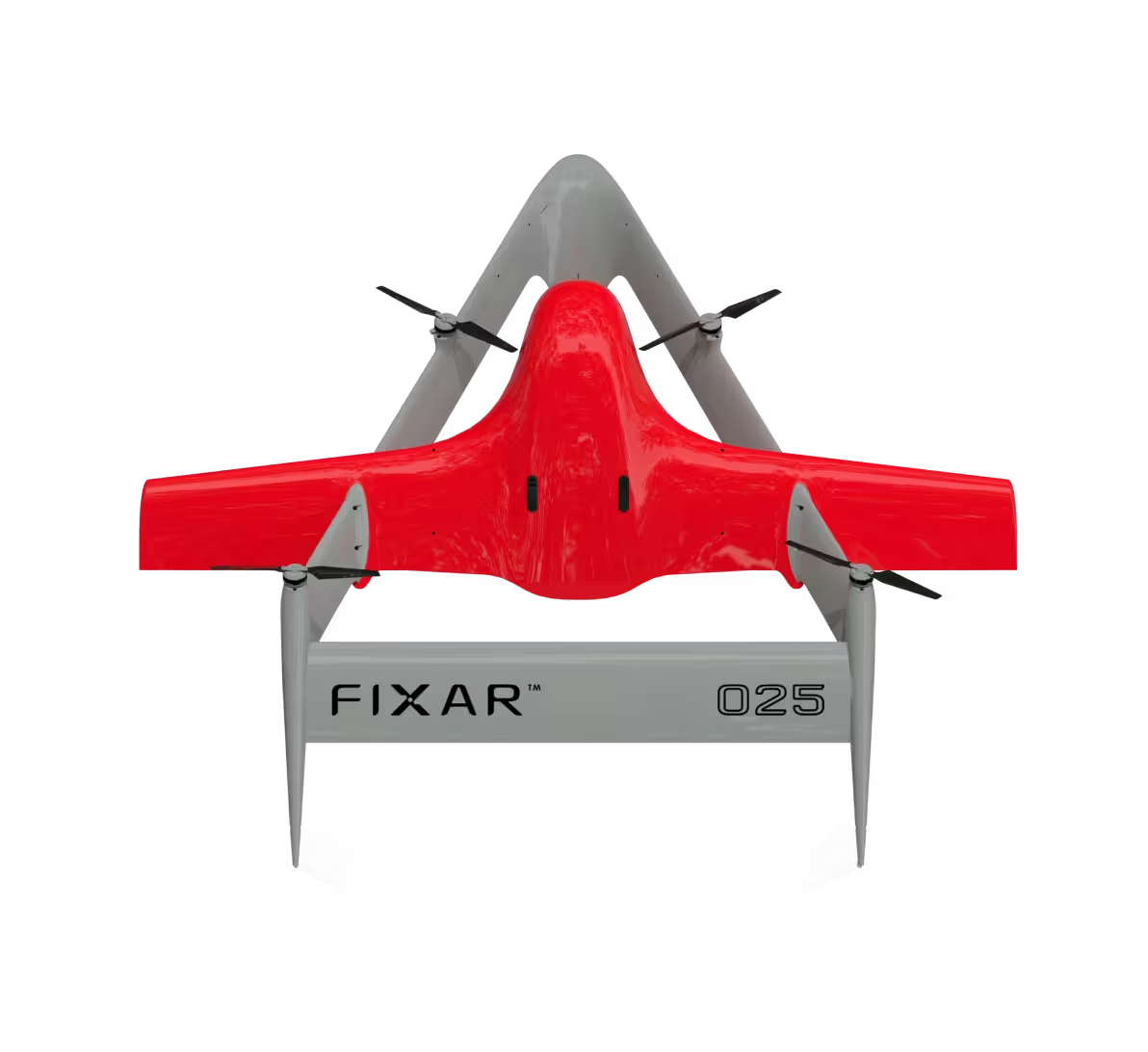
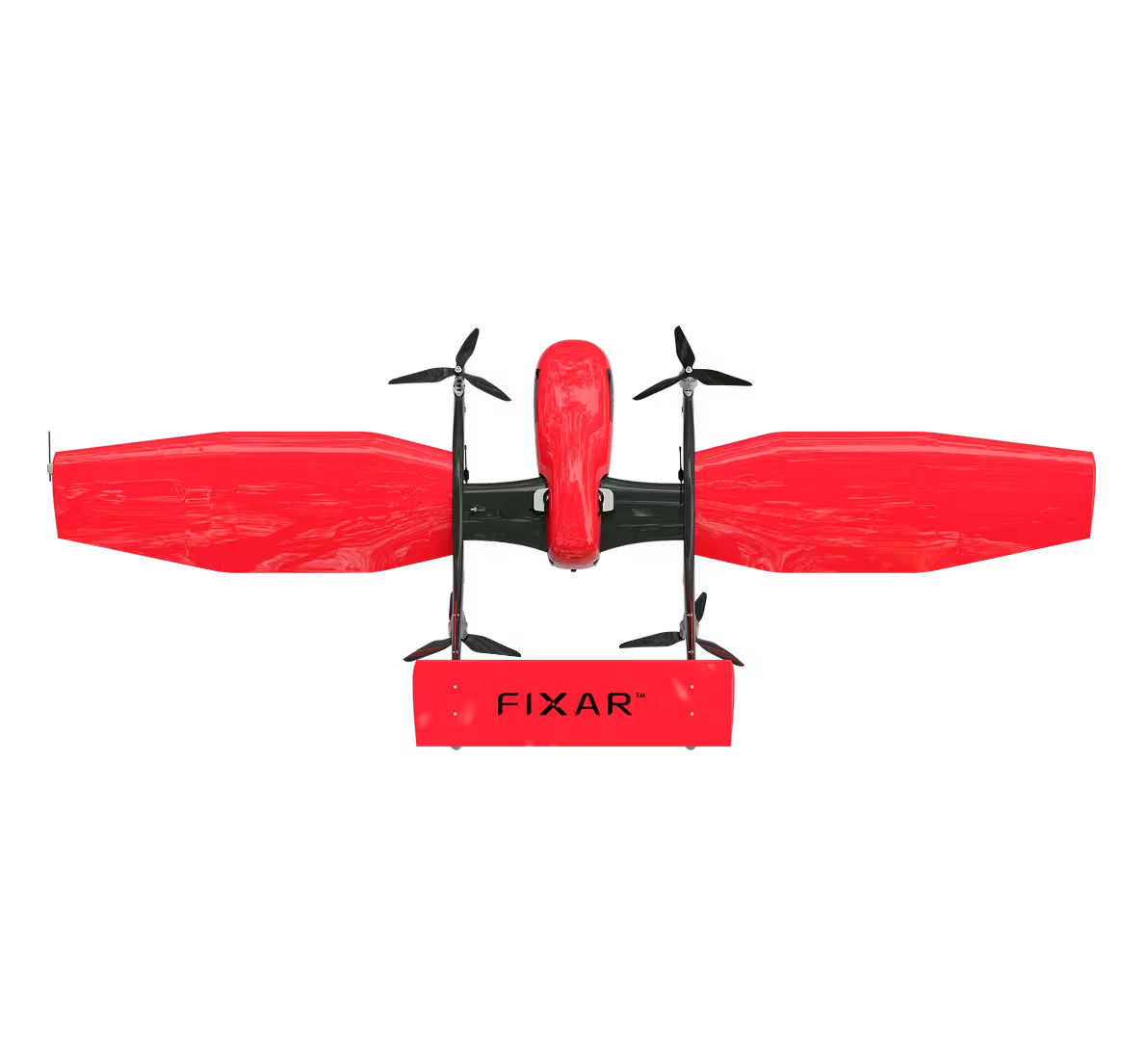
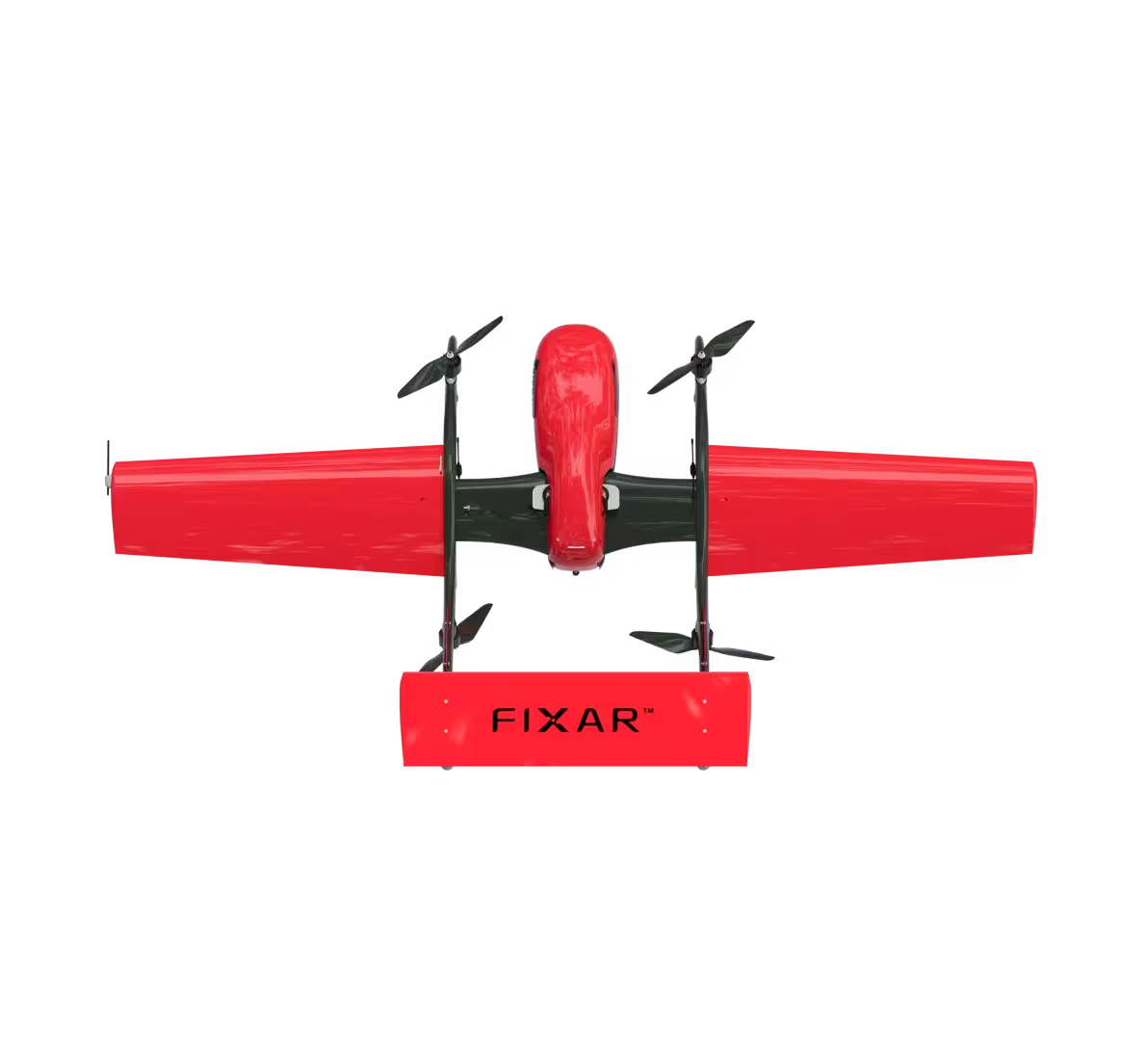
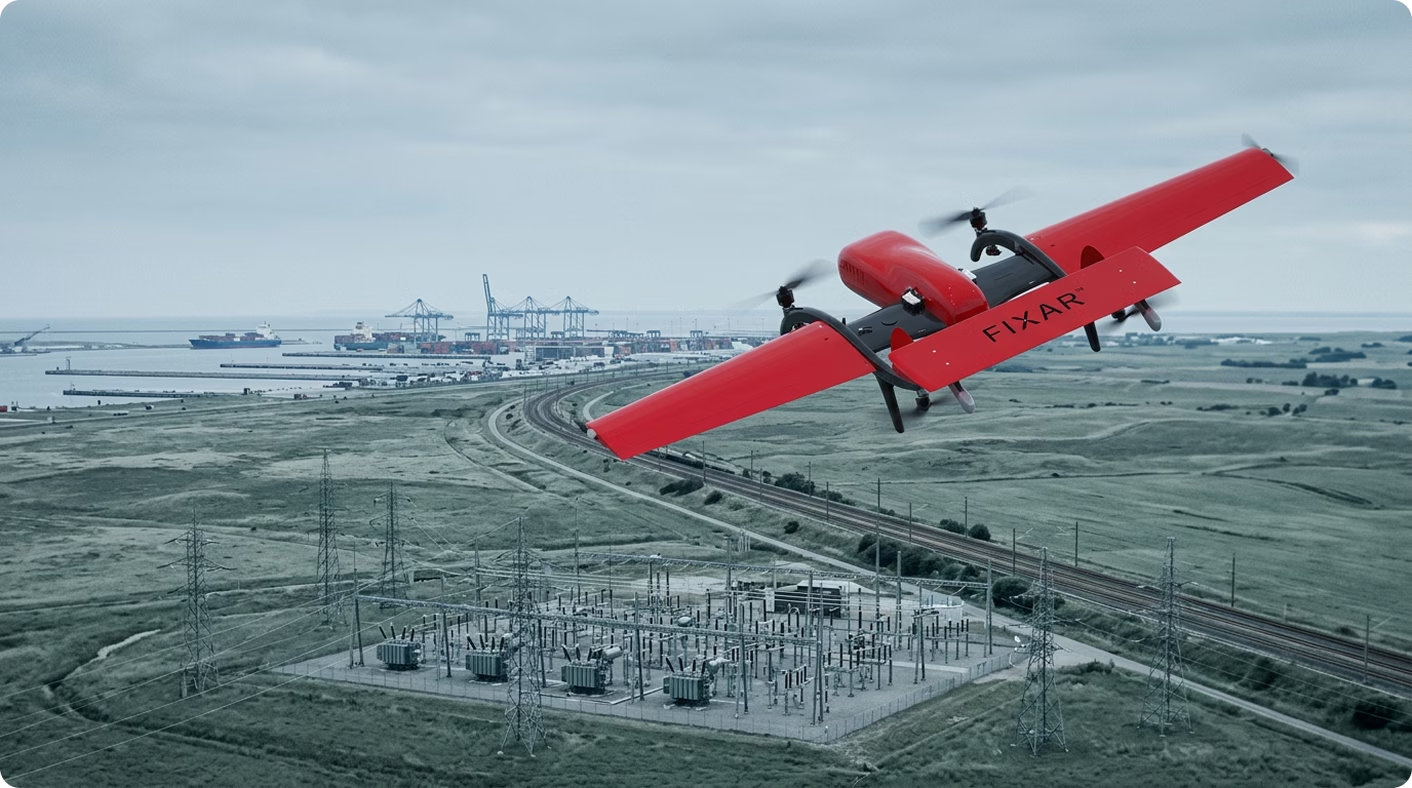
FIXAR has been developed to support this type of collaborative deployment.
Rather than functioning as a standalone UAV platform, FIXAR enables consortium partners to establish repeatable autonomous operations that integrate into larger capability-development projects.
For organizations participating in EDF, EDIP, or other multinational initiatives, this provides a structured foundation for developing scalable operational concepts rather than isolated technology demonstrations.
Supporting mission-oriented capability development
European consortiums are increasingly expected to demonstrate how individual technologies contribute to complete operational solutions.
FIXAR supports this objective by enabling organizations to develop standardized autonomous workflows for applications such as:
- critical infrastructure monitoring;
- border surveillance;
- persistent reconnaissance;
- emergency response;
- distributed asset inspection;
- autonomous security patrols.
Instead of focusing on individual flights, the platform supports recurring operational missions that can be integrated into broader capability architectures.
Enabling repeatable operational workflows
Collaborative projects require consistency across multiple organizations, operators, and deployment environments.
FIXAR enables consortium partners to establish standardized mission profiles that improve operational repeatability while reducing implementation complexity.
Repeatable workflows support:
- consistent data collection;
- comparable operational results;
- simplified training;
- easier knowledge transfer;
- improved multi-partner coordination.
These characteristics become increasingly important as projects transition from research into operational validation.
Supporting cross-border collaboration
European defense programs rarely involve a single organization or a single country.
Technologies must support cooperation across diverse operational environments while remaining flexible enough to adapt to different mission requirements.
FIXAR helps organizations establish common operational approaches that facilitate collaboration between research institutions, defense contractors, government agencies, and industrial partners.
This contributes to more efficient project execution and stronger interoperability throughout the consortium.
Reducing operational complexity
Large collaborative projects often involve multiple technical work packages, demonstration activities, and field trials.
Reducing operational complexity allows project teams to focus on capability validation rather than routine mission preparation.
By streamlining mission planning and standardizing operational procedures, FIXAR supports more efficient demonstration campaigns and smoother technology integration.
Frequently Asked Questions
What is the European Defence Fund (EDF)?
The European Defence Fund supports collaborative research and capability development projects involving organizations from multiple EU member states. Funding is awarded to consortiums that address strategic defense priorities through joint innovation and industrial cooperation.
What is the European Defence Industry Programme (EDIP)?
EDIP complements the EDF by focusing on strengthening Europe's defense industrial base, improving production readiness, and supporting collaborative capability development across member states.
Can SMEs participate in EDF projects?
Yes. Small and medium-sized enterprises play an important role in many EDF consortiums, particularly when they contribute specialized technologies or expertise that complement larger industrial partners.
What makes a consortium proposal competitive?
Successful proposals combine strong technical expertise with clearly defined partner roles, operational relevance, interoperability and a credible plan for transitioning research outcomes into deployable capabilities.
Why are UAV technologies important?
UAV technologies create value across both civilian and defense sectors, making them particularly attractive for European programs that emphasize resilience, strategic autonomy, and efficient use of public investment.
How does FIXAR support collaborative defense projects?
FIXAR enables consortium partners to integrate autonomous UAV operations into broader capability-development initiatives through standardized mission planning, repeatable operational workflows, and scalable deployment models suitable for multinational projects.
Conclusion
Europe's defense innovation ecosystem is increasingly built around collaboration rather than individual procurement. Programs such as the European Defence Fund and the European Defence Industry Programme are designed to strengthen shared capabilities, industrial resilience, and technological sovereignty through multinational cooperation.
For UAV companies, this changes the path to market. Success depends not only on developing advanced autonomous systems but on demonstrating how those systems contribute to larger operational objectives, integrate with complementary technologies, and support long-term capability development.
Organizations that understand this collaborative model and position themselves as valuable consortium partners rather than standalone suppliers will be better placed to participate in Europe's next generation of defense and UAV programs.
Looking to join a European defence consortium?
Whether your organization is preparing an EDF proposal, exploring EDIP opportunities, or looking for experienced partners in autonomous UAV technologies, FIXAR can help strengthen your consortium strategy.
Our team supports partners with:
- operational concept development;
- procurement- and consortium-ready technical documentation;
- autonomous mission workflow design;
- integration planning for multinational projects;
- support for demonstrations and capability validation;
- collaboration on UAV initiatives.
Contact the FIXAR team to discuss how autonomous UAV operations can enhance your next European defense project.






.svg)