.svg)
Why Saudi Arabia matters for industrial UAV companies
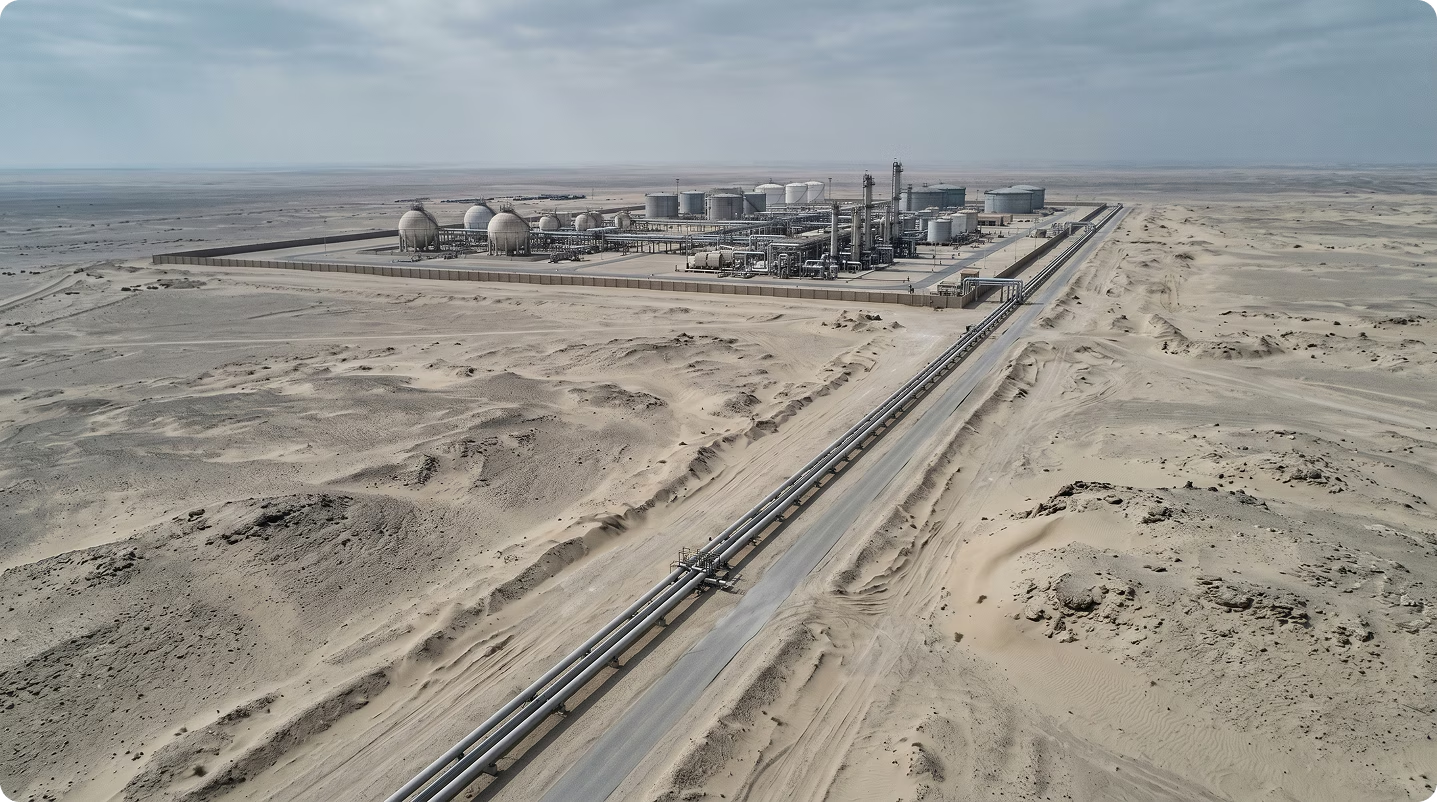
Saudi Arabia manages one of the world's largest portfolios of oil and gas infrastructure, including production facilities, pipelines, processing plants, storage terminals, and utility networks that extend across vast desert regions.
Maintaining these assets requires continuous inspection, yet conventional field operations are expensive, time-consuming, and often expose personnel to challenging environmental conditions.
At the same time, the Kingdom is investing heavily in industrial digitalization through Vision 2030, creating strong demand for technologies that improve operational efficiency without increasing workforce requirements.
For UAV solution providers, this creates an attractive market, but one with procurement rules that differ significantly from Europe or North America.
Technology alone is rarely enough. Buyers expect suppliers to demonstrate operational maturity, long-term support capabilities and a credible localization strategy before moving beyond pilot projects.
Understanding how UAV procurement works in Saudi Arabia
One of the most common misconceptions among international UAV companies is that Saudi Arabia operates like a traditional innovation market.
In practice, most industrial UAV projects are driven by operational requirements rather than experimentation.
Organizations procure inspection capabilities because they need to reduce maintenance costs, improve infrastructure visibility, or strengthen health and safety performance, not because they want to deploy drones.
As a result, procurement teams evaluate suppliers based on their ability to deliver sustainable operational outcomes rather than the technical specifications of an aircraft.
This shift fundamentally changes how UAV companies should position themselves.
Vision 2030
Vision 2030 is the Kingdom's long-term economic transformation strategy.
For UAV suppliers, its importance lies in the government's continued investment in digital infrastructure, industrial automation, and smart asset management.
Inspection technologies that improve efficiency, safety, and infrastructure resilience closely align with these priorities.
Etimad
Companies interested in public-sector opportunities should become familiar with Etimad, Saudi Arabia's official procurement platform.
Government organizations use the system to publish tenders, register suppliers, and manage procurement workflows.
Preparing procurement-ready technical documentation before opportunities are published significantly improves competitiveness.
iktva
Saudi Aramco's In-Kingdom Total Value Add (iktva) program encourages suppliers to create long-term value inside Saudi Arabia.
Rather than focusing solely on technology, procurement teams increasingly evaluate whether companies can contribute through:
- local partnerships;
- workforce development;
- technical support;
- knowledge transfer;
- sustainable service delivery.
For many industrial projects, localization has become a commercial requirement rather than a competitive advantage.
Where UAV solutions deliver the highest ROI in Saudi Arabia
While drones are used across a growing number of industries, energy infrastructure remains one of the most commercially attractive sectors for UAV deployment in Saudi Arabia.
The reason is simple: operators manage large, geographically dispersed assets that require frequent inspection, yet traditional monitoring methods are often expensive, labour-intensive, and difficult to scale.
As a result, procurement teams increasingly focus on solutions that reduce operational costs, improve infrastructure visibility, and support long-term digital transformation initiatives.
The following applications consistently generate the strongest business case for UAV adoption.
Pipeline integrity management
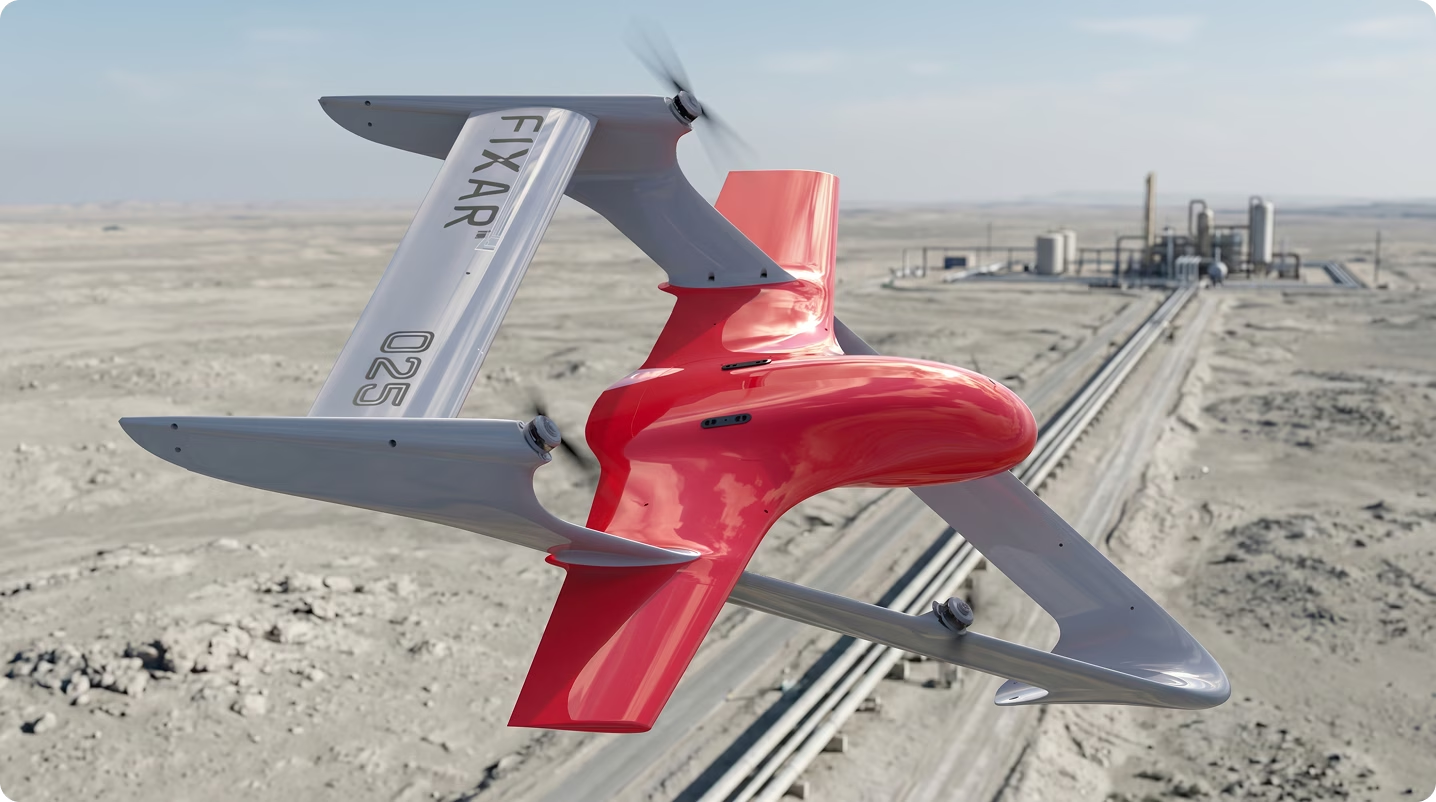
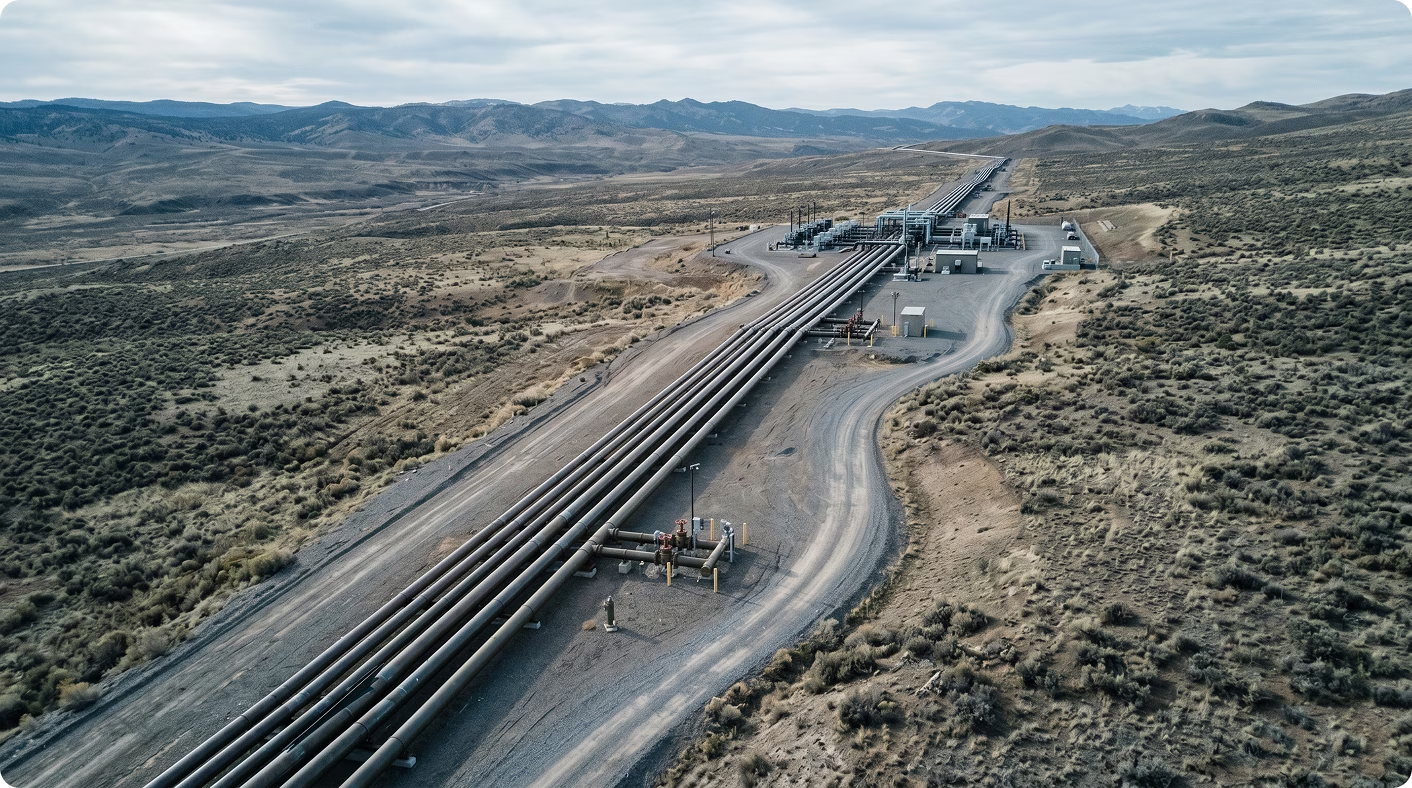
Saudi Arabia operates extensive pipeline networks that connect production facilities, processing plants, and export infrastructure across remote regions.
Inspecting these assets manually often requires significant field resources and lengthy deployment schedules.
Autonomous UAV inspections help operators monitor:
- pipeline rights-of-way;
- erosion and environmental changes;
- unauthorised activity near infrastructure;
- vegetation and access conditions;
- potential integrity risks.
The business value comes from faster inspections, improved coverage, and better decision-making based on more frequent data collection.
For many operators, pipeline inspection remains the most compelling industrial UAV use case.
Remote asset inspection
Remote facilities often present unique operational challenges.
Production sites, pumping stations, substations and utility infrastructure may be located far from operational centres, making routine inspections both costly and time-consuming.
UAV-based inspection programs help reduce unnecessary travel while providing engineering teams with more consistent visibility across distributed assets.
This enables organizations to prioritize maintenance activities more effectively and focus field resources where they are needed most.
Tank farm and storage facility inspection
Storage terminals require regular inspection to maintain safety, regulatory compliance and operational performance.
Traditional inspection methods can involve scaffolding, specialized equipment and temporary disruptions to normal operations.
UAV systems provide a more efficient way to collect visual data from elevated or difficult-to-access structures, supporting:
- routine condition assessment;
- corrosion monitoring;
- roof inspections;
- perimeter reviews;
- maintenance planning.
This reduces inspection time while improving access to inspection data.
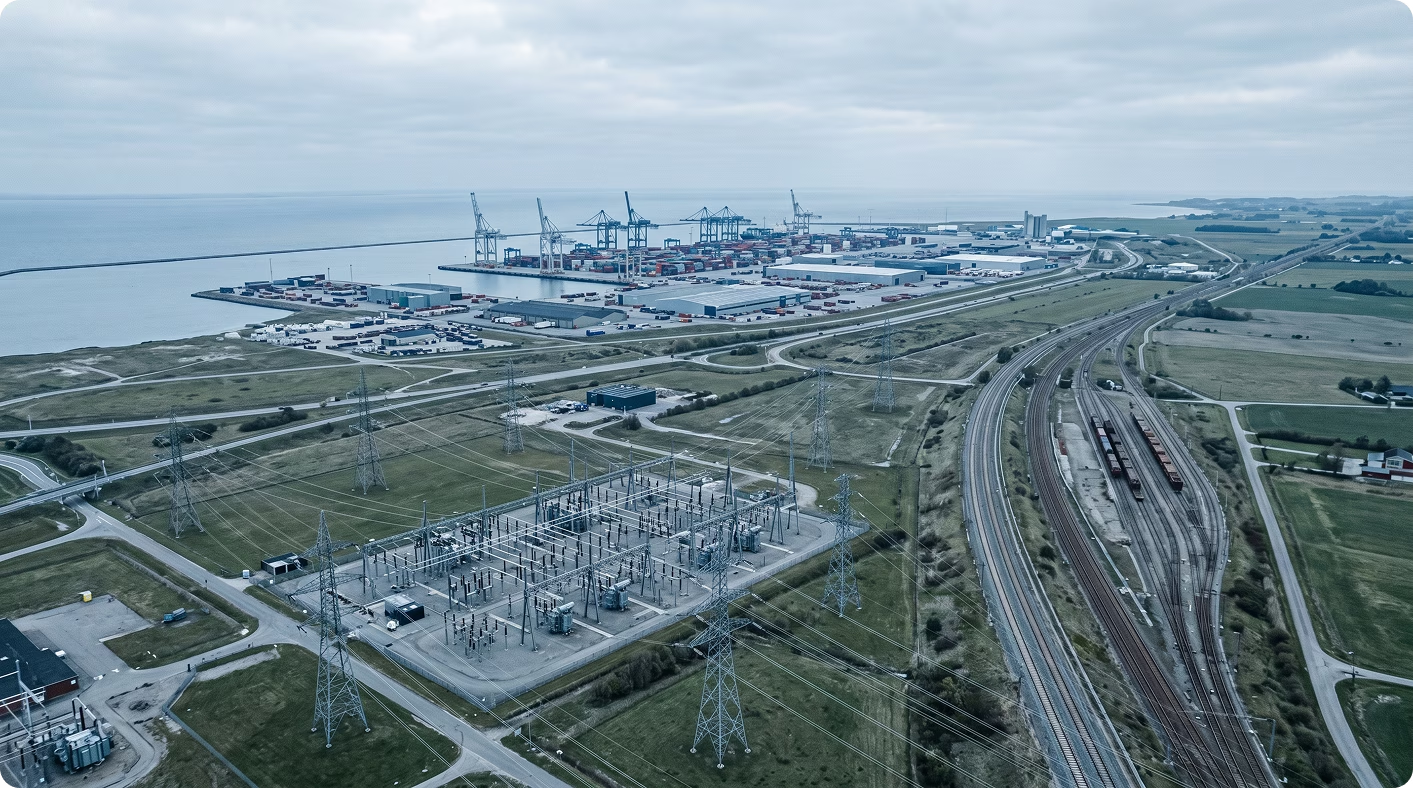
Utility corridor monitoring
In addition to oil and gas infrastructure, Saudi operators manage extensive utility networks that support industrial operations.
Monitoring corridors through conventional methods can be difficult, particularly in remote environments.
Drone inspections provide recurring visibility across:
- power distribution routes;
- utility access roads;
- communications infrastructure;
- industrial support corridors.
These programs become increasingly valuable as infrastructure networks expand.
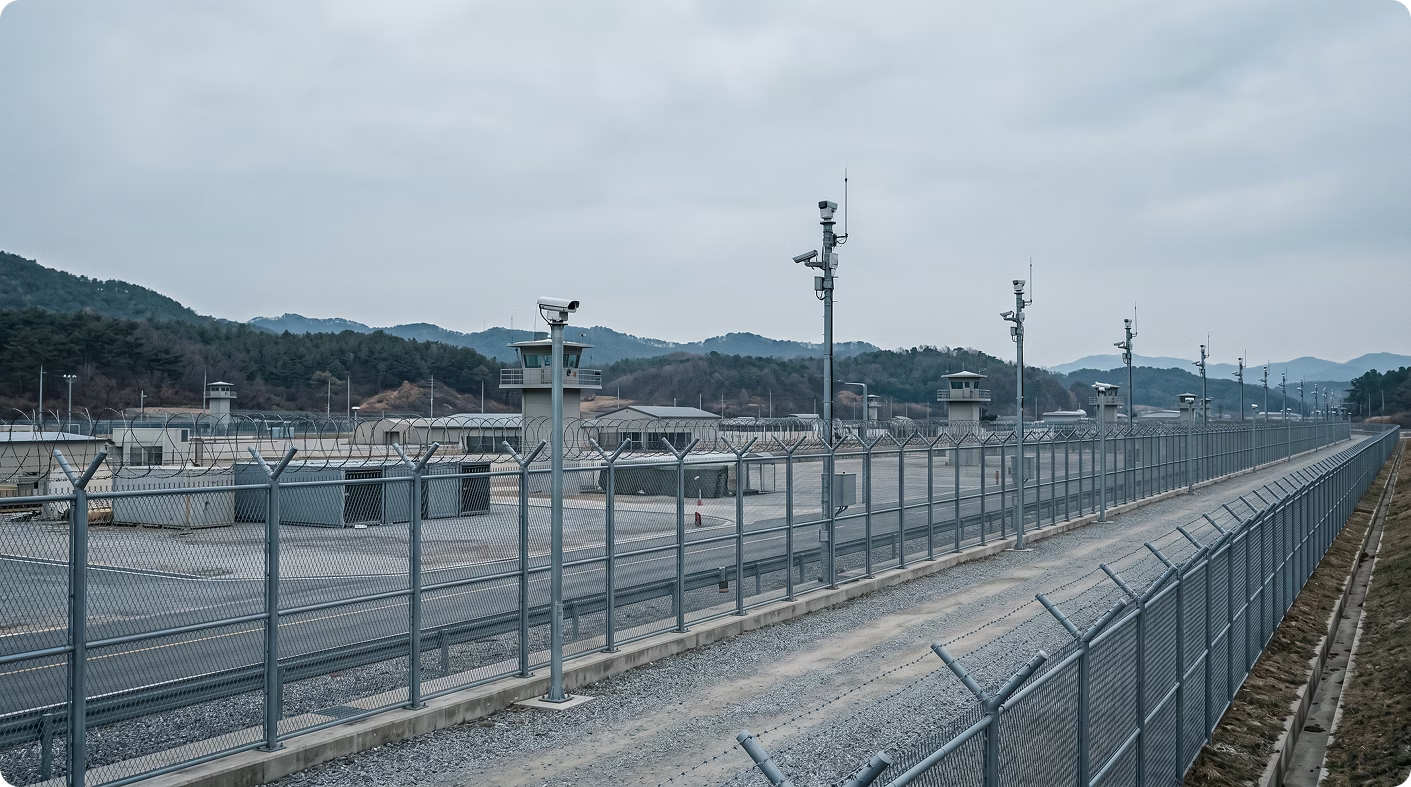
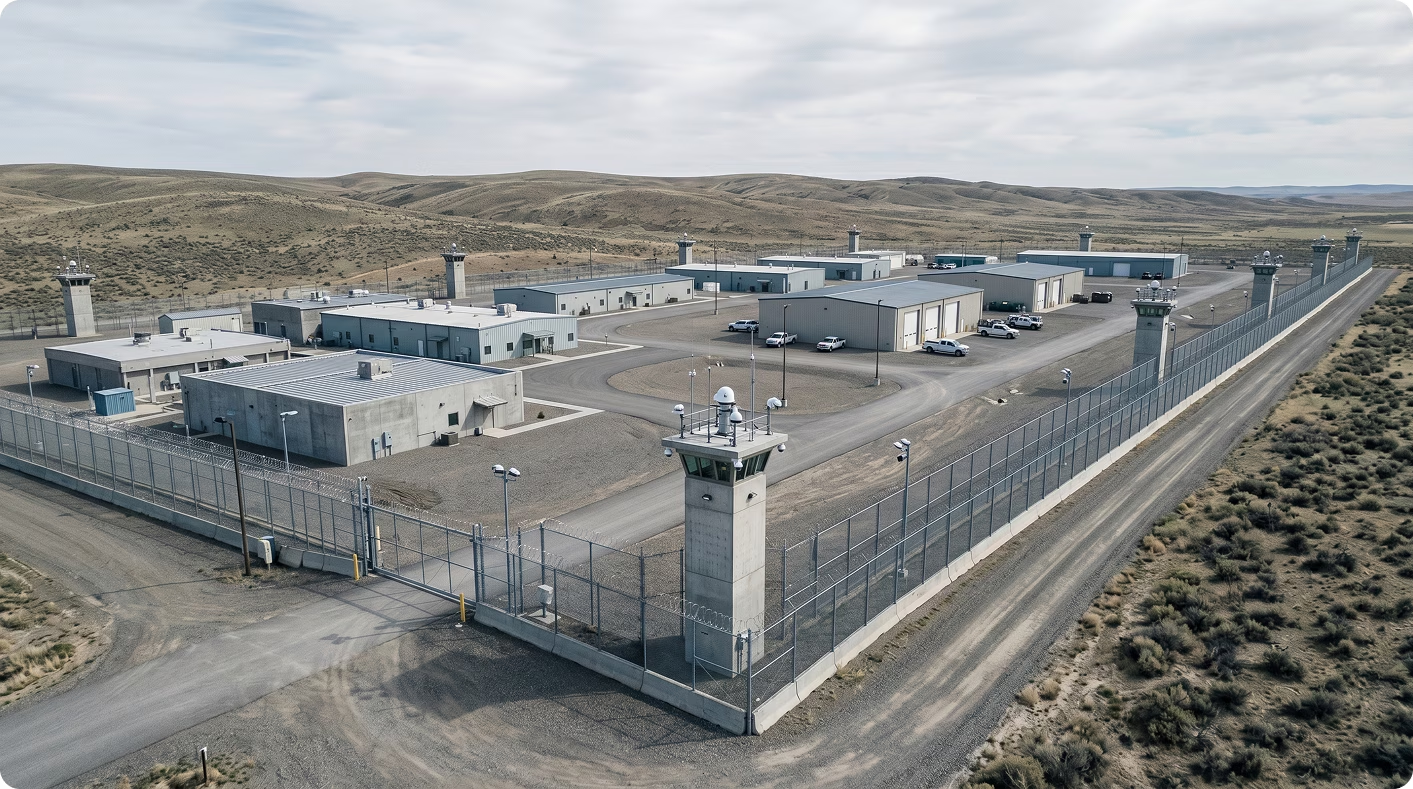
Perimeter security and infrastructure awareness
Critical infrastructure operators are increasingly interested in technologies that improve situational awareness around strategic assets.
While UAVs are not a replacement for physical security systems, they can complement existing security programs by providing rapid aerial assessment and improved visibility across large operational environments.
This is particularly relevant for facilities that cover large geographic areas and require frequent perimeter monitoring.
What Saudi buyers expect from UAV suppliers
One of the biggest mistakes international suppliers make is assuming that procurement decisions are based primarily on technology performance.
In reality, Saudi buyers often place equal – or greater – importance on operational readiness and long-term support capability.
Organizations evaluating UAV solutions typically assess suppliers across several key areas.
Proven operational value
Buyers want evidence that a solution can solve a specific operational challenge.
Strong proposals focus on measurable outcomes such as:
- reduced inspection costs;
- improved workforce safety;
- faster inspection cycles;
- better infrastructure visibility;
- increased maintenance efficiency.
The most successful suppliers position UAVs as a business solution rather than a technology product.
Local support capability
Localization expectations continue to increase across the Kingdom.
Organizations are more likely to engage suppliers that can demonstrate:
- local partnerships;
- technical support capabilities;
- operator training;
- maintenance services;
- long-term commitment to the market.
For strategic infrastructure projects, local presence can significantly influence procurement outcomes.
Scalability
Pilot projects are relatively easy to launch.
Scaling them across dozens of facilities is considerably more difficult.
Saudi buyers increasingly favour solutions that can support:
- standardized workflows;
- recurring inspections;
- multiple operating sites;
- enterprise-wide deployment.
The ability to scale is often more important than the sophistication of individual flights.
Integration with existing operations
Drone programs rarely operate in isolation.
Procurement teams increasingly evaluate how UAV-generated data can support existing systems, such as:
- Enterprise Asset Management platforms;
- GIS systems;
- maintenance programs;
- digital twin initiatives;
- predictive maintenance workflows.
Solutions that integrate with broader operational processes tend to deliver stronger long-term value.
Preparing a successful UAV proposal for Saudi Arabia
Whether responding to a government tender, engaging with a state-owned enterprise or supporting an EPC contractor, successful proposals typically demonstrate much more than technical capability.
The strongest submissions clearly explain:
- the operational challenge being addressed;
- the expected business outcomes;
- the implementation methodology;
- the localization strategy;
- long-term service and support arrangements;
- how UAV operations integrate into existing maintenance processes.
For international suppliers, procurement success increasingly depends on demonstrating operational readiness rather than simply offering advanced technology.
Frequently Asked Questions
Are there grant programs for commercial UAV deployment in Saudi Arabia?
Grant funding plays a relatively limited role in the commercial UAV market. Most industrial projects are financed through enterprise procurement, government modernization initiatives or strategic partnerships with major operators such as Saudi Aramco.
Can foreign UAV companies participate in Saudi government tenders?
Yes. However, companies should understand local procurement requirements, register where applicable and be prepared to demonstrate compliance with localization and operational expectations.
Is a Saudi partner required?
Not in every case, but working with local partners often strengthens market access, improves service delivery and increases procurement credibility, particularly for long-term industrial projects.
How important is localization?
Localization is a strategic priority across Saudi Arabia's industrial sector. Organizations that invest in local partnerships, technical support and workforce development are generally better positioned for major procurement opportunities.
Which industries offer the strongest opportunities for UAV deployment?
Oil and gas remains the largest market, followed by utilities, mining, large-scale infrastructure, industrial inspection and smart city development.
How can FIXAR support organizations entering the Saudi market?
FIXAR supports partners by providing autonomous flight planning technology, procurement-ready technical documentation, repeatable inspection workflows and deployment models suitable for enterprise-scale infrastructure projects.
Conclusion
Saudi Arabia is one of the most promising markets for industrial UAV deployment, but success depends on more than innovative technology.
Organizations that understand procurement practices, invest in localization and align their solutions with operational priorities are better positioned to secure long-term opportunities across the Kingdom's energy sector.
For UAV providers, the opportunity lies not in selling drones, but in delivering inspection capabilities that improve safety, increase operational efficiency and support the digital transformation of critical infrastructure.
Planning to enter the Saudi UAV market?
Whether your organization is preparing for an Etimad tender, developing a localization strategy or exploring inspection opportunities with Saudi Aramco, utilities or EPC contractors, FIXAR can help you build a procurement-ready UAV solution.
Our team can support you with:
- solution positioning for enterprise customers;
- procurement-ready technical documentation;
- inspection workflow design;
- autonomous mission planning;
- localization strategy development;
- technical consultations for industrial UAV deployments.
Get in touch with the FIXAR team to discuss how your organization can successfully enter Saudi Arabia's rapidly growing industrial UAV market.



.svg)