.svg)
Why defense procurement is different
Organizations entering the U.S. defense market often assume that success depends on superior UAV technology.
In practice, procurement decisions are driven by mission requirements, operational trust, and acquisition readiness.
Defense organizations do not buy aircraft because they are autonomous.
They invest in capabilities that improve force protection, reduce operational burden, and support repeatable mission execution.
As a result, suppliers must demonstrate far more than technical innovation.
Procurement teams increasingly evaluate whether a solution can:
- support defined mission objectives;
- integrate into existing operational workflows;
- comply with cybersecurity and supply chain requirements;
- scale across multiple sites and operational environments;
- reduce manpower requirements without increasing operational complexity.
Understanding this procurement mindset fundamentally changes how UAV companies should position themselves.
Defense acquisition pathways that matter
The Department of Defense acquires technology through multiple pathways depending on operational urgency, program maturity, and mission requirements.
Organizations that understand these pathways are better positioned to identify opportunities and prepare procurement-ready solutions.
Blue UAS
Blue UAS has become one of the most important reference points within the defense UAV ecosystem.
Managed by the Defense Innovation Unit (DIU), the initiative helps government buyers identify trusted UAV technologies that meet security, supply chain, and interoperability requirements.
For many organizations, alignment with Blue UAS significantly improves procurement credibility because it demonstrates readiness for defense environments rather than purely commercial applications.
Defense Innovation Unit (DIU)
The Defense Innovation Unit plays a critical role in accelerating the adoption of commercial technologies across the U.S. military.
Many emerging UAV capabilities enter the defense ecosystem through DIU projects before transitioning into larger acquisition programs.
For technology companies, DIU often represents an important entry point into long-term defense procurement.
Short-Range Reconnaissance (SRR)
The U.S. Army's Short-Range Reconnaissance program continues to shape demand for small autonomous systems that support tactical awareness and distributed operations.
Although focused on military reconnaissance, the program highlights broader procurement priorities such as:
- rapid deployment;
- autonomous operation;
- mission flexibility;
- operator efficiency;
- scalable field deployment.
These priorities increasingly influence other defense modernization programs as well.
SBIR and dual-use innovation
The Small Business Innovation Research (SBIR) program remains one of the most important innovation pathways for emerging defense technologies.
For UAV companies, SBIR provides opportunities to validate technologies with defense customers while developing solutions that also have commercial applications.
Organizations pursuing dual-use strategies often use SBIR participation to strengthen long-term acquisition positioning.
Other Transaction Authority (OTA)
OTA agreements provide a more flexible contracting mechanism for emerging technologies than traditional federal procurement processes.
Many autonomous systems projects, including AI-enabled monitoring, autonomous security, and advanced sensing, are evaluated through OTA pathways before broader procurement decisions are made.
Understanding how OTA projects are structured helps suppliers engage earlier in the acquisition cycle.
Where autonomous UAVs deliver the highest mission value
Autonomous UAV systems are increasingly deployed to address specific operational challenges rather than simply expand aerial capabilities.
Across military installations, logistics hubs, training ranges, and distributed infrastructure, the primary objective is consistent: improve situational awareness while reducing the manpower required for routine security and monitoring tasks.
The following applications represent the strongest use cases for autonomous UAV deployment in today's defense environment.
Installation perimeter security
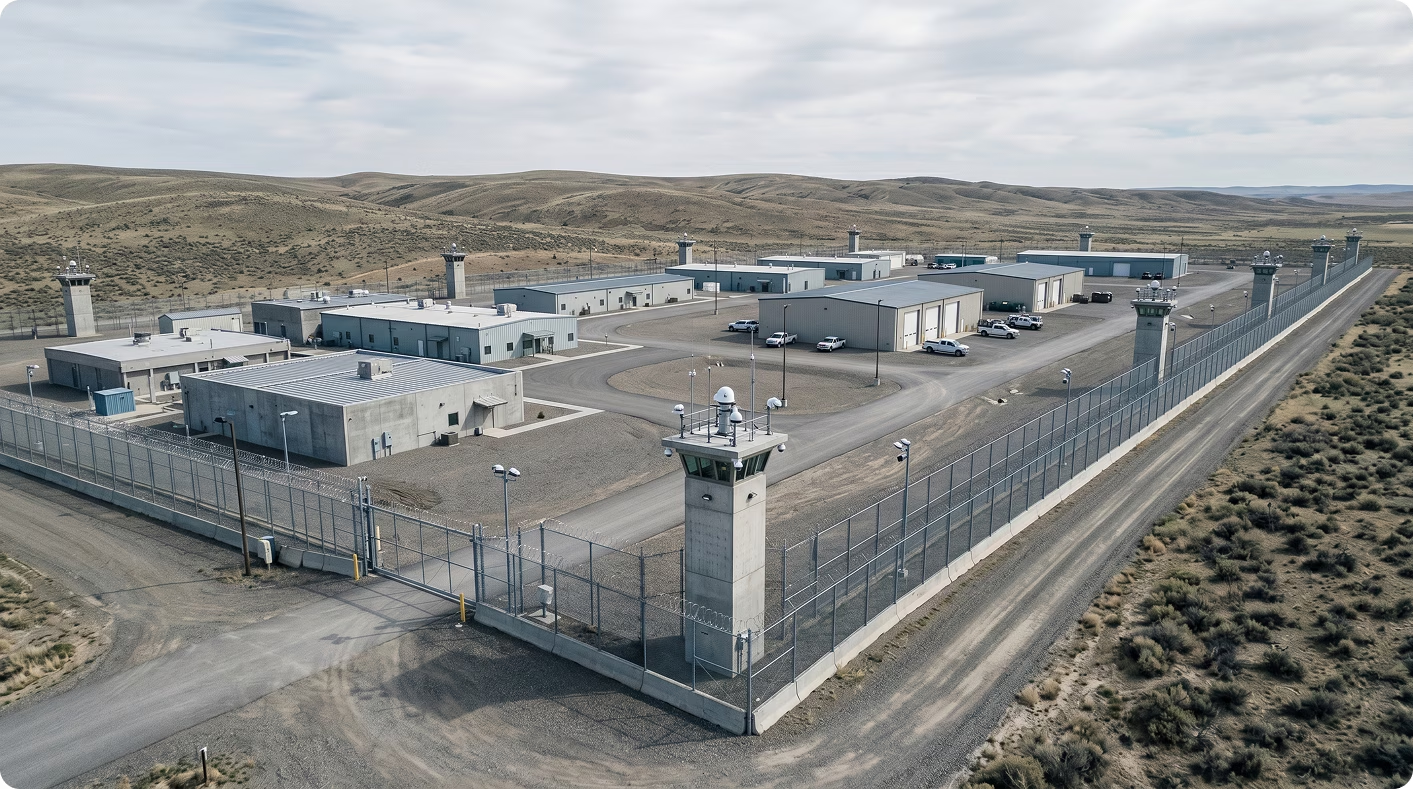
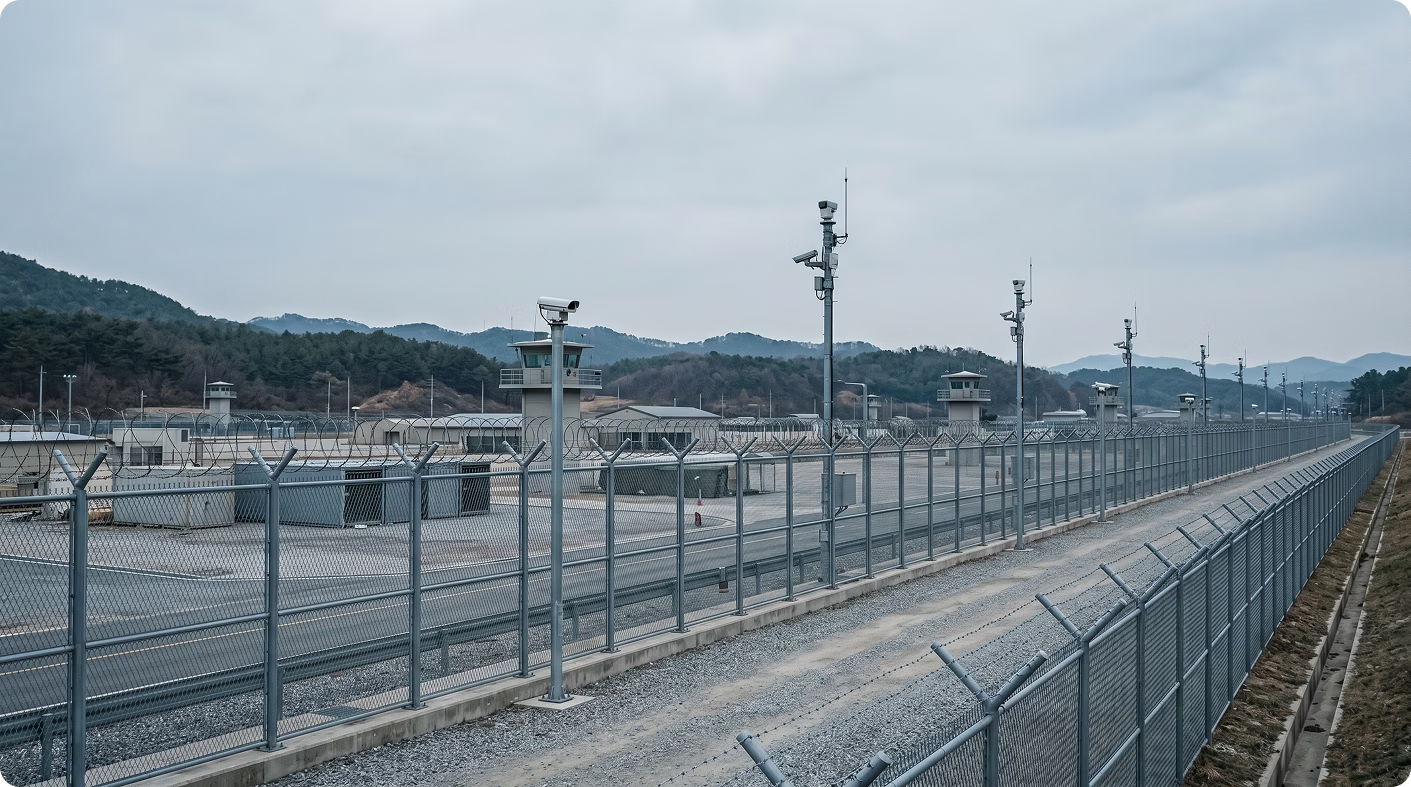
Large military installations require continuous monitoring across extensive perimeters that often include restricted areas, critical infrastructure, and difficult terrain.
Traditional security operations rely on vehicle patrols, fixed cameras, and personnel assigned to repetitive surveillance tasks.
Autonomous UAV patrols complement these systems by providing:
- recurring perimeter inspections;
- rapid assessment of security alerts;
- monitoring of remote access points;
- improved visibility across blind areas;
- flexible patrol routes that can be adapted to changing operational requirements.
Rather than replacing existing security measures, UAVs strengthen layered defense by extending situational awareness across large operational environments.
Critical infrastructure monitoring
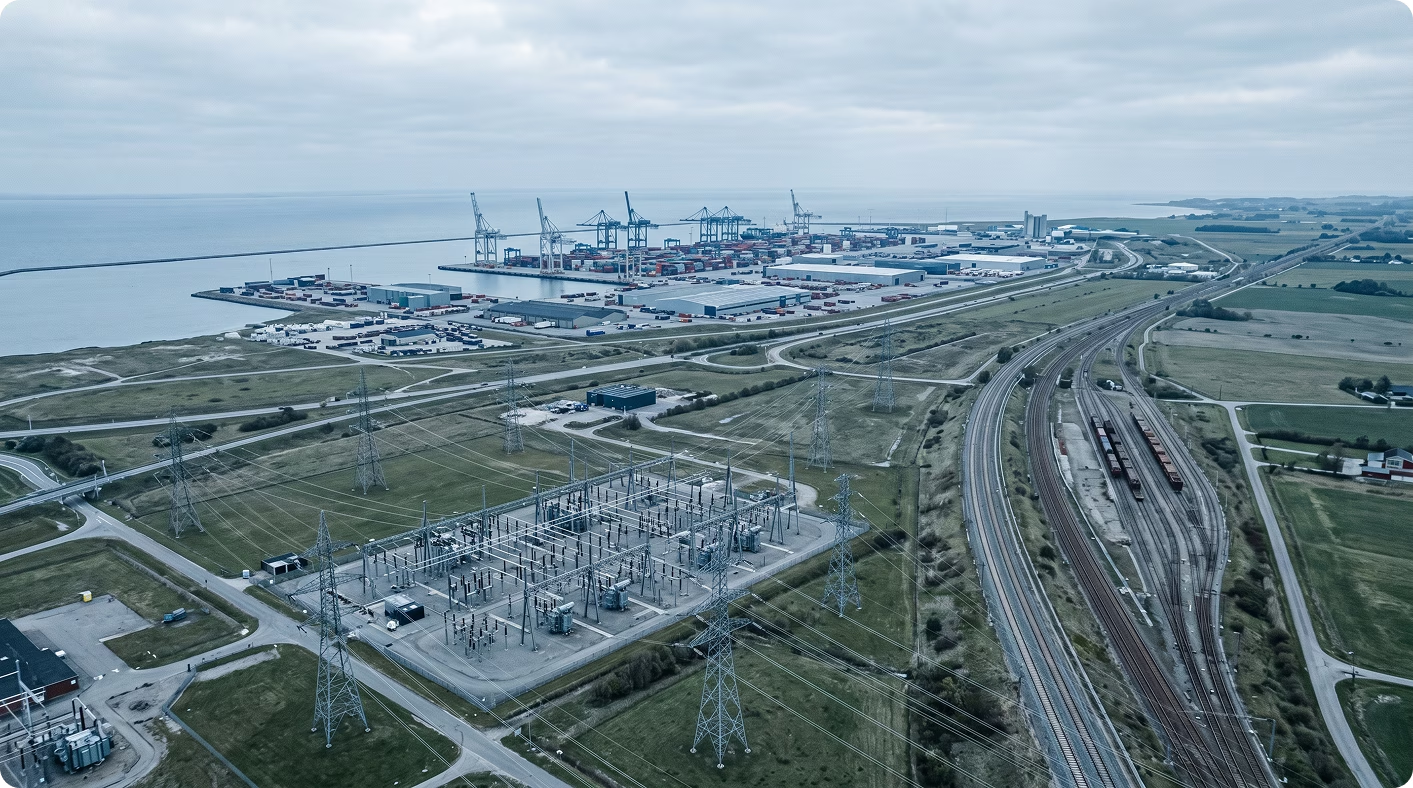
Defense organizations manage a wide range of critical assets, including fuel storage, ammunition depots, communications facilities, power infrastructure, and logistics hubs.
These locations require frequent inspection and continuous awareness while often operating with limited personnel.
Autonomous aerial monitoring supports recurring inspections of:
- infrastructure perimeters;
- access routes;
- storage facilities;
- utility corridors;
- remote support assets.
By automating routine observation tasks, organizations can allocate personnel to higher-value operational activities.
Distributed site awareness
Modern defense operations increasingly involve geographically dispersed facilities that require consistent monitoring despite limited staffing.
Examples include:
- remote communications sites;
- radar installations;
- temporary operating locations;
- logistics support facilities;
- border infrastructure.
Autonomous UAV operations improve visibility across these sites without requiring permanent on-site aviation personnel.
Temporary and expeditionary operations
Temporary operating locations often require the rapid establishment of perimeter awareness before permanent security infrastructure is available.
Autonomous UAV missions enable units to:
- evaluate surrounding terrain;
- monitor access routes;
- assess infrastructure;
- maintain recurring aerial observation during early operational phases.
This provides commanders with greater situational awareness while reducing the burden on security personnel.
Logistics and transportation security
Military logistics operations frequently involve large storage areas, transportation corridors, and staging locations.
Autonomous aerial patrols support:
- route monitoring;
- convoy staging awareness;
- logistics hub observation;
- infrastructure inspection;
- rapid verification of reported incidents.
These missions help improve operational visibility while supporting faster decision-making.
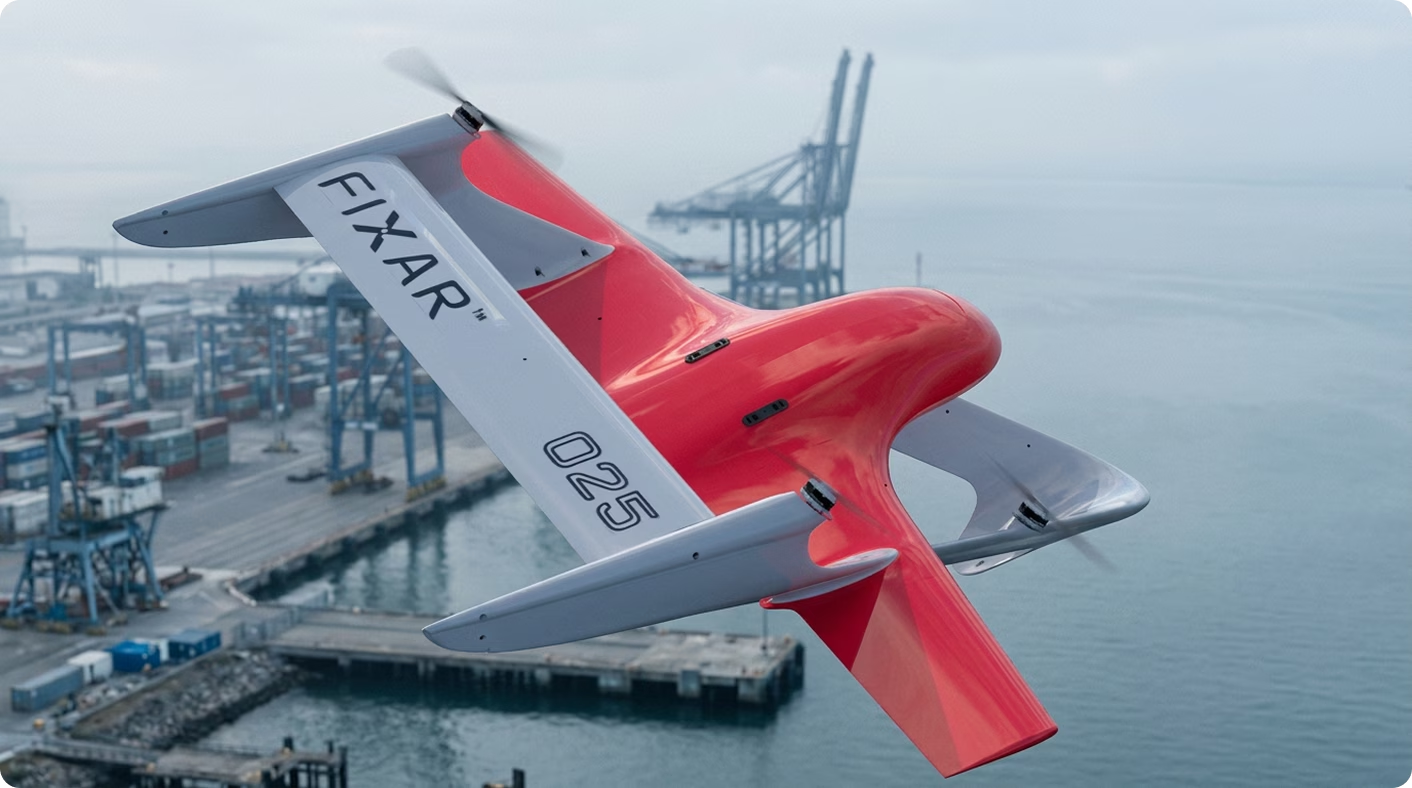
How FIXAR supports mission-ready UAV operations
Defense organizations are not simply evaluating UAV platforms; they are assessing whether a solution can support repeatable missions, integrate into existing operational workflows, and scale across multiple installations.
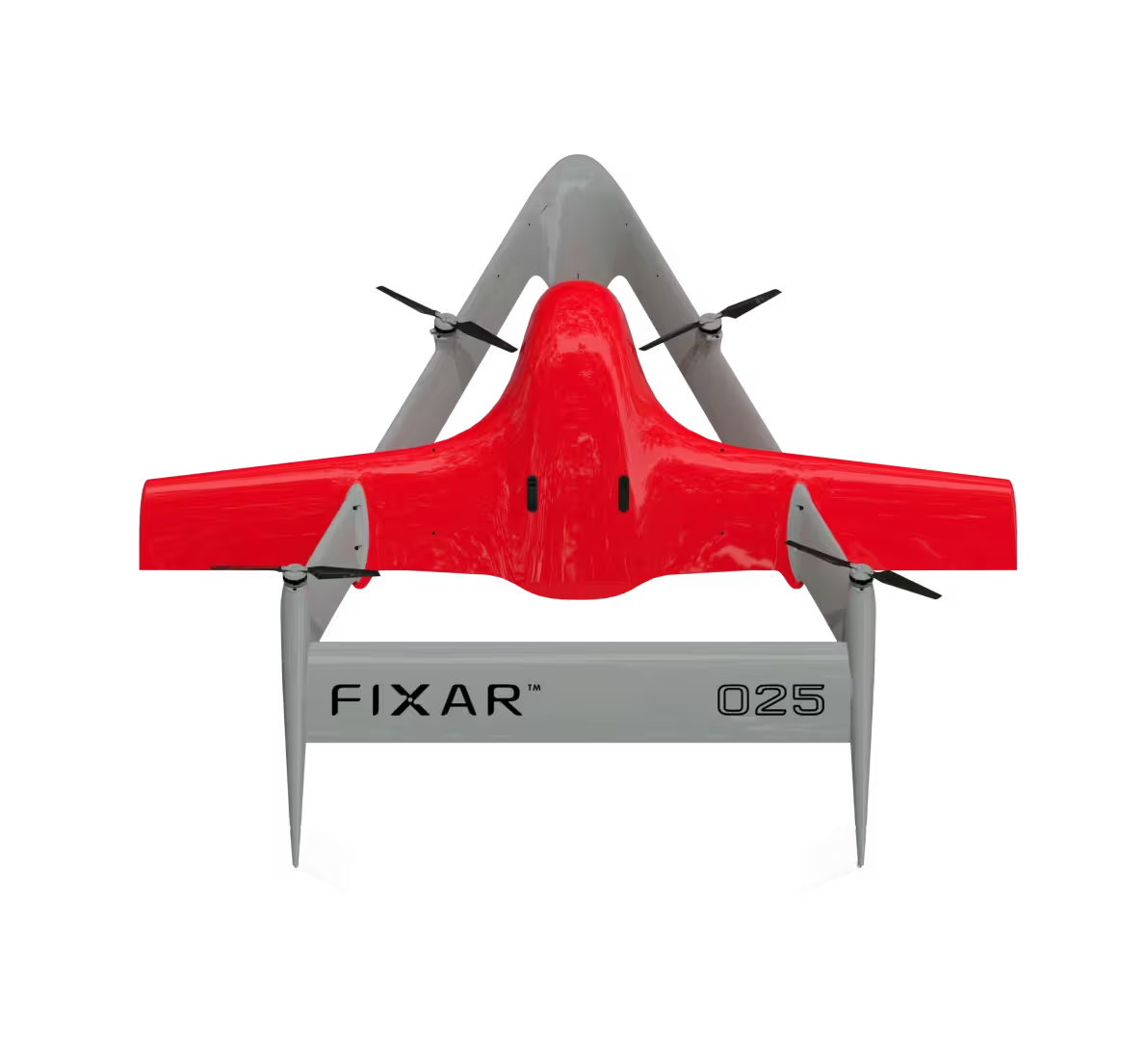
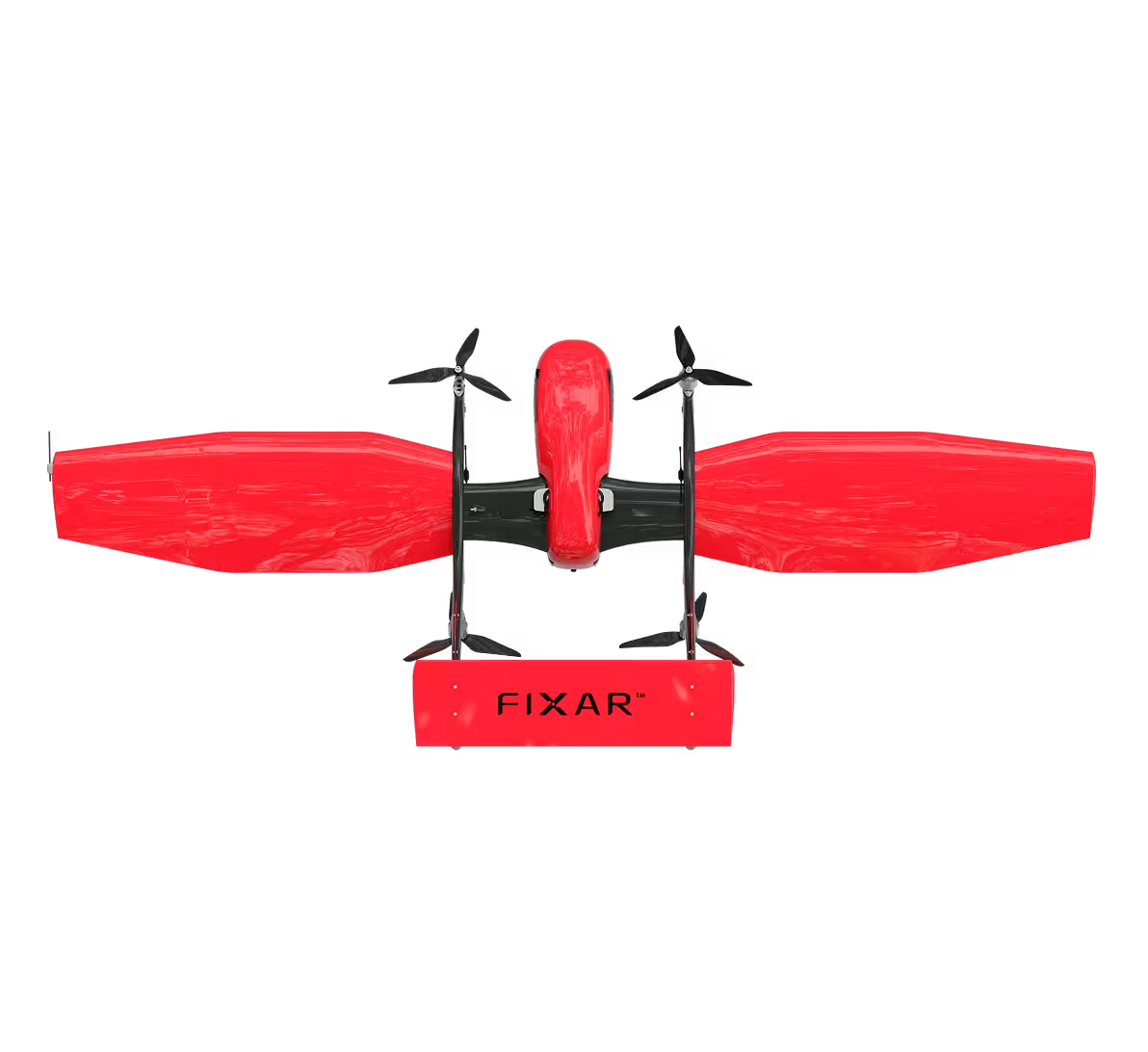
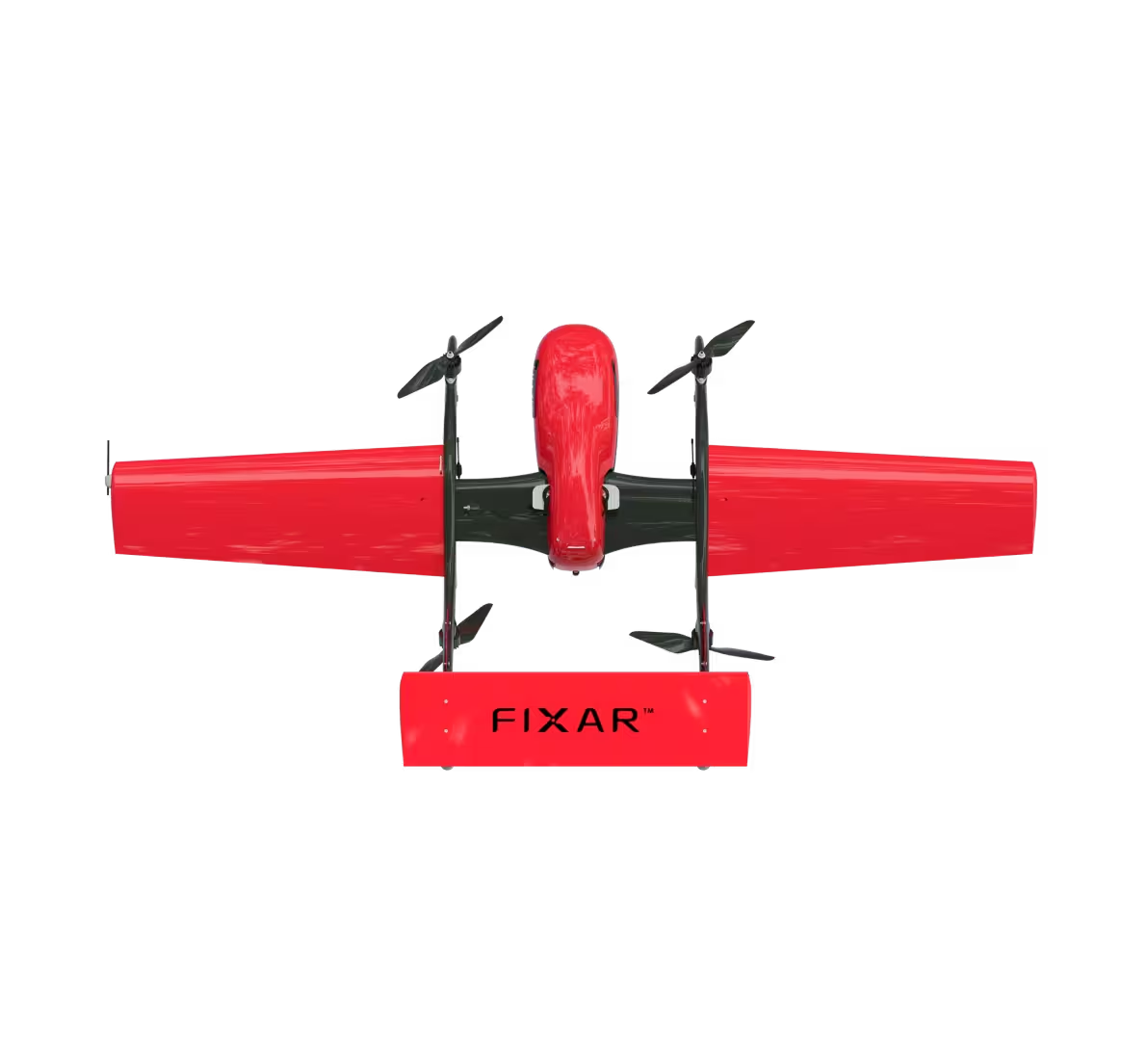
FIXAR is designed with these operational priorities in mind.
Rather than focusing on individual flights, the platform enables organizations to establish structured autonomous missions that support routine security operations, infrastructure monitoring, and recurring reconnaissance tasks.
For defense contractors and system integrators, this approach aligns more closely with acquisition priorities than demonstrations centered solely on aircraft performance.
Supporting repeatable security operations
Routine perimeter patrols and infrastructure inspections require consistency.
FIXAR enables organizations to build standardized mission profiles that can be executed repeatedly across different facilities while maintaining consistent operational procedures.
This helps security teams:
- monitor large operational areas;
- automate recurring patrol routes;
- improve inspection consistency;
- reduce manual mission planning;
- simplify routine surveillance activities.
Repeatable workflows become increasingly valuable as monitoring requirements expand across multiple sites.
Improving operational awareness
Large military installations generate enormous volumes of operational activity.
Maintaining visibility across access roads, infrastructure corridors, logistics areas, and perimeter zones requires continuous situational awareness.
FIXAR supports recurring aerial observation that helps operators:
- verify security alerts;
- assess remote locations;
- monitor infrastructure;
- improve perimeter awareness;
- support force protection activities.
This provides commanders with better information while reducing reliance on repetitive manual patrols.
Reducing operator workload
One of the key trends in defense modernization is reducing the workload associated with routine operational tasks.
FIXAR supports this objective through autonomous mission planning and structured flight execution.
Instead of requiring operators to manually recreate similar patrols, organizations can establish standardized mission templates that improve consistency while reducing planning time.
For installations conducting regular security patrols, these efficiencies become increasingly significant over time.
Supporting scalable deployment
Defense organizations rarely evaluate technology for a single installation.
Solutions must be capable of supporting multiple locations, operational environments, and security requirements.
FIXAR enables organizations to build scalable deployment models that can be adapted across:
- military installations;
- logistics facilities;
- training areas;
- critical infrastructure;
- distributed operational sites.
This allows UAV capability to grow alongside evolving operational requirements.
Why defense organizations choose FIXAR
Mission capability, not aircraft specifications, drives procurement decisions.
The table below illustrates how FIXAR supports operational priorities commonly found across U.S. defense environments.
{{Funding-1="/custom-tables-elem"}}
Rather than positioning UAVs as standalone aircraft, FIXAR enables organizations to build sustainable aerial capabilities that integrate into broader force protection and infrastructure security strategies.
Preparing for defense procurement
Entering the U.S. defense market requires preparation long before a solicitation is published.
Organizations that consistently succeed typically invest in procurement readiness rather than waiting for individual opportunities.
Several practices significantly improve long-term positioning.
Monitor acquisition pathways
Successful suppliers actively follow developments across:
- Blue UAS initiatives;
- Defense Innovation Unit programs;
- Army modernization efforts;
- SBIR opportunities;
- OTA solicitations;
- installation modernization projects.
Early visibility allows organizations to align technology roadmaps with evolving operational priorities.
Develop procurement-ready documentation
Defense customers expect structured technical and operational documentation that explains not only what a system does, but how it will be deployed.
A strong documentation package typically includes:
- operational concepts;
- mission scenarios;
- deployment workflows;
- implementation plans;
- operator requirements;
- sustainment considerations.
Well-prepared documentation reduces acquisition risk and supports technical evaluations.
Build a dual-use strategy
Many successful UAV companies begin with commercial or industrial applications before transitioning into defense.
Demonstrating how a platform performs across both government and commercial environments strengthens long-term acquisition potential and reduces perceived program risk.
Engage early with the defense ecosystem
Many procurement opportunities begin long before formal requests for proposals are released.
Participating in demonstrations, industry days, innovation programs, and technology evaluations allows organizations to better understand customer priorities while building relationships within the defense acquisition community.
Frequently Asked Questions
What is Blue UAS?
Blue UAS is a Defense Innovation Unit initiative that helps identify trusted commercial UAV technologies suitable for Department of Defense use. It focuses on cybersecurity, supply chain integrity, and procurement readiness.
What is the difference between SBIR and OTA?
SBIR supports research and technology development through phased funding, while OTA agreements provide a more flexible contracting mechanism for rapidly evaluating and adopting emerging technologies.
Can small companies work with the Department of Defense?
Yes. Many small businesses enter the defense ecosystem through SBIR programs, DIU initiatives, OTA projects, or by partnering with larger defense contractors and system integrators.
What makes a UAV solution procurement-ready?
Successful solutions combine strong operational documentation, mission relevance, cybersecurity considerations, deployment planning, and the ability to integrate into existing defense workflows.
Why is autonomous perimeter security receiving so much attention?
Military installations continue to manage large operational footprints with limited personnel. Autonomous UAV patrols help improve coverage, strengthen situational awareness, and reduce the burden of repetitive security tasks.
How does FIXAR support defense operations?
FIXAR enables structured autonomous missions for perimeter security, infrastructure monitoring, and distributed site awareness. Its focus on repeatable workflows and operational simplicity aligns well with the requirements of organizations seeking scalable UAV capabilities.
Conclusion
The U.S. defense UAV market is evolving from platform acquisition toward mission-focused capability development.
Organizations that understand defense procurement, align with trusted acquisition pathways, and demonstrate measurable operational value will be better positioned to participate in future modernization programs.
Success in this market depends not only on innovative technology, but on the ability to present autonomous UAVs as a scalable operational capability that supports force protection, infrastructure security, and long-term mission readiness.
Preparing for U.S. defense opportunities?
Whether your organization is developing autonomous security capabilities, pursuing Blue UAS alignment or supporting defense modernization initiatives, FIXAR can help you build a procurement-ready UAV solution.
Our team supports partners with:
- procurement-ready technical documentation;
- mission workflow design;
- autonomous deployment concepts;
- technical positioning for defense programs;
- support for pilot and evaluation projects;
- integration planning for autonomous security operations.
Contact the FIXAR team to discuss how your organization can strengthen its position within the U.S. defense acquisition ecosystem.




.svg)