.svg)

Why geography changes everything
Emergency response in Canada is fundamentally different from that in many other countries.
While urban emergency services focus on incident density, Canadian agencies often operate across enormous geographic areas with limited infrastructure, difficult terrain and extreme weather conditions.
Responders regularly face challenges such as:
- remote communities with limited road access;
- mountainous terrain;
- northern operations;
- seasonal flooding;
- large wildfire zones;
- coastal emergencies;
- sparse communications infrastructure.
In these environments, time is rarely lost because responders lack expertise.
Time is lost because reaching the incident is often the greatest operational challenge.
This is why aerial situational awareness has become increasingly valuable.
Rather than replacing existing emergency procedures, UAVs help agencies understand the situation before committing personnel and resources to potentially inaccessible or hazardous environments.
Funding opportunities for Canadian emergency services
Canadian organizations rarely receive funding simply because they want to purchase drones.
Successful applications demonstrate how UAVs improve operational capability, strengthen responder safety and increase resilience during large-scale emergencies.
Several funding pathways consistently support these objectives.
Canadian Safety and Security Program (CSSP)
The Canadian Safety and Security Program supports projects that improve public safety, emergency preparedness and national resilience.
For emergency services, UAV programs align particularly well when they strengthen:
- disaster response;
- situational awareness;
- wildfire resilience;
- emergency coordination;
- critical infrastructure protection;
- operations in remote communities.
Projects that demonstrate collaboration between multiple organizations are often particularly competitive.
Innovative Solutions Canada (ISC)
Innovative Solutions Canada provides an important pathway for public-sector organizations to evaluate emerging technologies before large-scale procurement.
For UAV programs, ISC creates opportunities to:
- validate operational concepts;
- test new workflows;
- conduct pilot deployments;
- evaluate mission-specific capabilities;
- support technology adoption.
This makes ISC especially valuable for agencies introducing UAVs into wildfire response, search and rescue or disaster management.
CanadaBuys
CanadaBuys is more than a procurement portal.
It provides visibility into government modernization initiatives and public-sector technology opportunities.
Organizations planning UAV deployments should monitor CanadaBuys to identify:
- emergency management projects;
- wildfire modernization initiatives;
- public safety technology procurements;
- infrastructure resilience programs.
Early awareness helps agencies align operational capabilities with emerging procurement priorities.
Provincial funding opportunities
Many emergency management initiatives in Canada are funded or coordinated at the provincial level.
Organizations should also monitor provincial emergency management programs, wildfire preparedness initiatives and disaster resilience funding, particularly where regional collaboration or critical infrastructure protection are priorities.
Where UAVs deliver the greatest operational value
Canadian agencies rarely deploy drones because flying is easier.
They deploy them because aerial intelligence reduces uncertainty across vast operational environments.
The highest-value applications all improve decision-making before responders enter the field.
Wildfire intelligence
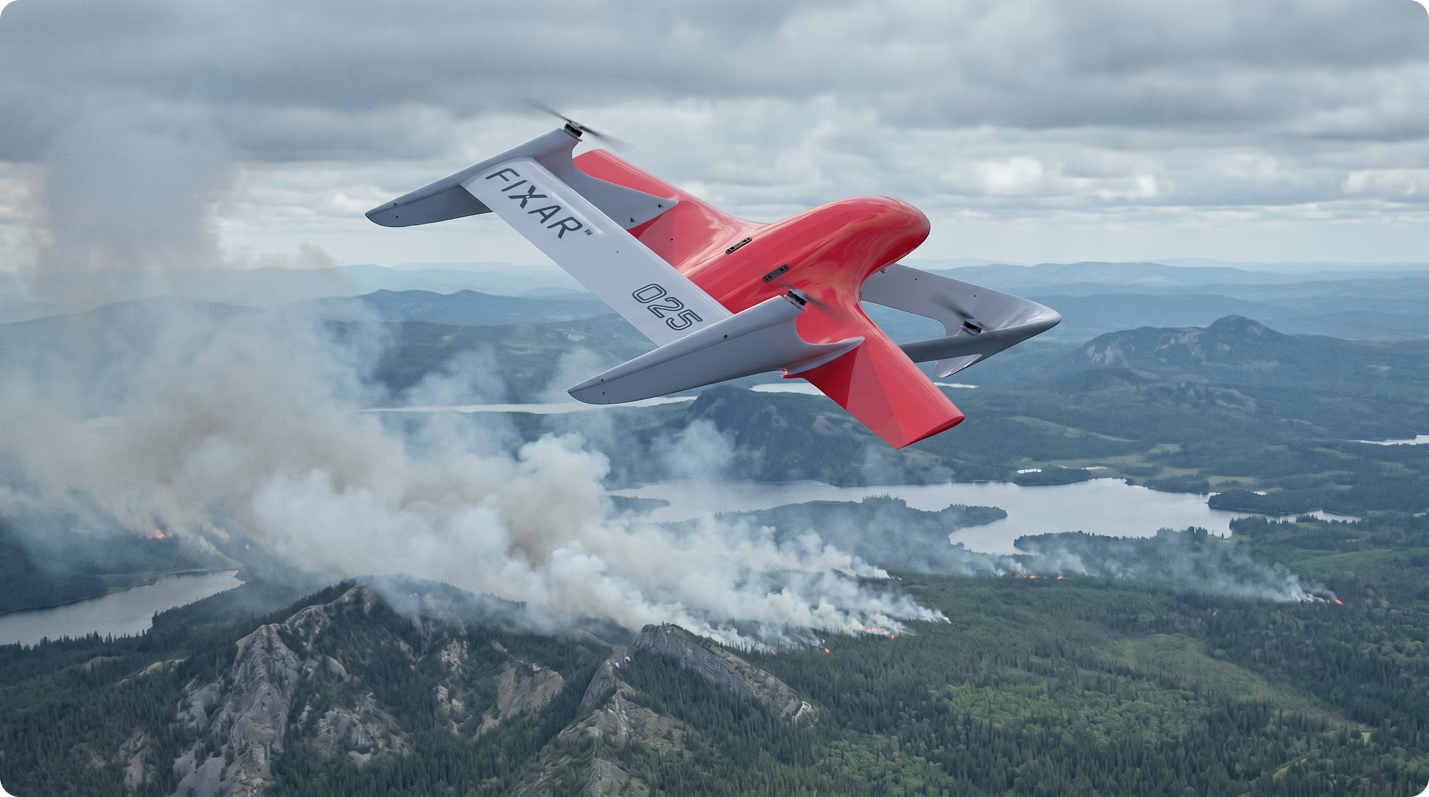
Wildfires often develop rapidly across remote terrain where ground visibility is limited.
UAV operations help incident commanders:
- assess fire perimeters;
- identify access routes;
- monitor infrastructure at risk;
- support evacuation planning;
- track changing fire behaviour.
Earlier aerial intelligence enables faster and more informed operational decisions.
Search and rescue
Search teams frequently operate in forests, mountainous terrain, coastal regions and northern environments where visibility is limited, and search areas are extensive.
Structured UAV search patterns help teams:
- cover larger areas more efficiently;
- prioritize search zones;
- improve coordination;
- reduce responder fatigue.
For time-critical missions, this can significantly improve operational effectiveness.
Remote incident assessment
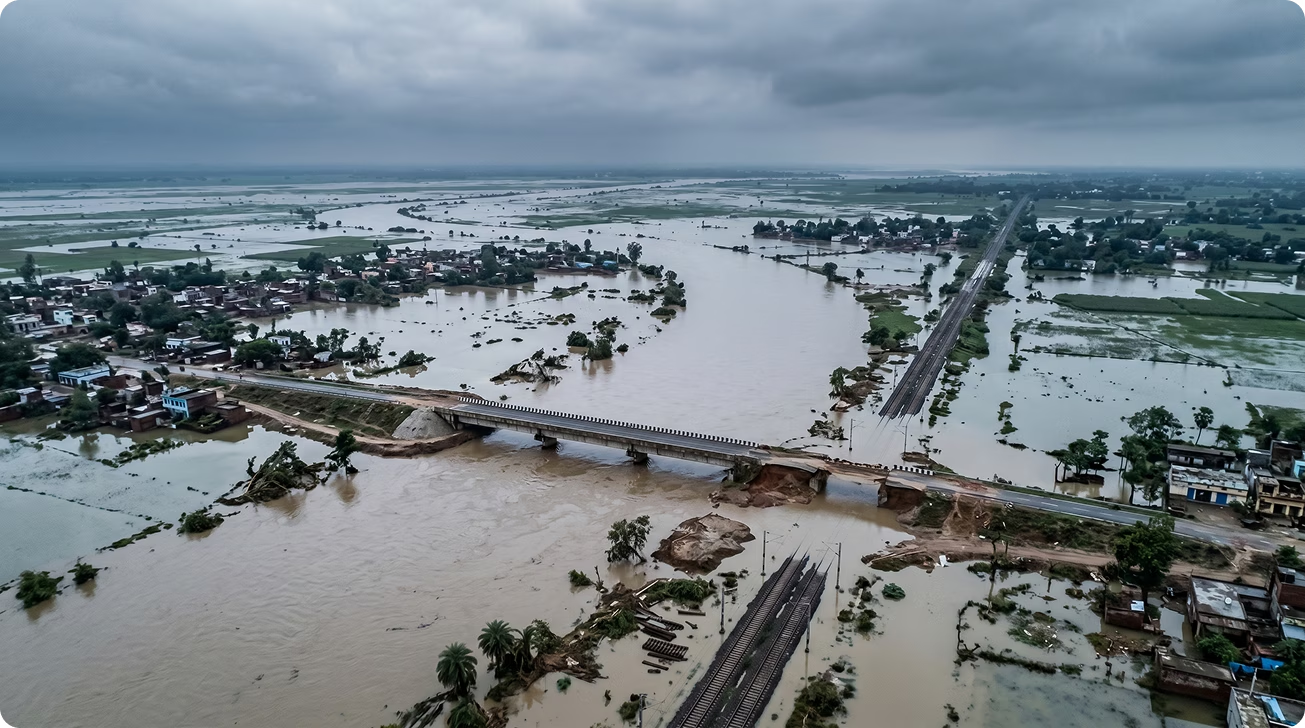
Floods, landslides, storms and infrastructure failures often occur in locations where immediate ground access is difficult.
Aerial reconnaissance provides the command staff with the information needed to evaluate:
- access routes;
- infrastructure damage;
- environmental hazards;
- resource requirements.
This supports safer deployment decisions while improving operational planning.
Supporting Indigenous and northern communities
Many Indigenous and northern communities face unique emergency response challenges due to distance, limited transportation infrastructure and environmental conditions.
UAVs provide a practical way to improve situational awareness when conventional reconnaissance is delayed or unavailable.
This capability is becoming increasingly relevant as emergency management organizations expand preparedness planning across remote regions.
Building a strong funding proposal
Technology alone rarely secures funding.
Canadian agencies are most successful when they demonstrate how UAVs solve operational problems created by geography.
Strong applications typically focus on five areas.
Demonstrate geographic necessity
Explain why terrain, distance or accessibility limits traditional response methods.
Funding reviewers should understand why aerial capability is operationally necessary, not simply desirable.
Prioritize responder safety
Describe how UAVs reduce unnecessary exposure by providing aerial intelligence before personnel enter hazardous or inaccessible environments.
Responder safety remains one of the strongest funding justifications.
Show how UAVs fit into existing operations
Demonstrate how drone deployments integrate into current emergency response procedures rather than creating parallel workflows.
Examples include:
- incident command support;
- search coordination;
- wildfire operations;
- evacuation planning;
- damage assessment.
Build regional capability
Projects that support multiple jurisdictions or regional response organizations often create stronger funding narratives than single-agency deployments.
Interoperability and shared operational capability are increasingly important across Canadian emergency management.
Plan for long-term sustainability
Successful proposals include more than equipment.
Departments should address:
- pilot training;
- standard operating procedures;
- maintenance planning;
- operational exercises;
- ongoing program management.
This demonstrates that the investment will deliver long-term value.
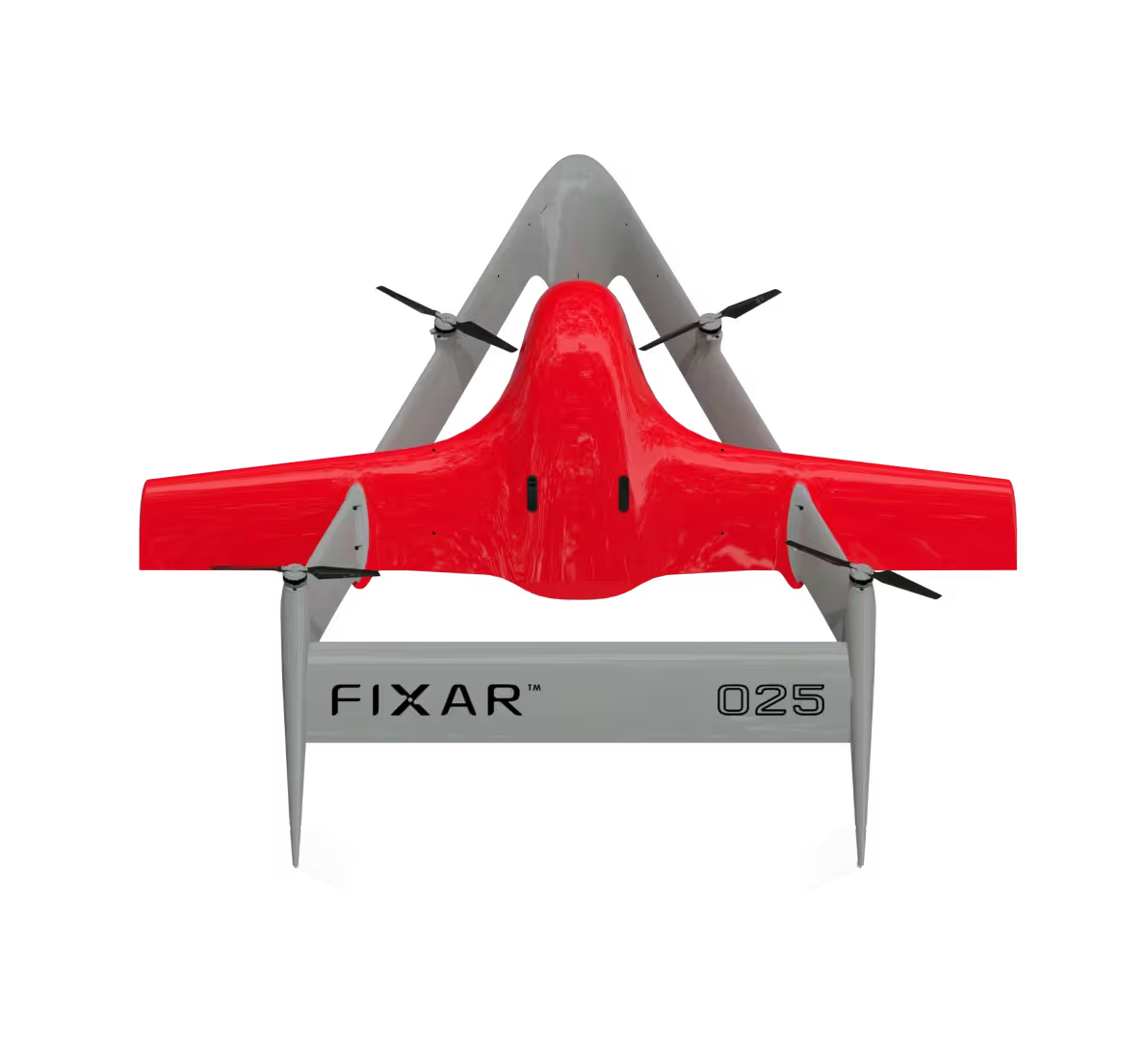
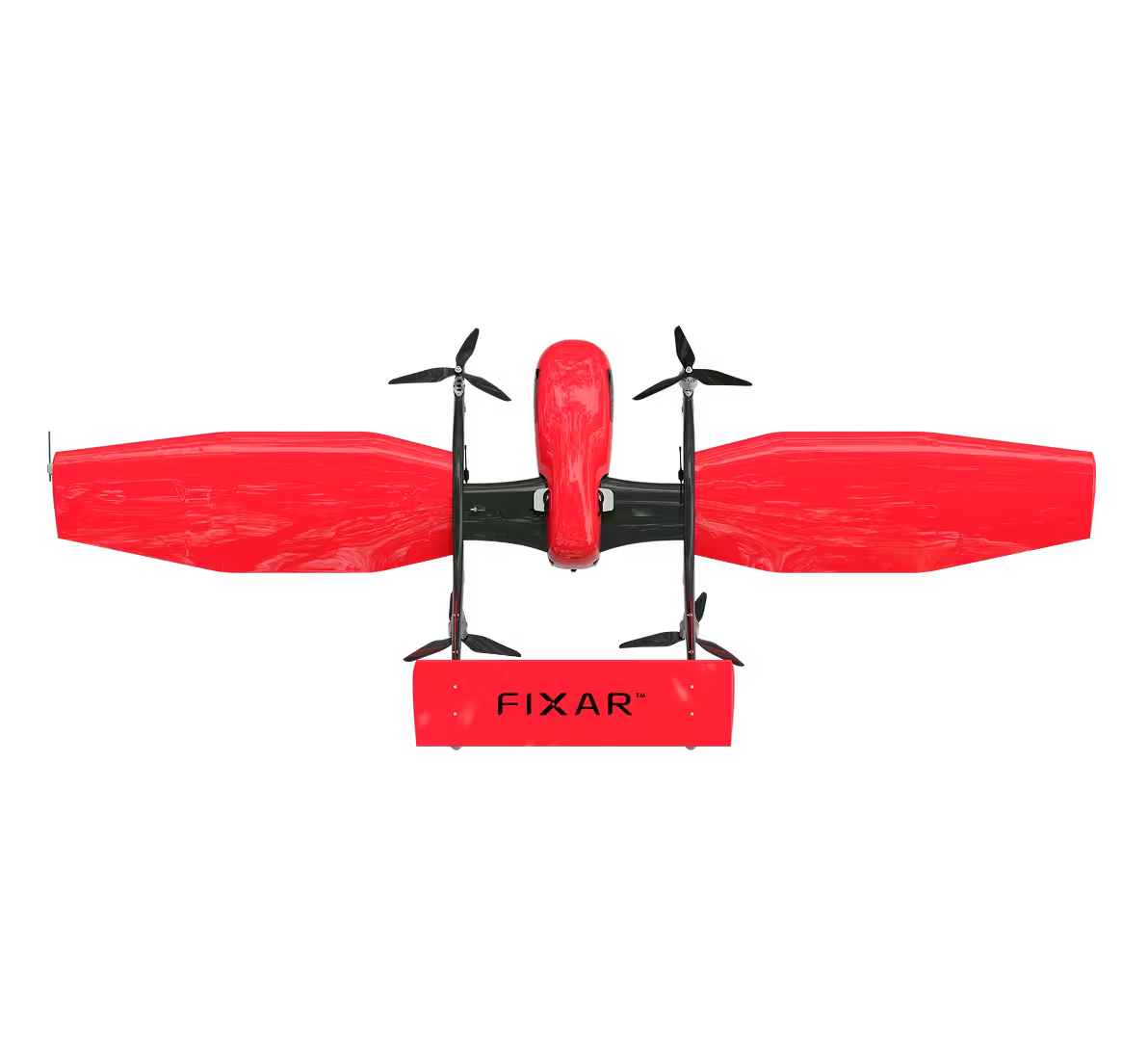
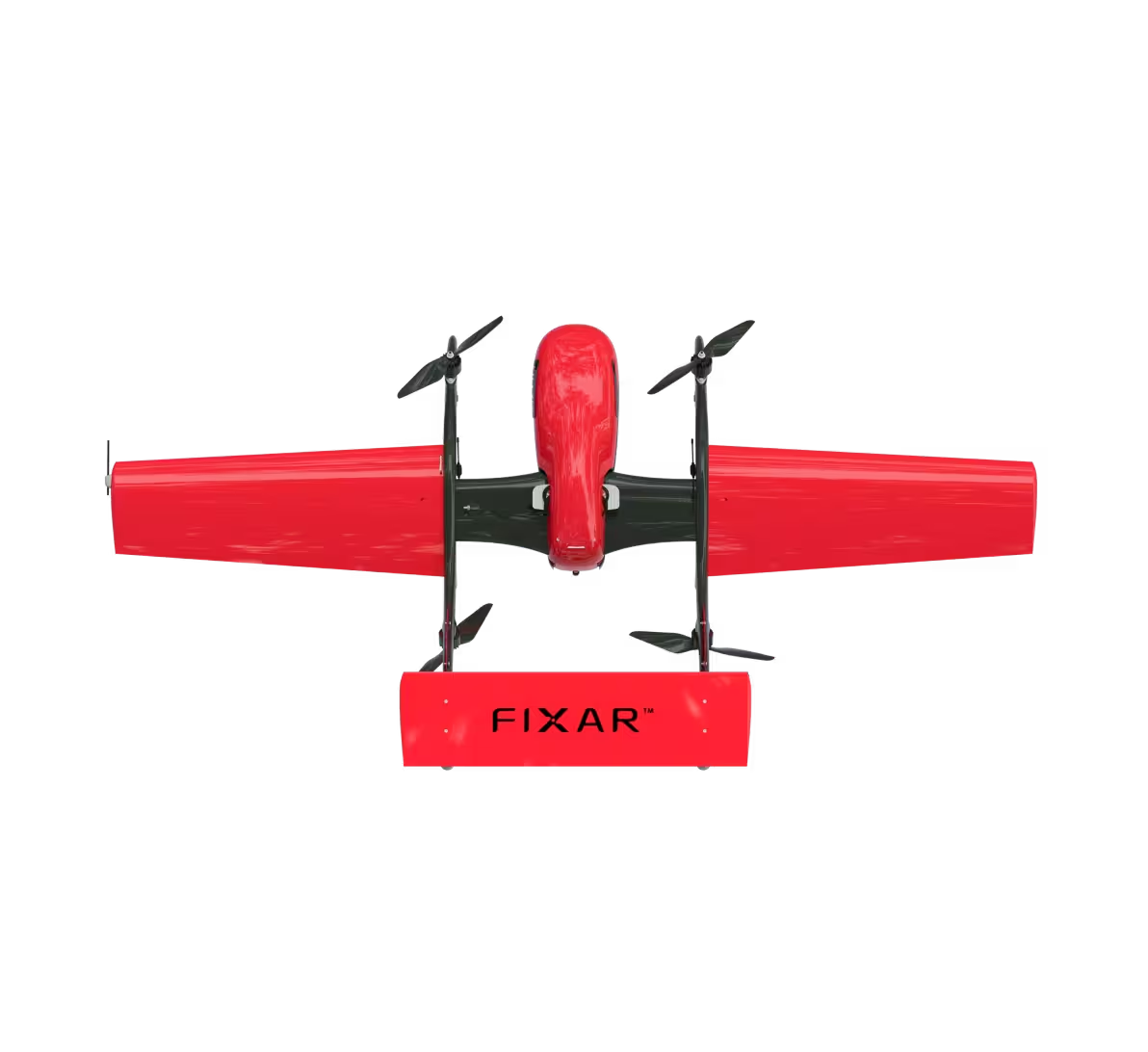
How FIXAR supports remote emergency operations
Remote emergency response requires more than reliable aircraft.
It requires a platform that enables agencies to gather actionable information quickly, standardize aerial operations and maintain consistent situational awareness across geographically dispersed incidents.
FIXAR has been designed with these operational requirements in mind.
Rather than focusing on individual flights, the platform supports repeatable mission workflows that can be integrated into broader emergency management procedures.
Supporting large-area incident assessment
Canadian incidents often extend across large geographic areas where traditional reconnaissance is slow or impractical.
FIXAR enables agencies to establish standardized aerial missions that support:
- wildfire perimeter assessment;
- search area coverage;
- flood impact mapping;
- infrastructure assessment;
- remote incident reconnaissance.
This allows command staff to gain operational awareness before deploying personnel into uncertain environments.
Standardizing search and response workflows
Consistency becomes increasingly important as UAV programs expand.
FIXAR enables organizations to establish repeatable flight patterns and mission templates that can be used across different regions and incident types.
Standardized workflows improve:
- operational consistency;
- training efficiency;
- interagency cooperation;
- mission repeatability.
This is particularly valuable for agencies operating across multiple jurisdictions.
Improving command visibility
Emergency managers require reliable information, not simply aerial imagery.
By providing structured observation workflows, FIXAR helps incident commanders maintain a clearer understanding of evolving situations while supporting more informed tactical decisions.
This contributes to better resource allocation and improved coordination throughout the operational period.
Reducing operational complexity
Emergency responders already manage significant operational pressure.
FIXAR's autonomous mission planning reduces manual flight preparation, allowing responders to focus on incident management rather than UAV operation.
For organizations with limited personnel or volunteer-based teams, reducing operational complexity can be just as important as improving aerial capability.
Frequently Asked Questions
Can UAV programs receive funding through the Canadian Safety and Security Program (CSSP)?
Yes. CSSP supports projects that improve public safety, emergency management and operational resilience. UAV programs are strongest when positioned as capabilities that enhance situational awareness, responder safety and disaster response.
Is Innovative Solutions Canada only for technology companies?
No. While the program supports innovation, public-sector organizations can participate in pilot projects and technology evaluations that help validate new operational capabilities before wider procurement.
Why are UAVs particularly valuable in Canada?
Canada's geography presents unique operational challenges. UAVs help responders assess incidents in remote or inaccessible locations more quickly, improving situational awareness and supporting safer deployment decisions.
What types of emergency operations benefit most from UAVs?
High-value applications include wildfire response, search and rescue, flood assessment, disaster response, infrastructure inspections and emergency operations in remote or northern communities.
What makes a strong funding proposal?
Successful proposals explain how UAVs improve operational reach, responder safety and interagency coordination. They also include implementation plans covering training, maintenance, standard operating procedures and long-term program sustainability.
How does FIXAR support Canadian emergency services?
FIXAR enables agencies to build structured UAV programs through autonomous mission planning, repeatable workflows and scalable deployment models suited to Canada's demanding operational environments.
Conclusion
Canada's emergency services face challenges that are defined as much by geography as by the incidents themselves. Vast distances, remote communities and difficult terrain require agencies to make critical decisions before they have complete information.
UAVs are becoming an essential part of that decision-making process,not because they replace responders, but because they provide earlier situational awareness, improve operational reach and support safer, more effective emergency response.
Organizations that build funding proposals around these operational outcomes, rather than around technology acquisition, are better positioned to secure investment and develop sustainable UAV programs.
Ready to build a remote response UAV program?
Whether your organization is expanding wildfire operations, strengthening search and rescue capabilities or improving emergency preparedness across remote regions, FIXAR can help you build a funding-ready, operationally scalable UAV program.
Our team supports agencies with:
- funding-ready technical documentation;
- operational concept development;
- UAV deployment strategies;
- mission workflow design;
- training and implementation planning;
- technical support for public safety operations.
Contact the FIXAR team to discuss how your organization can improve operational reach and strengthen emergency response across Canada's challenging environments.



.svg)