.svg)
Why methane monitoring is now a business priority
Methane emissions have moved from an environmental reporting issue to a core operational and financial concern for the U.S. oil and gas industry.
Federal regulations, investor expectations, and corporate sustainability commitments are driving operators to improve how they detect, quantify, and report methane emissions across distributed infrastructure.
At the same time, aging pipeline networks and geographically dispersed assets make traditional inspection methods increasingly expensive and difficult to scale.
These trends are creating strong demand for technologies that deliver more frequent, repeatable, and cost-effective monitoring.
For many organizations, UAVs are becoming part of a broader digital inspection strategy rather than a standalone technology investment.
Federal programs driving UAV adoption
Unlike many international markets, the United States offers multiple federal initiatives that directly or indirectly support methane monitoring technologies.
Understanding these programs helps organizations build stronger business cases and identify funding opportunities beyond traditional capital expenditure.
DOE Methane Emissions Reduction Program
The U.S. Department of Energy's Methane Emissions Reduction Program supports projects that reduce methane emissions across the oil and gas value chain.
For UAV companies, the program is particularly relevant because it encourages technologies that improve:
- methane detection;
- emissions measurement;
- leak quantification;
- continuous monitoring;
- operational transparency.
Organizations developing UAV-based monitoring workflows should consider how their projects align with these priorities.
Inflation Reduction Act
The Inflation Reduction Act has significantly increased federal investment in emissions reduction and clean energy technologies.
While funding is not directed exclusively toward UAVs, many methane-monitoring projects can benefit when drone-based inspections contribute to measurable emissions reductions or improved environmental performance.
For technology providers, understanding how UAV monitoring supports IRA-funded initiatives can strengthen funding proposals and procurement discussions.
DOE Funding Opportunity Announcements (FOAs)
The Department of Energy regularly publishes Funding Opportunity Announcements (FOAs) supporting advanced technologies for emissions monitoring, infrastructure resilience, and industrial modernization.
Organizations planning UAV deployments should monitor these opportunities, particularly those related to methane detection, industrial digitalization, and advanced sensing technologies.
EPA Methane Regulations
In addition to funding programs, updated EPA methane regulations are encouraging operators to improve inspection frequency, reporting accuracy, and emissions management.
As compliance requirements evolve, organizations increasingly require monitoring solutions that generate reliable, repeatable data while reducing operational costs.
Infrastructure Investment and Jobs Act
Infrastructure modernization programs continue to support investment in pipeline safety, critical infrastructure resilience, and advanced inspection technologies.
For companies operating large infrastructure networks, UAV monitoring can become part of broader modernization initiatives funded under federal infrastructure programs.
Where UAV-based methane monitoring delivers the highest ROI
The business case for UAV deployment is strongest when organizations focus on measurable operational outcomes rather than the technology itself.
For U.S. energy operators, drone-based methane monitoring is increasingly used to reduce inspection costs, improve emissions visibility, and strengthen compliance across geographically dispersed infrastructure.
The following applications consistently deliver the highest return on investment.
Methane leak detection and quantification
Methane emissions remain one of the industry's highest operational and regulatory priorities.
Conventional leak detection often requires field personnel to travel between multiple facilities, making inspections time-consuming and expensive—particularly across remote assets.
UAV-based monitoring helps operators inspect infrastructure more frequently while improving visibility into potential emissions sources.
Typical applications include:
- production facilities;
- gathering systems;
- compressor stations;
- processing plants;
- storage terminals;
- pipeline infrastructure.
For many organizations, the greatest value comes from identifying potential issues earlier, allowing maintenance teams to prioritize repairs before problems escalate.
Pipeline integrity monitoring
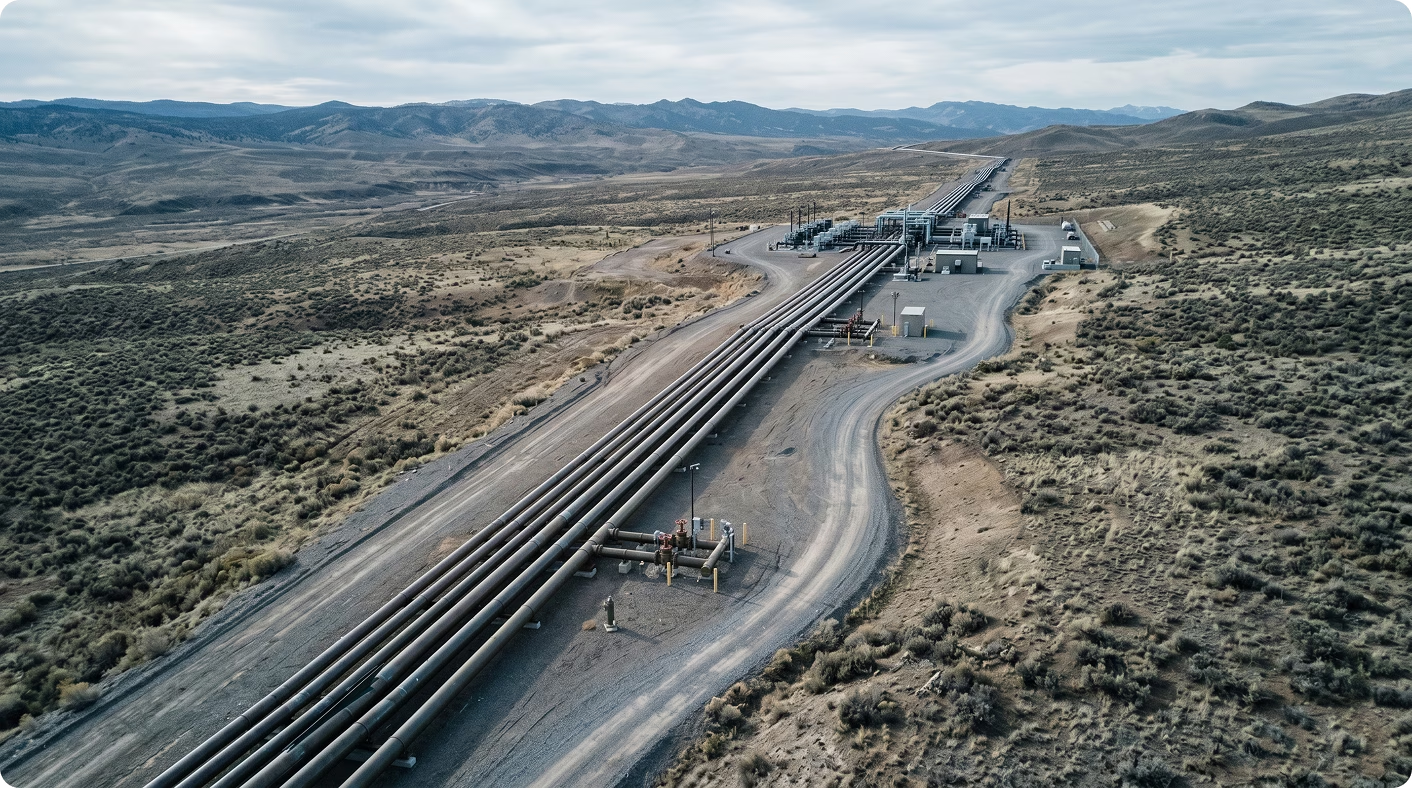
The United States operates one of the world's largest pipeline networks, much of which requires continuous inspection to maintain operational safety and regulatory compliance.
Traditional inspections often involve long travel distances, multiple field teams, and high operational costs.
Autonomous UAV missions enable operators to inspect:
- pipeline rights-of-way;
- construction activity;
- vegetation encroachment;
- erosion risks;
- access roads;
- environmental changes.
Rather than replacing existing inspection programs, UAVs complement them by increasing inspection frequency and improving infrastructure awareness.
Compressor stations and processing facilities
Compressor stations are among the most critical assets in midstream operations.
Routine inspections support both equipment reliability and emissions management.
Drone-based inspections help operators monitor:
- facility conditions;
- equipment accessibility;
- potential leak locations;
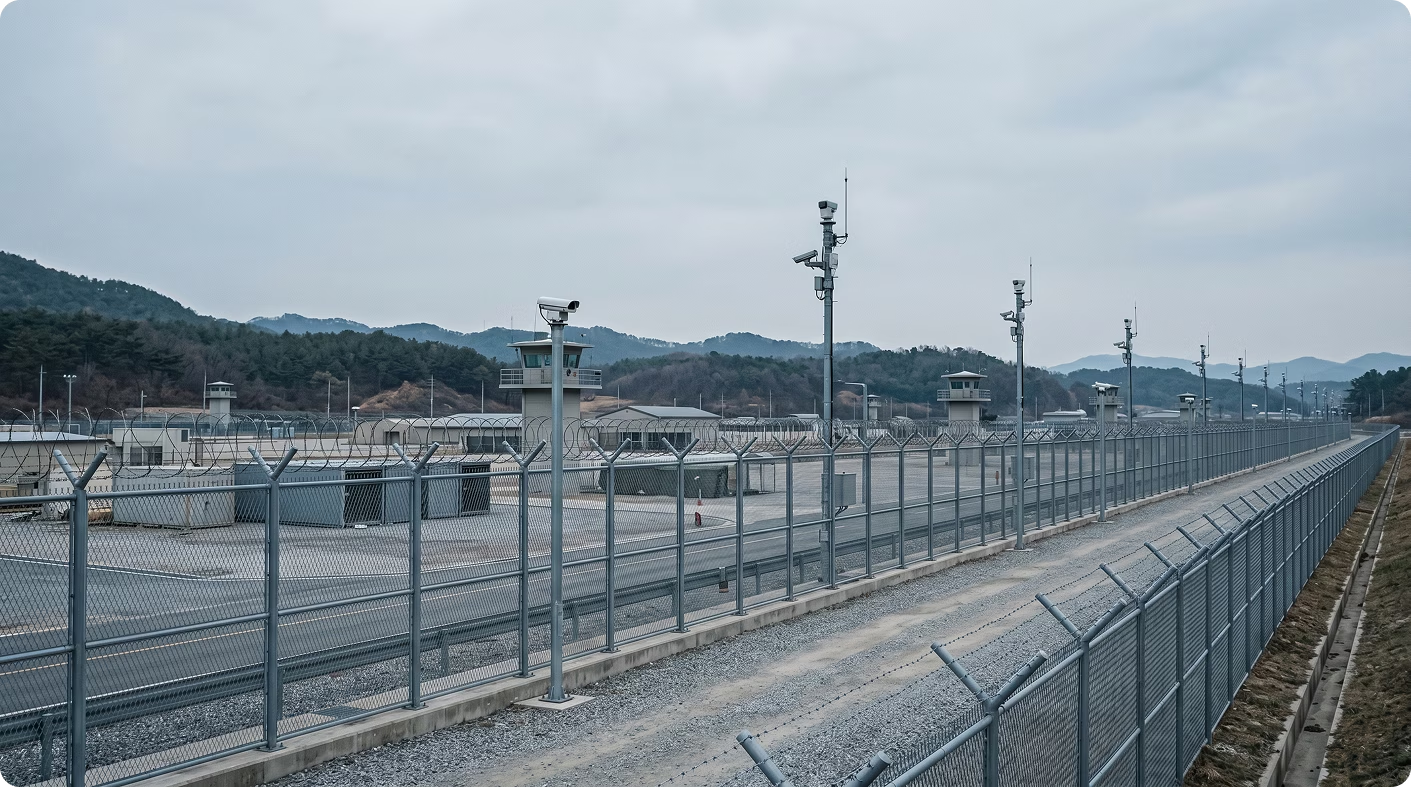
- perimeter infrastructure;
- maintenance planning.
This enables inspection teams to cover more assets in less time while reducing unnecessary site visits.
Remote asset monitoring
Many oil and gas assets are located in areas where routine inspections require extensive travel and specialized logistics.
Examples include:
- remote well pads;
- gathering systems;
- storage infrastructure;
- isolated production facilities.
UAV operations provide recurring visibility across these sites without requiring frequent deployment of field personnel.
For operators managing thousands of distributed assets, this creates significant efficiency gains.
Right-of-way monitoring
Maintaining pipeline rights-of-way requires continuous observation to identify activities that could threaten infrastructure integrity.
Drone inspections support recurring monitoring of:
- excavation activity;
- vegetation growth;
- third-party encroachment;
- erosion;
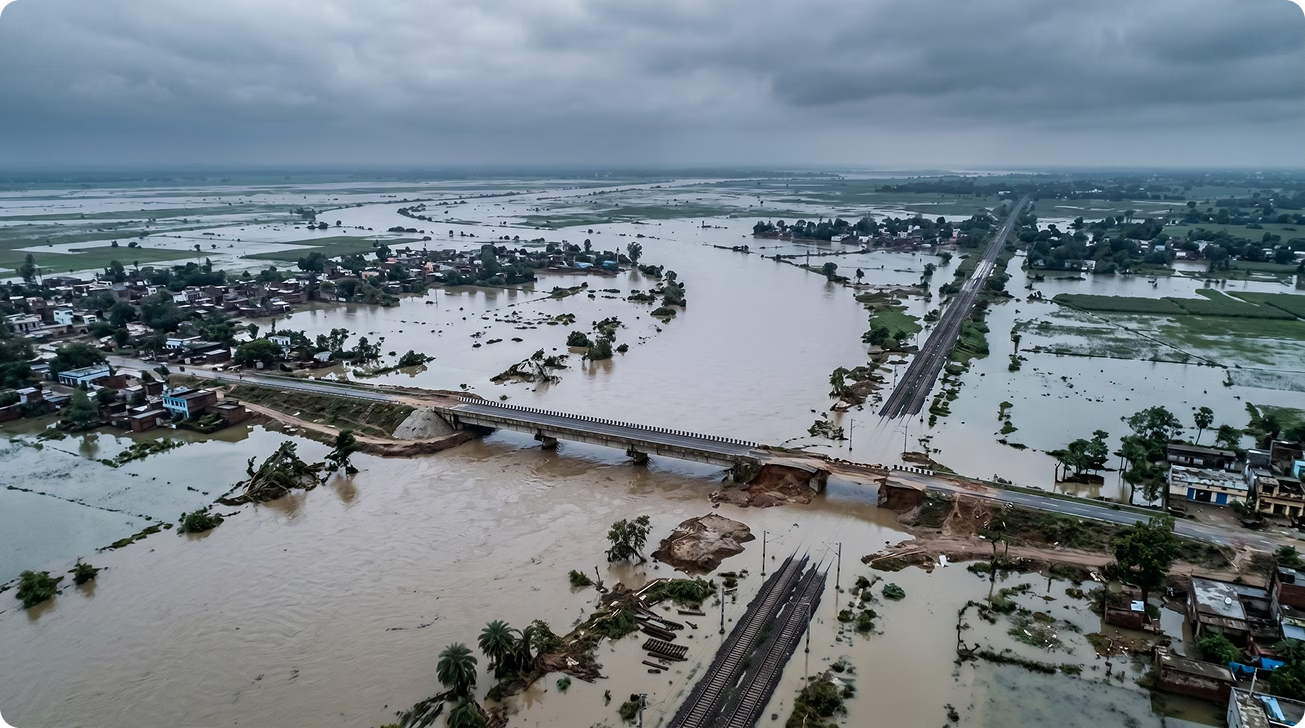
- flood impacts;
- infrastructure accessibility.
This allows operators to identify emerging risks earlier while improving documentation for maintenance and compliance purposes.
Building the business case for UAV monitoring
One of the biggest misconceptions surrounding methane monitoring is that organizations invest in UAVs solely to satisfy regulatory requirements.
In practice, compliance is only one part of the value proposition.
Most operators evaluate drone programs based on their ability to improve overall operational performance.
Successful business cases typically demonstrate value across four areas.
Lower inspection costs
Reducing the number of field deployments lowers travel costs, minimizes equipment downtime, and enables inspection teams to cover more infrastructure with the same resources.
Faster detection
More frequent aerial inspections help identify abnormal conditions earlier, reducing the time between the emergence of an issue and corrective action.
Earlier detection can help prevent costly operational disruptions while supporting more proactive maintenance planning.
Better asset visibility
Recurring aerial surveys provide a consistent view of infrastructure conditions across large operating environments.
This supports better maintenance prioritization and more informed investment decisions.
Stronger regulatory readiness
Repeatable inspection workflows generate structured operational records that can support emissions reporting, compliance documentation, and internal governance processes.
Organizations increasingly value monitoring systems that produce consistent, auditable datasets rather than isolated inspection reports.
How FIXAR supports enterprise methane monitoring programs
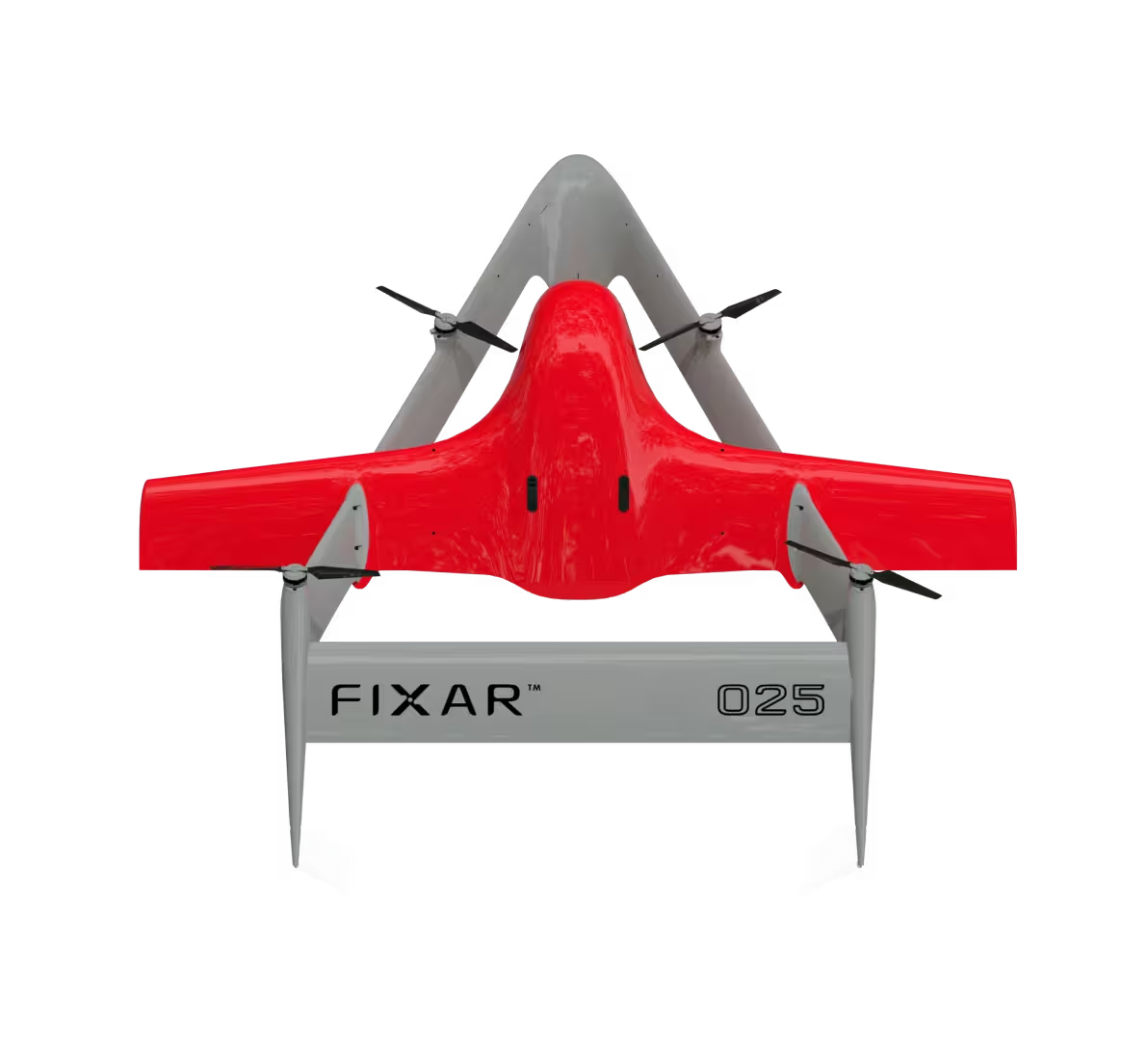
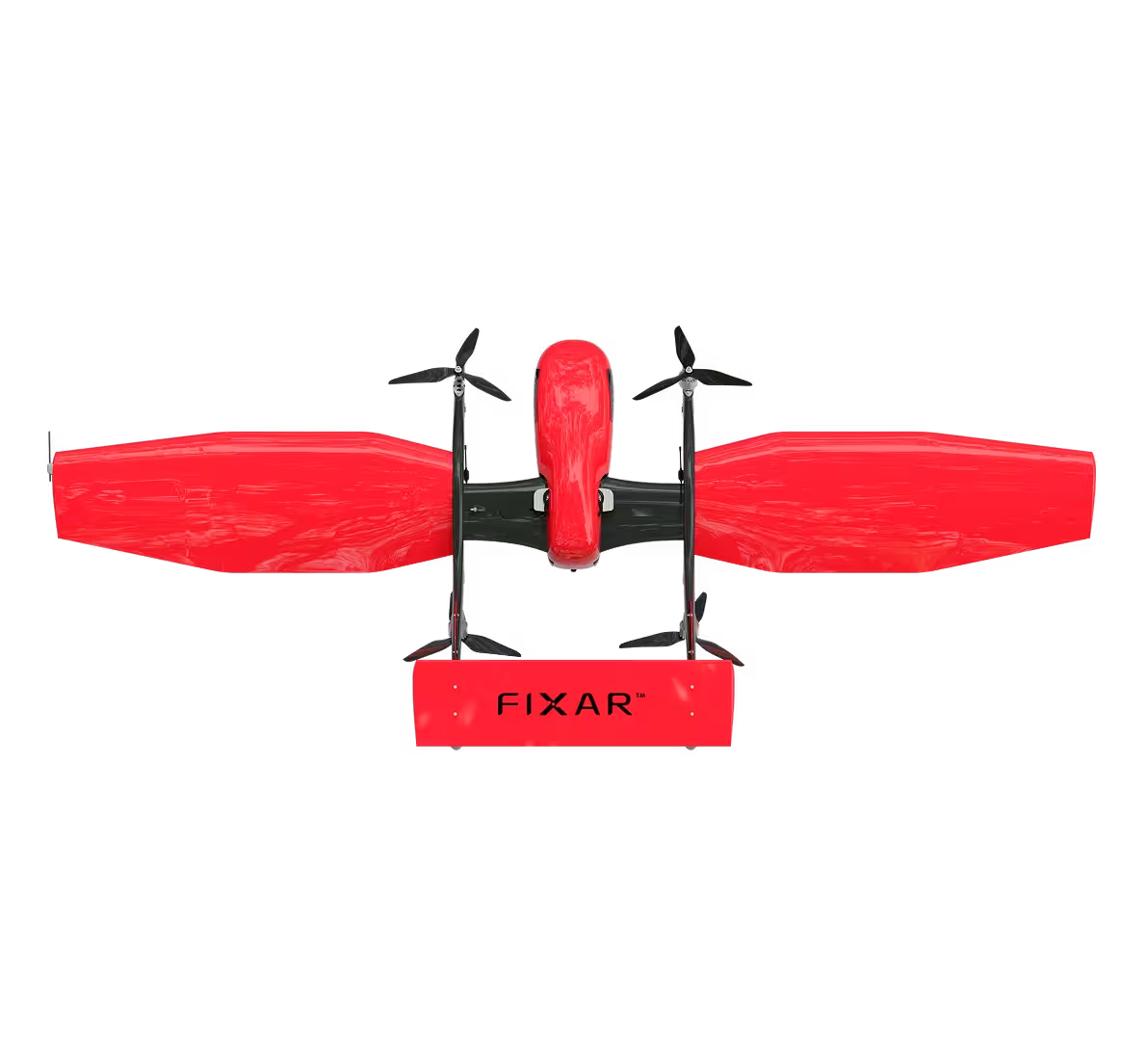
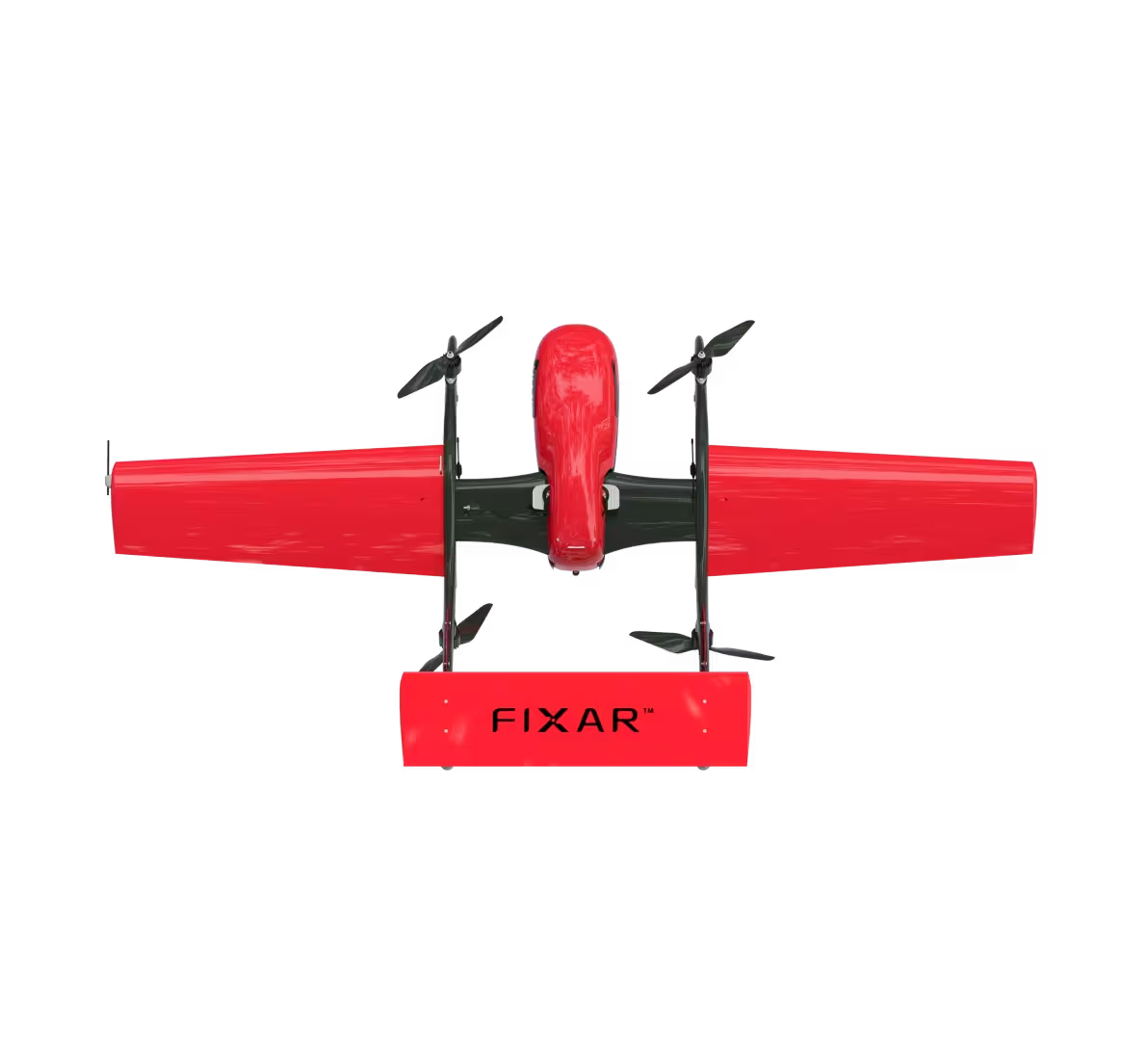
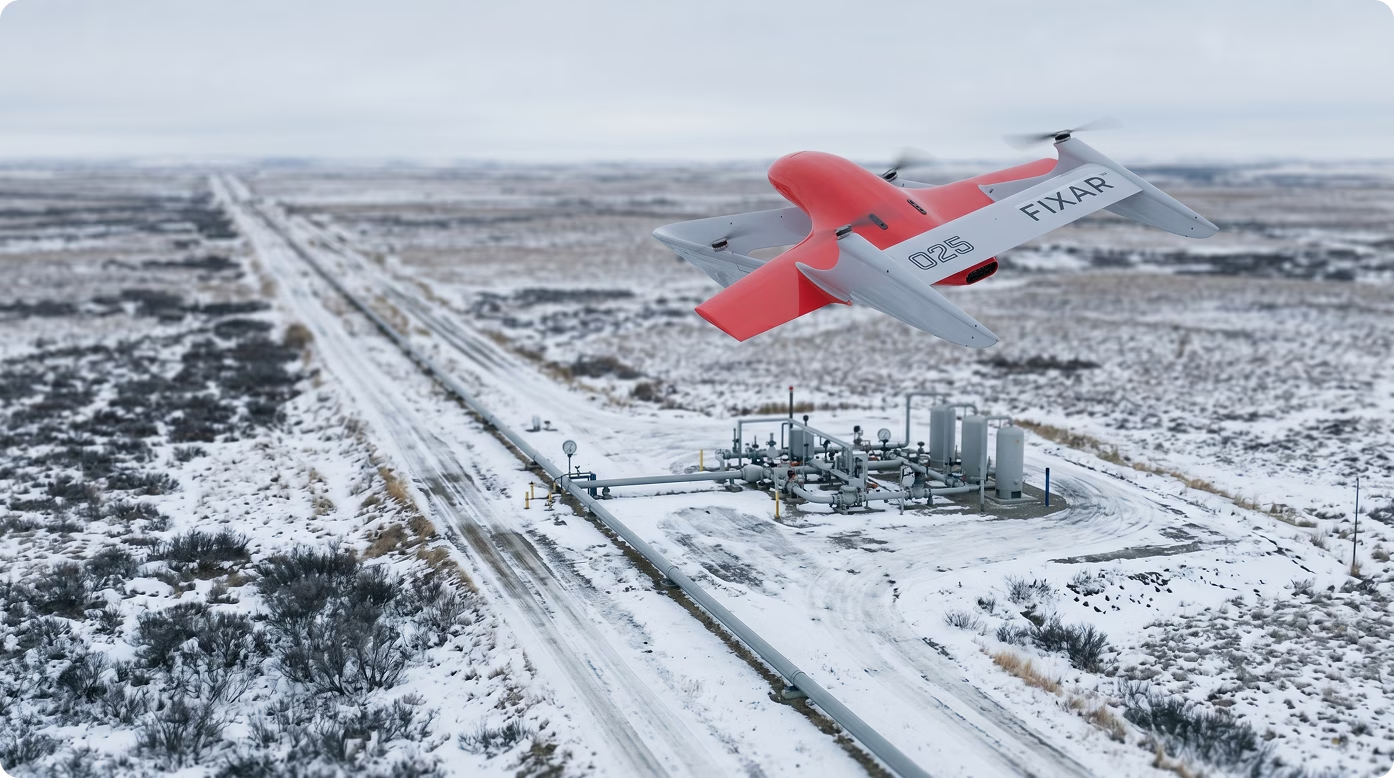
Organizations implementing UAV-based methane monitoring need more than autonomous aircraft. They require a platform capable of supporting standardized inspections, repeatable data collection, and scalable operations across large infrastructure networks.
FIXAR has been designed with these operational requirements in mind.
Rather than focusing on isolated drone flights, the platform enables organizations to establish structured monitoring programs that support recurring inspections and long-term asset management.
This approach aligns closely with the way large U.S. energy companies evaluate new inspection technologies.
From pilot projects to enterprise operations
Many UAV deployments demonstrate technical feasibility but struggle to transition into routine operations.
FIXAR helps bridge that gap by enabling organizations to standardize mission planning and inspection procedures across multiple facilities.
Instead of creating unique flight plans for every inspection, teams can develop repeatable workflows that improve consistency while reducing operational complexity.
Supporting large infrastructure networks
Oil and gas operators often manage thousands of kilometres of pipeline infrastructure alongside compressor stations, storage terminals, and remote production facilities.
Maintaining visibility across these assets requires monitoring systems that can support recurring inspections over long periods.
FIXAR enables organizations to develop repeatable aerial monitoring programs suitable for:
- transmission pipelines;
- gathering systems;
- compressor stations;
- storage facilities;
- processing plants;
- remote production sites.
This supports more efficient inspection planning while improving infrastructure awareness.
Improving operational efficiency
Inspection teams frequently spend significant time travelling between sites before any data collection begins.
Autonomous mission planning reduces preparation time and helps teams focus on inspection activities rather than manual flight planning.
For organizations operating across multiple states or large production areas, these efficiencies become increasingly valuable as monitoring programs expand.
Supporting compliance and reporting
Methane monitoring programs generate value only when inspection data can support regulatory reporting and operational decision-making.
By enabling repeatable inspections using standardized workflows, FIXAR helps organizations build consistent datasets that improve trend analysis, maintenance planning, and compliance documentation.
This creates greater confidence in inspection results while supporting long-term monitoring strategies.
Frequently Asked Questions
Can UAV-based methane monitoring receive federal funding?
Yes. While most funding programs do not finance drone purchases directly, several federal initiatives, including those administered by the Department of Energy, support projects that improve methane detection, emissions measurement, and infrastructure monitoring. UAVs can form part of a broader funded solution when they contribute to these objectives.
Is methane monitoring only about regulatory compliance?
No. Although compliance remains an important driver, many organizations invest in methane monitoring because it improves operational efficiency, reduces inspection costs, and provides better visibility across distributed infrastructure.
Which energy assets benefit most from UAV monitoring?
The strongest use cases include transmission pipelines, gathering systems, compressor stations, processing facilities, storage terminals, and remote production sites—particularly where traditional inspections require extensive travel or frequent field deployments.
What makes a strong funding or procurement proposal?
Successful proposals focus on measurable business outcomes. They explain the operational challenge, quantify expected improvements, demonstrate how the solution integrates with existing inspection processes, and present a realistic plan for enterprise deployment.
How does FIXAR support methane monitoring programs?
FIXAR enables organizations to build standardized, repeatable UAV inspection programs through autonomous mission planning and structured workflows. This helps operators improve infrastructure visibility, streamline inspections, and support long-term methane monitoring strategies.
Conclusion
Methane monitoring is becoming a core operational function for U.S. energy companies, not only because of evolving regulations, but because it supports more efficient, data-driven infrastructure management.
Organizations that combine federal funding opportunities with a strong operational business case will be better positioned to scale UAV deployments and integrate aerial monitoring into routine asset management.
For technology providers, success depends on demonstrating measurable business value, operational readiness, and the ability to support long-term inspection programs rather than simply offering advanced flight capabilities.
Ready to build a stronger UAV business case?
Whether your organization is pursuing federal funding, preparing a procurement proposal, or expanding methane monitoring across energy infrastructure, FIXAR can help you develop a scalable, procurement-ready UAV solution.
Our team supports partners with:
- UAV solution design for methane monitoring;
- procurement-ready technical documentation;
- inspection workflow development;
- autonomous mission planning;
- enterprise deployment strategies;
- technical support for large-scale infrastructure inspections.
Contact the FIXAR team to discuss how your organization can strengthen its methane monitoring strategy and prepare for the next generation of industrial UAV operations.

.svg)